
US Navy completes four-month covert operation to clear Iranian mines from Strait of Hormuz
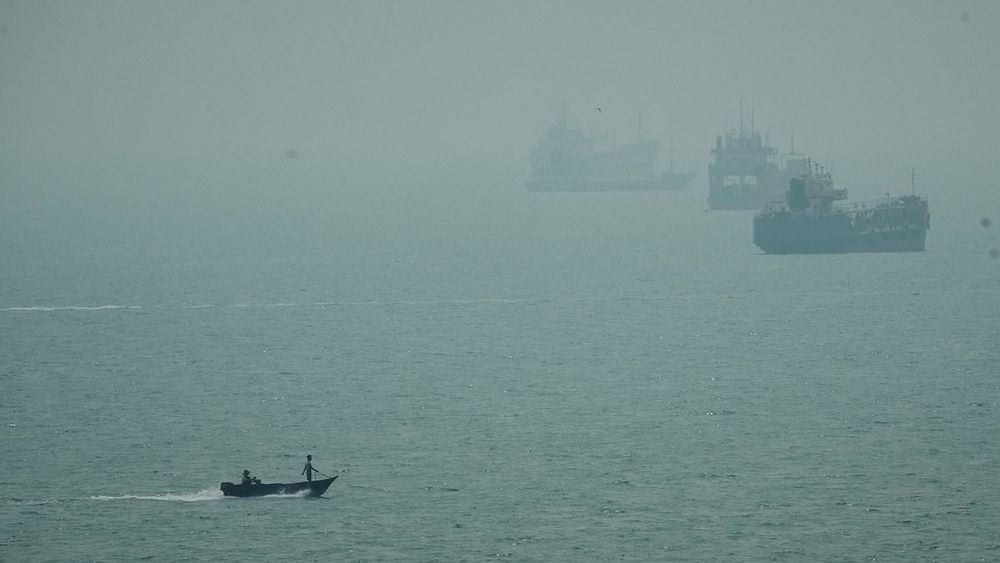
The United States Navy has completed a four-month covert operation to remove Iranian mines from the Strait of Hormuz, clearing the critical waterway that carries approximately 20 million barrels of oil per day and represents roughly one-quarter of the world's seaborne oil trade.
President Donald Trump announced on August 25, 2026, that American forces had successfully removed or detonated all mines in international waters within the strait, following Iran's closure of the shipping route on February 28, 2026. The operation, conducted primarily during nighttime hours to minimize detection, involved minesweepers, helicopters, and explosive ordnance disposal teams working in the confined two-mile-wide shipping lanes that funnel global commerce through the narrow waterway.
Iran shut down passage through the strait in late February in response to US-Israeli military strikes, deploying sea mines and threatening vessels attempting to transit the choke point. The closure marked the first time Tehran had fully attempted to block the waterway after four decades of periodic threats during various political crises.
The Iranian Revolutionary Guard Corps Navy views naval mines as a key pillar of its military strategy, according to a 2017 Office of Naval Intelligence report. In April, President Trump ordered the Navy to destroy any Iranian boats laying mines in the strait, setting the stage for the subsequent clearing operation.
The mission's complexity was amplified by the strait's geography. While the waterway measures approximately 21 miles wide at its narrowest point, commercial vessels must navigate through designated shipping lanes just two miles wide in each direction, separated by a two-mile buffer zone. This confined space forced Navy personnel to conduct precision operations in waters heavily seeded with explosive devices.
Historical precedent in the region
The operation draws on the Navy's experience with mine warfare in the Persian Gulf. During the 1991 Gulf War and the 2003 Iraq War, American forces deployed mine countermeasures units to the region, utilizing Avenger-class ships, MH-53 helicopters, and explosive ordnance disposal teams to secure shipping routes.
The strait has been a flashpoint for maritime conflict since the Iran-Iraq War of the 1980s, known as the Tanker War, when both nations routinely attacked oil shipments transiting the Persian Gulf and Strait of Hormuz.
The US Fifth Fleet, based in Manama, Bahrain, maintains responsibility for protecting maritime shipping lanes in the region, including the Strait of Hormuz. The successful completion of the mine-clearing operation represents a significant achievement for American naval forces operating under the Fifth Fleet's command structure.
With the strait now cleared of mines, the waterway that serves as a vital artery for global energy supplies has been reopened to international shipping, ending a six-month disruption that threatened world oil markets and demonstrated the strategic vulnerability of the narrow passage connecting the Persian Gulf to the Indian Ocean.