
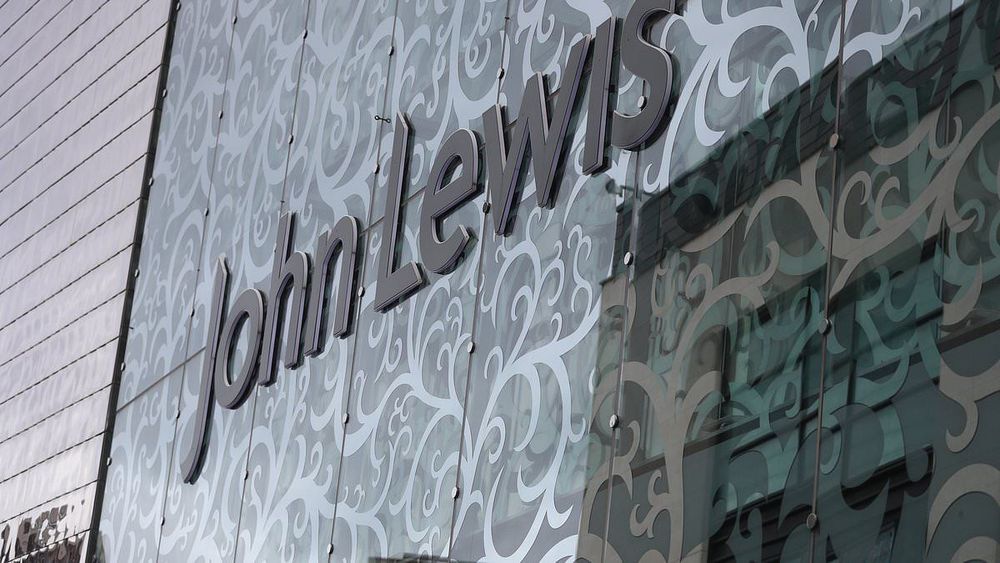
John Lewis losses signal deeper financial strain for middle-class Britain
The John Lewis department store chain has long served as a bellwether for middle-aged, middle-class Britain, embodying the understated values of a demographic more concerned with quality than fashion. When the retailer posted a loss before tax and exceptional items of £89 million for the 26 weeks to August 1, 2026—more than double the £34 million loss in the same period the previous year—it sent ripples through the bourgeois soul.
The red ink stems partly from deliberate long-term investment and partly from government policies that have made employing people significantly more expensive. The Partnership increased staff pay by £108 million during the first half of 2026, whilst also absorbing the annualisation of last year's National Insurance rise. But beneath these factors lies a more troubling reality: shoppers are increasingly reluctant to spend on big-ticket purchases such as sofas and home furnishings. Department store sales fell 2% year-on-year to £2 billion, a decline the retailer attributed to the discretionary market becoming more challenging.
For those who traditionally shopped at John Lewis—people once well insulated against most economic malaise—this hesitation signals something more profound than a simple downturn. Many professional mid-lifers now face a confluence of financial pressures that would have seemed unthinkable a generation ago.
The erosion of middle-class security
Someone aged 40 to 60 today is likely juggling multiple financial burdens simultaneously: mortgages, rising food and energy bills, higher transport costs, and in many cases school or university fees. Frozen income tax thresholds are eating their spending power through fiscal drag, whilst the disappearance of traditional defined benefit pensions from the private sector means they must save substantial amounts for retirement through stock market-linked schemes that carry inherent risks.
The scale of fiscal drag's impact is staggering. According to the Office for Budget Responsibility, between 2022/23 and 2030/31, the frozen thresholds will result in 5.2 million more individuals starting to pay income tax for the first time, 4.8 million more people being dragged into the higher tax band, and 600,000 more into the additional rate band. The OBR estimates this freeze will raise over £55 billion in 2030/31 alone.
The higher-rate threshold, at which people begin paying 40% tax, has remained frozen since 2022. By 2030–31, nearly a quarter of all taxpayers will be on either this rate or the additional 45% tier—a dramatic shift in who is considered a higher earner.
Mounting mortgage pressures
Compared with their parents' generation, today's mid-lifers carry larger mortgages for longer periods. Nearly 750,000 households currently on rates below 3% will see their fixed-rate deals expire in 2026, facing an average increase of £170 per month in repayments—over £2,000 annually. Looking further ahead, the Bank of England projects that over five million households will see mortgage payment increases by the end of 2028.
These rising costs come at a time when many households are already stretched thin. The Joseph Rowntree Foundation calculates that a couple with two young children needs a gross household income of approximately £74,000 to achieve what the public regards as a socially acceptable standard of living—a measure that includes modest holidays, socialising and occasional gifts, though nothing extravagant.
This is not a poverty threshold, yet it suggests why people on seemingly comfortable incomes still report feeling financially pressured. An income of £50,000 or even £100,000 simply does not stretch as far as it once did.
Employment insecurity and its consequences
The threat of redundancy adds another layer of precarity to this financial landscape. Over-50s face particular challenges in returning to work after job loss. Between 1998 and 2020, only 62% of those aged 50 and above returned to work within six months of becoming unemployed, compared with 74% of those aged 16-29 and 72% of those aged 30-49.
When older workers do find new employment, they typically earn less than before. Over the past 20 years, workers over 50 who became unemployed faced hourly earnings that were, on average, 9.5% lower than in their previous roles.
For a demographic that once represented the epitome of financial comfort, the picture has shifted dramatically. Today's middle-class professionals may not be poor, but many are far less secure than their income levels might suggest. The John Lewis losses—whilst partly reflecting strategic investment choices—also mirror a deeper reluctance among their core customers to commit to discretionary spending.
A generation ago, the typical John Lewis customer would have been considered comfortably off, secure in their career trajectory and confident about their financial future. That confidence has been steadily eroded by a combination of policy decisions, economic shifts and demographic changes that have made middle-class financial security far more fragile than it appears from the outside.