
Fund manager reveals why Alphabet remains undervalued despite soaring US stock prices
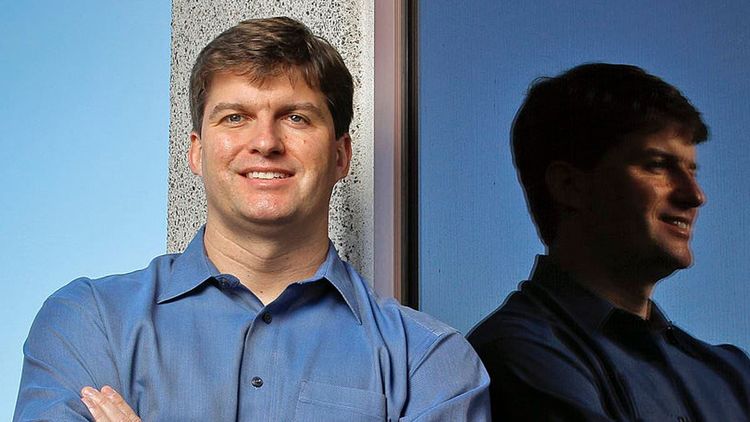
Miguel Oleaga manages the $1.9 billion Thornburg Global Opportunities Fund, which has delivered an average annual return of 11.68 per cent since its inception over two decades ago. The fund has earned a five-star Morningstar rating as of June 30, 2026, ranking in the top quartile across one, three, five and 10-year periods among 293 global large-stock blend funds.
With 32 per cent of holdings in the United States, 25 per cent in the Eurozone and a similar proportion in Asia, Oleaga's portfolio reflects his conviction that compelling opportunities now exist beyond America's expensive technology sector. The fund's concentrated approach typically holds between 30 and 40 securities selected through fundamental bottom-up analysis.
Alphabet tops the decade-long investment list
Asked which single company he would choose for a ten-year investment horizon, Oleaga named Alphabet without hesitation. The technology giant combines several characteristics his team prioritises: an exceptionally strong competitive position, multiple sources of earnings growth, substantial financial resources and significant exposure to artificial intelligence and related secular technology trends.
What makes Alphabet particularly attractive, Oleaga explained, is that its valuation fails to reflect the breadth and durability of its earnings opportunities. As of September 2026, Alphabet trades at a price-to-earnings ratio between 16.78 and 17.48 times earnings—approximately 38 per cent below its ten-year historical average of 27.21 and roughly 50 per cent below the technology sector average of 33.72 times earnings.
This valuation disconnect persists despite the company's dominant positions across search, advertising, cloud computing and emerging AI applications. Oleaga emphasised that unlike many companies associated with artificial intelligence, Alphabet's share price does not appear to fully account for its diversified revenue streams and long-term growth potential.
TSMC leads near-term picks on semiconductor dominance
For a shorter 12-month investment timeframe, Oleaga selected Taiwan Semiconductor Manufacturing Company. The chipmaker controls approximately 72 per cent of the global semiconductor foundry market as of 2026, maintaining an unrivalled position in advanced chip manufacturing with no close competitor.
TSMC has contributed significantly to the fund's recent performance alongside Samsung Electronics, with both semiconductor stocks benefiting from surging demand tied to artificial intelligence and advanced computing applications. The company's CEO C.C. Wei recently told investors he expects elevated chip demand to continue through at least 2029 or 2030, with internal projections pointing to annualised growth exceeding 50 per cent for AI-related chips through 2029.
Oleaga stressed the investment appeal stems from combining TSMC's exceptional market position with valuations that remain reasonable relative to long-term earnings potential. The fund's weighted-average price-to-earnings ratio of 12.9 times for 2026 compares favourably to 18.8 times for the MSCI ACWI benchmark index.
South Korea offers value amid persistent discount
Samsung Electronics and TSMC together represent the portfolio's semiconductor exposure, which Oleaga identified as the most significant contributors to long-term returns. Samsung's semiconductor business delivered record revenue and operating profit in the second quarter of 2026, driven by AI server memory demand, though its foundry operations continue to trail TSMC in market positioning.
South Korea represents approximately 7.5 per cent of the portfolio as of June 30, with Samsung as the fund's largest individual holding. Oleaga highlighted the market as particularly interesting due to persistent valuation discounts compared to American technology companies.
The so-called 'Korea discount' phenomenon sees South Korean stocks trading at lower valuations than global peers, with the KOSPI index maintaining a price-to-book ratio around 0.78 to 0.99 times compared to higher ratios in developed markets. Over the decade ending 2024, the KOSPI returned just 35 per cent compared to 179.4 per cent for the S&P 500 and 155.5 per cent for the Nikkei 225.
The Korean government has launched the Corporate Value-Up Program to address these structural issues through reforms including enhanced minority shareholder voting rights and restrictions on split listings from corporate spinoffs. These regulatory tailwinds could narrow the valuation gap whilst the fund benefits from exposure to world-class technology companies at attractive entry points.
Cautious stance on US equities amid elevated valuations
When asked about the prospect of a market crash, Oleaga declined to predict timing but identified warning signs investors should monitor: markets where the margin of safety and risk-reward balance have become unfavourable through a combination of high valuations and elevated expectations.
He acknowledged these conditions currently characterise US equities, resulting in the fund's underweight position relative to its benchmark. The concentration of approximately one-third of assets in American stocks reflects deliberate caution rather than a wholesale retreat from the market.
Oleaga emphasised his team remains conscious of risks surrounding artificial intelligence expectations becoming excessive. However, the fund's investment thesis does not depend on assuming every pound invested in AI infrastructure will generate attractive returns. By maintaining the portfolio's significantly lower valuation multiple whilst participating in AI-related growth, the strategy aims to capture upside without paying peak prices.
Global diversification beyond US technology
Rather than recommending investors abandon US holdings, Oleaga suggested recognising the increasingly broad global opportunity set now available. Whilst America remains home to many exceptional companies, significant valuation differences across markets have created compelling opportunities in Europe and Asia that receive less attention.
The portfolio's geographic distribution reflects this philosophy, with substantial exposure to Europe, South Korea, Taiwan and other markets beyond the United States. Technology remains the sector generating most excitement for Oleaga, particularly infrastructure supporting AI and advanced computing, but his focus centres on identifying enabling companies with durable competitive advantages rather than the most obvious AI beneficiaries.
On alternative assets, Oleaga noted his team neither invests in gold nor cryptocurrencies, as these fall outside their area of demonstrated expertise. He suggested that buying market-leading businesses with strong competitive positions and reinvestment opportunities at attractive valuations provides similar portfolio durability to precious metals. The fund's downside capture of 79 per cent during the past five years supports this approach.
For a hypothetical 25-year-old inheriting £100,000, Oleaga recommended global equities without hesitation, citing the power of long-term compounding when buying quality businesses at reasonable prices. He emphasised that global markets rarely move in lockstep, creating pockets of mispricing that a worldwide mandate allows investors to exploit wherever opportunities emerge.