
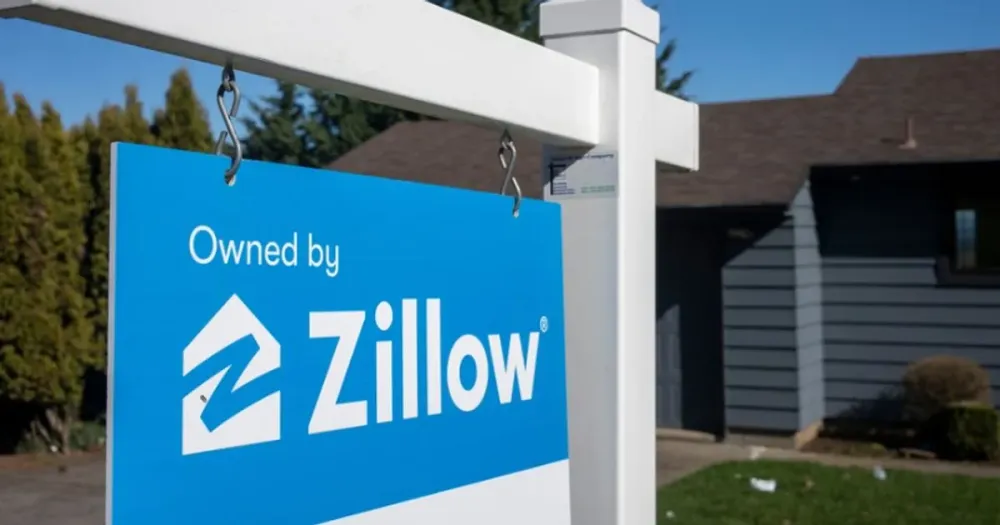
Housing outlook weakens
Jefferies forecasts a 12.4% year-over-year drop in the value of US residential property transactions in the fourth quarter, reversing the third quarter's 0.7% increase.
October pending home sales were 17.1% below their year-earlier level, National Association of Realtors data showed, following a 12.5% decline in September. Existing home sales fell 11.7%, with transaction value down 10.6%. Meanwhile, mortgage rates have averaged approximately 7.3% so far in the fourth quarter, up from 6.7% in the preceding quarter.
The brokerage projects that industry-wide purchase mortgage originations will fall 15% year over year. That would put the decline at the upper end of the 10%-15% contraction Zillow expects.
Guidance and shares reflect the pressure
Zillow's fourth-quarter outlook calls for total revenue between $635 million and $665 million, approximately unchanged from a year earlier, and adjusted EBITDA between $100 million and $135 million. Both ranges fell short of analyst consensus, according to Investing.com. The company expects year-over-year declines of roughly 9% to 15% in both For Sale and Residential revenue.
Following the third-quarter earnings miss and weak outlook, shares dropped about 15% in premarket trading on November 5, 2026, to approximately $29.30, Investing.com reported. That price was near the stock's 52-week low of $27.25, compared with a 52-week high of $74.80.
Jefferies subsequently cut its price target from $42 to $40 on November 9 while retaining its Buy rating, according to Markets Insider.
Mortgage and rental growth offset residential weakness
In results released November 4, Zillow reported third-quarter 2026 revenue of $724 million, a 7% increase from a year earlier. It nevertheless recorded a GAAP net loss of $158 million, or $0.70 per diluted share, compared with net income of $10 million a year earlier. Adjusted EBITDA totaled $182 million, representing a 25% margin.
The revenue gains came outside the residential business. Residential revenue slipped 4% to $419 million, while Mortgages revenue climbed 32% to $70 million and Rentals revenue increased 26% to $220 million.
Zillow attributed most of the Mortgages revenue growth to purchase loan origination volume, which rose 55% to $2.0 billion. Industry-wide purchase mortgage origination volume fell 4% over the same period.
Audience measures also declined: average monthly unique users decreased 3% year over year to 215 million, and quarterly visits dropped 5% to 2.3 billion. Even so, Zillow attracted 77% of the real estate category's average monthly unique visitors, according to Comscore.
CEO Jeremy Wacksman called the operating environment "one of the toughest housing markets in a generation." He said mortgage rates had been higher than expected, putting pressure on housing transaction volumes and residential revenue.
Preferred connections transition adds to the drag
Alongside the housing slowdown, Zillow's faster shift to Preferred connections is weighing on residential and for-sale revenue growth. Jefferies puts the transition's growth headwind at an estimated 900-1,000 basis points.
The brokerage says Preferred connections produce revenue at 1.35 times the rate of the older market-based pricing model, supported by better conversion and additional revenue from Zillow Home Loans and other services.
Jefferies expects the transition's drag to diminish during the second half of 2027 and end in the first half of 2028, potentially allowing stronger residential revenue growth after that.