Invoices cover cattle slaughtered between 2018 and 2023
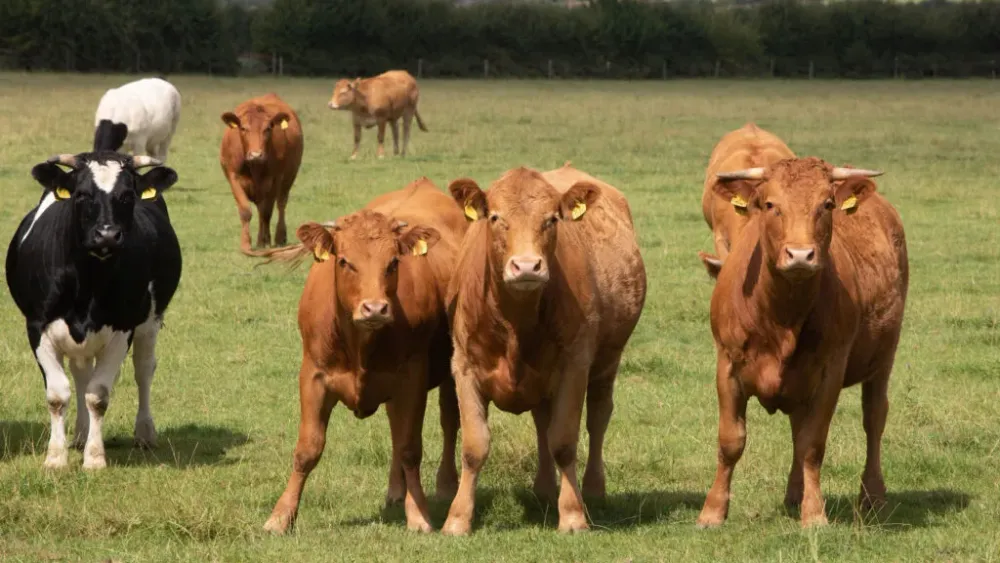
The department is seeking £609,800.50, or about £1,900 per farmer on average, for cattle compulsorily slaughtered between 2018 and 2023. It says the farmers received full compensation when the applicable rules entitled them to half that amount.
After first contacting affected farmers in July, Defra has recently sent invoices specifying what each farmer owes and offering payment-plan options. The invoices set a three-month deadline for payment.
The overpayments are understood to have resulted from an administrative error. According to the NFU's July 31 statement and FarmingUK's August 1 report, the Animal and Plant Health Agency (APHA), rather than Defra directly, discovered the problem during an internal audit. Following a policy change, some cattle moved onto holdings during an active TB breakdown had attracted full payments instead of the required 50% reduction.
Which cattle qualified for reduced compensation?
England introduced the reduction on November 1, 2018, to discourage farmers from bringing infection into herds already subject to TB restrictions. It covers cattle purchased for a herd after it has lost officially TB-free (OTF) status. Farmers can obtain movement licenses to bring cattle onto restricted holdings, but those animals qualify for only half the normal compensation if they become infected and are slaughtered before the herd regains OTF status.
The rule was already in place in Wales before England adopted it. In a May 24, 2018, written statement, George Eustice also set out an exception: herds accredited under the Cattle Health Certification Standards (CHeCS) scheme when a breakdown began would retain full compensation for all cattle compulsorily slaughtered.
Farm records have already helped at least one farmer contest a demand. Farmers Weekly understands that the department withdrew his bill after he demonstrated that he had bought the cattle before 2018, meaning the reduced-payment rule did not apply.
Farmers challenge recovery as NFU offers support
An unnamed dairy farmer told Farmers Weekly that an invoice for several thousand pounds arrived by email on Friday evening, November 13, leaving the farmer to worry about it over the weekend. The farmer described receiving the demand while facing poor milk prices with little prospect of short-term improvement, having missed the latest SFI window and with an existing agreement ending next spring.
The farmer plans to dispute the invoice and is seeking advice from the NFU and others. "The money was received in good faith. The valuation document they sent very clearly said 100% compensation," the farmer said.
NFU Livestock Board Chairman Paul Tompkins also argued that farmers should not be required to return payments they accepted in good faith. "We don't believe that these funds should have been reclaimed," he said.
Tompkins noted that farmers with cattle testing positive could choose government removal and compensation or arrange private slaughter and receive the animals' commercial value. Those who opted for the government scheme believed they were following the right process, he said, describing the dispute as another example of the "strained relationship" between government and farming.
In its July 31, 2026, statement, the NFU said it had formally told APHA that it opposed recovery. The union warned of "serious distress across the industry", including among members not directly affected. It says discrepancies between farmers' records and government records may provide grounds to challenge demands.
Affected members can call NFU CallFirst on 0370 845 8458. FarmingUK reported that the service can refer them to Birketts LLP for independent legal guidance, while NFU Legal Assistance Scheme subscribers can apply for an assessment of their eligibility for funding support. The Farming Community Network, on 03000 111 999, and RABI, on 0800 188 4444, have also had their support lines briefed on the issue.
Compensation policy under review
The repayment dispute coincides with Defra's consideration of how compensation should work over the longer term. Government figures put the annual net cost to taxpayers at £25 million to £30 million. Defra wants the system to encourage shared responsibility and lower disease risks while retaining confidence and providing value for taxpayers.
On November 5, 2026, the government formally adopted the refreshed Bovine TB Control Strategy for England. Its five priorities aim to achieve Officially Bovine TB Free status by 2038.
In its response that day, the government cited Defra-commissioned research finding that compensation cuts alone were unlikely to produce lasting changes in disease-risk management. The research, which was then expected to be published shortly, suggested greater potential in tying payments more clearly to proportionate, evidence-based expectations for biosecurity, safer herd management and risk-based cattle trading.
A new industry-government Strategy Board is to be established in 2027. Defra has also invited the co-design Steering Group to use its first delivery plan, due in late spring 2027, to explain how options for the system's longer-term financial sustainability could be explored.