Technical Specifications and Platform
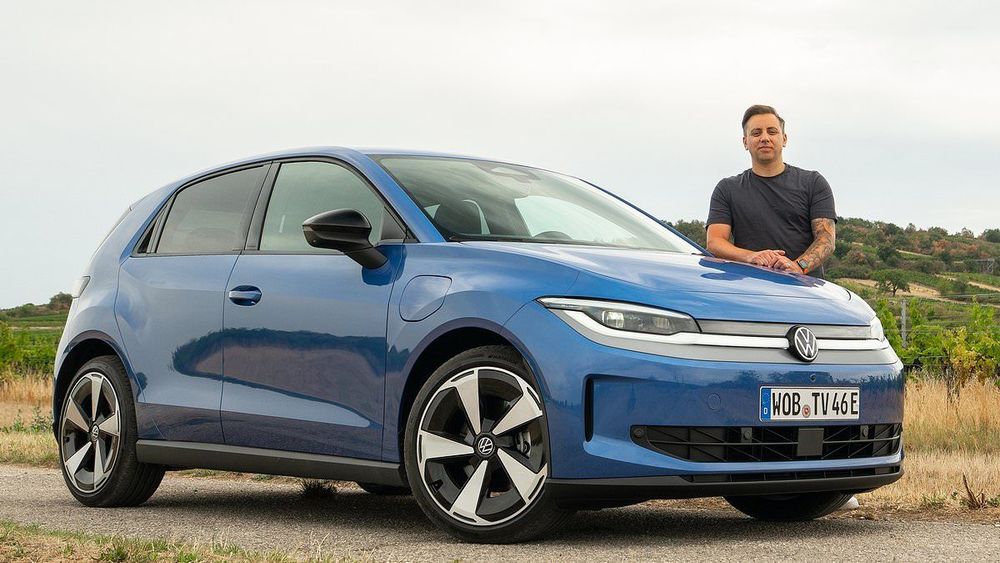
Volkswagen has taken a bold step by attaching the Polo name to an electric vehicle for the first time in the model's 50-year history. The ID.Polo represents a significant shift for the German manufacturer, which has previously avoided linking its established nameplates to its electric ID range.
Since launching its ID electric vehicle lineup in 2019, Volkswagen has deliberately kept distance between legacy names and battery-powered models. Buyers have seen the ID.3 rather than an ID.Golf, the ID.7 instead of an ID.Passat. The company maintained this separation until now, when it deemed the technology mature enough to carry one of its most storied badges.
The Polo first reached UK roads in 1976 during a summer heatwave and has since become the sixth most common car in Britain, with approximately 715,000 examples on driveways. Global sales have exceeded 20 million units across six generations, establishing formidable expectations for any successor.
Technical Specifications and Platform
The ID.Polo utilises Volkswagen Group's MEB+ platform, shared with the Cupra Raval. Customers can choose between two battery sizes and three power outputs, with all variants sending power to the front wheels rather than the rear axles used in previous ID models.
Entry-level versions produce 114bhp and 133bhp respectively, paired with a 37kWh lithium iron phosphate battery delivering a maximum range of 206 miles. The battery supports DC rapid charging at speeds up to 90kW.
The larger 52kWh nickel manganese cobalt battery pack, expected to be the popular choice, connects to a 208bhp electric motor. This configuration offers up to 281 miles of range and charging speeds reaching 105kW. A 10-to-80 per cent DC rapid charge takes 27 minutes for the smaller battery and 24 minutes for the larger pack.
Home charging with a standard 7kW wallbox requires approximately seven and a half hours for a full charge. Top speed is limited to 99mph across all variants.
Dimensions and Practicality
The ID.Polo measures just 2cm shorter than the current combustion-engined Polo but is 5cm wider and nearly 8cm taller. The wheelbase extends 5cm longer, increasing the distance between front and rear axles.
Boot capacity reaches 441 litres with clever under-floor storage, representing a 25 per cent increase over the petrol Polo and exceeding even the current Golf's luggage space. Volkswagen claims the ID.Polo now offers genuine five-seat capability.
Pricing and Equipment
Prices start at £23,395 for the entry-level 37kWh ID.Polo Life. The larger 52kWh version benefits from the Government's lower-tier £1,500 electric vehicle grant, reducing its starting price to just under £27,000. This positions it competitively against rivals including the Renault 5, Mini Cooper and Ford Puma Gen-E.
The base model costs approximately £2,000 more than the traditional petrol Polo, while higher-specification petrol variants match the price of the larger-battery electric version.
Standard equipment in Life trim includes:
- 17-inch alloy wheels
- Single-zone climate control
- Automatic high-beam assist
- Front and rear parking sensors
- Rearview camera
- Digital instrument cluster
- 12.9-inch infotainment touchscreen with wireless Apple CarPlay and Android Auto connectivity
- Wireless phone charging
Style specification adds 18-inch alloys, LED Matrix headlights, dual-zone climate control, and heated front seats and steering wheel. Limited-edition Launch Edition versions include additional features such as a panoramic glass roof, electrically adjustable front seats with massage function, and a detachable towbar enabling towing of up to 1,200kg.
Interior Design and Technology
The cabin adopts a modest, monochrome aesthetic with practical design touches. Hollowed-out door panels create additional elbow room, while the overall layout prioritises functionality over flashy styling.
Volkswagen has addressed previous criticisms of ID models by reverting to physical steering wheel buttons instead of haptic touch controls. Proper controls for heating and ventilation functions sit in a row beneath the infotainment screen, and a traditional knob handles volume adjustment and track selection.
Build quality feels solid and durable throughout. The touchscreen responds crisply, while a retro instrument display recreates the square fonts and analogue needles of the original Golf's clocks. The system even transforms the central screen into a digital tape deck.
Rear passenger space meets class expectations, with a flat floor providing additional foot room. However, the battery pack's positioning raises seat height, meaning taller occupants in the back may find their eyeline above the window frame.
Driving Experience
Behind the wheel, the ID.Polo demonstrates refinement beyond its compact dimensions. The suspension setup, despite using cost-effective MacPherson struts at the front and a torsion bar at the rear, delivers a plush and composed ride through careful damping engineering.
The 208bhp variant accelerates from 0-62mph in 7.1 seconds. While not exceptional by modern electric vehicle standards, the effortless power delivery impresses, particularly given the 1,576kg weight. The car maintains pace with larger vehicles and keeps reserves of power readily available.
Steering weight feels perfectly judged, turning eagerly into corners with precise response to driver inputs. The brakes prove strong and progressive, while the adjustable regenerative braking system can be wound up to enable one-pedal driving.
Top-specification models feature Travel Assist 3.0, Volkswagen's latest semi-autonomous driving system. Using swarm data collected from other Volkswagen vehicles, it maintains lane positioning on rural roads even without visible white lines. On motorways, it combines adaptive cruise control and lane-keeping assistance to execute lane changes when the driver indicates. The system can detect red traffic lights and automatically bring the car to a stop.
Real-World Range
Testing across 150 miles of mixed driving conditions, including urban crawling, spirited B-road runs and high-speed motorway stretches with climate control running throughout, the ID.Polo returned an average efficiency of 4.3 miles per kilowatt-hour. Based on this figure, a full charge would deliver approximately 224 miles of real-world range.
This falls 57 miles, or 20 per cent, short of Volkswagen's claimed 281-mile range but aligns with typical real-world performance. For most supermini owners who rarely undertake journeys exceeding 200 miles, this range proves more than adequate.
Verdict
The Polo has spent decades as the sophisticated choice in the competitive supermini segment, consistently delivering quality without showiness. The ID.Polo maintains this exact balance, prioritising grown-up appeal over visual drama.
While it may not dazzle with styling or performance figures, the ID.Polo provides an exceptionally comfortable environment with power reserves and abundant practicality. It distinguishes itself from rivals through big-car characteristics, particularly cabin quality, ride comfort and technology suite.
The ID.Polo successfully transitions one of Volkswagen's most respected nameplates into the electric age without abandoning the sensible formula that made the Polo popular for half a century. It feels more mature than most rivals, maintaining the winning approach that has defined the model since 1976.