Robot collapse highlights technical challenges at World Robot Games
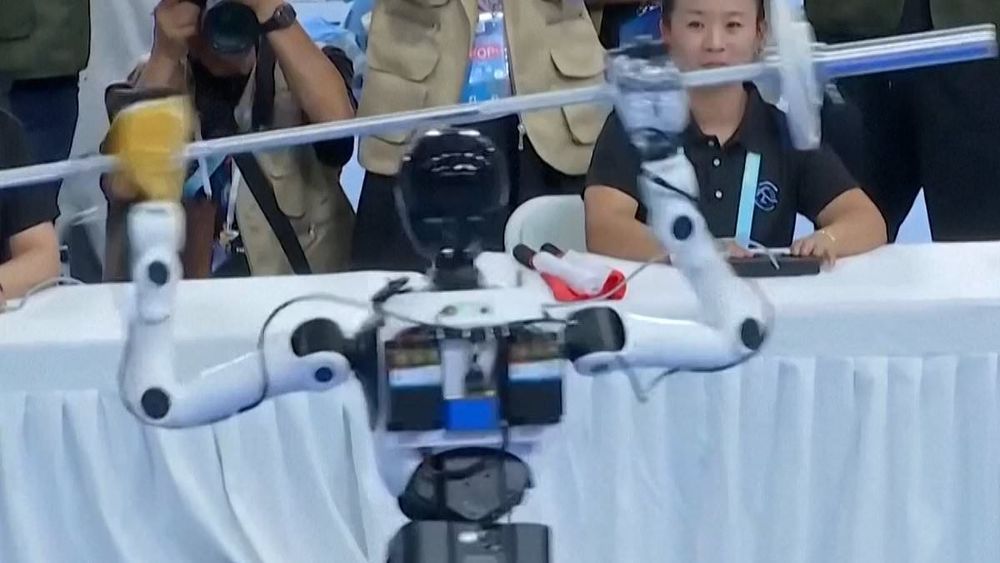
A humanoid robot competing in a weightlifting event collapsed onto the judges' table during the World Humanoid Robot Games in Beijing, highlighting ongoing challenges in robotics development as the field rapidly expands.
The incident occurred at Beijing's National Speed Skating Oval, the 'Ice Ribbon' venue originally built for the 2022 Winter Olympics, where the five-day competition is showcasing 2,056 robots from 666 teams representing 16 countries. The robot was reportedly rushed onto a stretcher following the collapse.
Weightlifting made its debut at this year's games alongside other new events including tug-of-war, table tennis, and traditional Chinese sports like Taijiquan. The competition, running from August 22-26, features 51 events with more than 1,000 individual competitions.
Part of broader pattern of mechanical failures
The weightlifting collapse represents just one example of technical difficulties plaguing the 2026 games. Throughout the competition, humanoid robots have tripped, collapsed, burst into flames, and slammed into safety barriers, with crowds watching as malfunctioning machines are stretchered off the track.
These challenges are not new to the event. At the inaugural 2025 World Humanoid Robot Games, which featured 280 teams and more than 500 robots competing in 26 events, fully autonomous robots struggled with balance and collapsed unexpectedly during soccer matches. In the 100-meter sprint, a robot managed to clock 21.5 seconds, though balance and stability issues were apparent across multiple disciplines.
The rapid growth of the competition underscores both the ambition and challenges facing the robotics field. Participation has surged 138 percent in teams from the first edition, with the number of competing robots quadrupling year-over-year.
China dominates emerging field
Approximately 96 percent of entries at the games are Chinese, though teams from the United States, Germany, Japan, and Brazil are also competing. The event is co-hosted by the Beijing Municipal Government and China Media Group, serving as a platform for demonstrating leadership in embodied intelligence and physical AI.
Competition rules incentivize autonomous operation, with scenario-based events awarding a 1.0 scoring weight for full autonomy compared to 0.5 for remote operation. The 100-meter sprint requires all participants to be fully autonomous with no human teleoperation, making navigation, balance, and stopping control critical technical challenges.
Safety concerns mount
The Beijing competition comes amid broader safety concerns surrounding humanoid robots in public settings. In June 2026, a Unitree G1 robot accidentally kicked a child in the stomach during a public demonstration at Urumqi Botanical Garden in Xinjiang. In a separate incident, another humanoid robot lost balance and struck a nearby man, causing a nose injury.
Despite the mechanical setbacks and safety incidents, the games continue to draw international attention as developers push the boundaries of humanoid robotics capabilities in athletic and physical challenges.