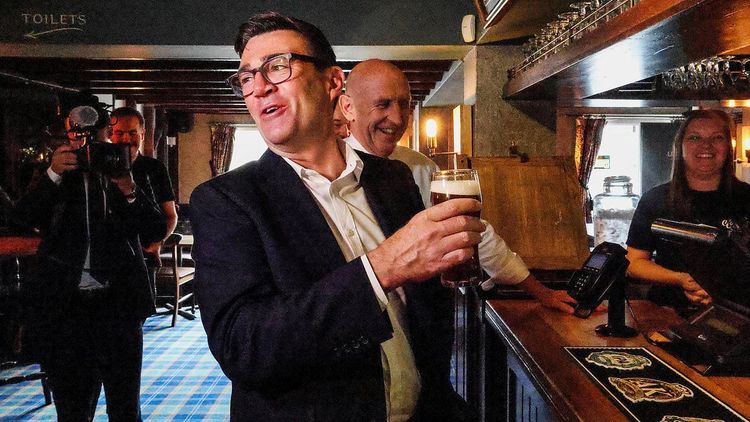
Music producers urge Prime Minister Burnham to address studio and venue closures threatening UK industry
Music producers and industry figures are pressing Prime Minister Andy Burnham to intervene urgently in the accelerating closure of recording studios and live music venues across the country, warning that the UK's position as a global music hub is at risk.
The appeal comes as the grassroots music sector faces its worst crisis in recent history. Between July 2024 and July 2025, 30 venues closed permanently and another 48 stopped operating as gig spaces, according to the Music Venue Trust's annual report. The closures are occurring at a rate of approximately one venue per fortnight.
Financial strain and job losses
The financial strain on the sector is severe. In 2025, more than half of UK grassroots music venues made no profit at all, with average profit margins at just 2.5%. The sector shed over 6,000 jobs in a single year, representing 19% of the workforce.
Industry campaigners are particularly concerned about the loss of studio infrastructure in Greater Manchester, the region Burnham represented as mayor for nine years before becoming Prime Minister in July 2026. The area has produced internationally renowned acts including Oasis, The Stone Roses, Joy Division and Elbow. Historic facilities like Strawberry Studios in Stockport, where Joy Division recorded their seminal album 'Unknown Pleasures' in 1979, closed in the 1990s, a loss still cited by music campaigners as a cautionary tale.
Burnham's music industry credentials
Burnham has previously championed the music industry. As Mayor of Greater Manchester, he launched a major review of the region's music scene in June 2018 in partnership with UK Music, stating at the time that
Greater Manchester has led the way when it comes to British music.The review aimed to strengthen the city-region's music infrastructure and support emerging talent.
Shortly after becoming Prime Minister, Burnham announced a 20% business rates cut for nearly 32,000 pubs, clubs and live music venues across England, set to come into force in April 2027. However, producers argue that more comprehensive support is needed to address the crisis facing recording studios specifically.
Crisis deepening over recent years
The situation has deteriorated markedly over recent years. In 2023, grassroots venues closed at a rate of two per week, with 125 venues shutting their doors, resulting in 4,000 jobs lost and 14,500 events cancelled. That year marked the worst for closures since the Music Venue Trust began collecting data.
Despite contributing over £526 million to the UK economy in 2024, grassroots music venues operated at an average profit margin of just 0.48%, with 43.8% reporting annual losses. Nearly a quarter of the Music Venue Trust's membership faced threats of permanent closure requiring emergency response services.
Economic significance of UK music
The economic significance of the sector extends far beyond grassroots venues. The UK music industry generated £4.4 billion to the economy in 2017, according to UK Music. Britain accounts for 12% of the global music market and ranks as the third largest domestic music market worldwide, behind only the United States and Japan.
Burnham's background includes serving as Secretary of State for Culture, Media and Sport from 2008 to 2009 under Prime Minister Gordon Brown, giving him direct ministerial experience with cultural policy. He was MP for Leigh from 2001 to 2017 before becoming Mayor of Greater Manchester in May 2017, returning to Parliament in June 2026.
Music industry leaders are now calling for targeted measures to protect studio infrastructure and ensure the survival of the grassroots venues that have historically served as the foundation for Britain's music industry success.