
A challenge to the government's approach
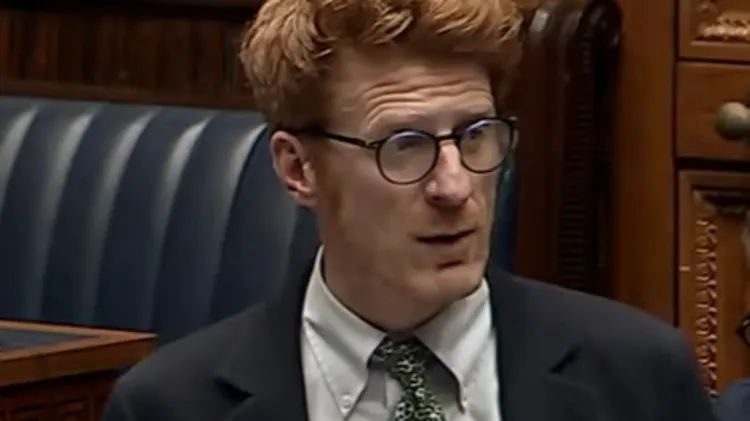
In a November 9 article for ConservativeHome, Graham argues for giving elected county-level leaders more power rather than combining counties and cities into larger authorities. He supports decisions being made locally but questions whether the government's proposed structures would improve services or strengthen communities' control.
Graham represented Ochil and Perthshire South from 2017 to 2019, later led the Downing Street Union Unit and was the Conservative candidate for Perth and Kinross-shire in 2024. He describes the expansion of English mayoralties, coupled with changes to their funding, as a major constitutional shift.
His criticism comes amid a broader attack on Labour's Budget. Graham contrasts Andy Burnham's summer promise of "radical, bold change" with what he describes as temporary household help, an unfunded commitment to 3% defense spending and little support for struggling farmers. For him, the mayoral and revenue proposals stand out as the Budget's substantial change.
Which revenues mayors would receive
HM Treasury's Fiscal Devolution Roadmap, published October 28, 2026, sets out a new funding model for England's regional and local government. Business rates would begin flowing to mayoral strategic authorities in 2027, followed by an assigned share of income tax in 2028. The roadmap also envisages greater business rates retention across both councils and mayoral authorities.
The Local Government Association's Budget briefing puts the initial mayoral share of locally retained business rates at 20%, starting in April 2027. Councils' share would rise to at least 70%. Before the decade ends, the government intends local and regional government together to keep all business rates income, replacing central government grants.
The income tax arrangements would start in April 2028. According to DWF's Budget analysis, mayoral strategic authorities would receive a share of basic-rate tax paid by residents on employment, self-employment and pension income. Mayors would have no authority to change income tax rates or thresholds. The next Spending Review is due to specify the assigned share and funding arrangements.
A separate first wave of Mayoral Strategic Authority Business Rates Retention Zones remains conditional on Full Business Case approval and legislation. The nine authorities named are Greater Manchester, East Midlands, Hull and East Yorkshire, Liverpool City Region, Tees Valley, West of England, North East, York and North Yorkshire, and the Greater London Authority.
The Budget also provides £285 million for Good Growth Funds in England in 2027-28: £165 million for places with a mayor in office in 2027 and £120 million in incubator capital for areas working toward devolution. Mayoral Capacity Funding would receive an additional £150 million that year.
Why Wiltshire's boundaries matter
Graham uses Wiltshire to illustrate his concern about applying a metropolitan model elsewhere. Under the proposals, Swindon would join Oxfordshire and Berkshire in a Thames Valley mayoralty, while the rest of Wiltshire would be oriented toward Wessex.
He argues that this would split a county whose economic, cultural and transport connections cross the proposed boundary. Swindon's manufacturing, technology and defense-related jobs serve people in Marlborough, Royal Wootton Bassett and nearby rural communities. Decisions about transport, skills and economic development could consequently fall to two mayoral authorities, potentially complicating coordination.
The proposals are still being developed. According to the Local Government Association, the government said it was nearing agreement on 10 new devolution deals, including Thames Valley and Wessex. Those agreements would bring coverage above 90% of England's population, with full coverage targeted by the end of 2028.
Swindon Borough Council said the government confirmed on October 28 that Thames Valley would move toward a mayoral strategic authority covering Swindon, Berkshire and Oxfordshire. A proposed £9.1 million allocation from the Good Growth Funds accompanied the announcement. The 13 participating councils will prepare a proposal before a stakeholder consultation planned for the new year. A shadow authority would follow later in 2027, with mayoral elections expected in 2028.
Graham contrasts Greater Manchester's dominant economic center and established metropolitan transport network with the dispersed settlements, multiple employment centers and differing infrastructure requirements of places such as Somerset, Wiltshire, Dorset and Poole. His concern is that a structure suited to a major city may serve rural and semi-rural areas less effectively.
What Scotland and Wales show
England's proposed strategic authorities would oversee transport, economic development and other regional priorities, rather than replicate national devolution. Graham nevertheless draws on Scotland and Wales to challenge the assumption that transferring responsibilities necessarily improves results. He also suggests that a city-focused model could help places such as Glasgow and Edinburgh, despite nationalist resistance.
After more than 25 years of devolution, he argues, Scotland and Wales have neither surpassed England in education and health nor eliminated longstanding gaps. He cites PISA 2025 results showing Welsh mathematics performance 28 points below its 2006 level and Scotland's 57 points below its early-devolution benchmark. The corresponding science declines he gives are 29 points for Wales and 24 for Scotland.
The Scottish Government's PISA 2025 report records mean scores of 467 in mathematics and 491 in science. Neither result differed statistically significantly from 2022, although both remained significantly below several earlier assessment cycles. Scotland scored significantly below England and significantly above Wales.
On health, Graham says Scotland still misses most of its own performance targets and Wales has fallen further behind English outcomes. He explicitly stops short of blaming these trends simply on devolution. His argument is that transferring powers alone offers no assurance of better services; institutions must be effective, accountable and able to demonstrate improvements.
The county-level alternative
Graham's alternative would put directly elected leaders in charge of transport, infrastructure and economic development at county level, with support from existing councils. Neighboring counties could cooperate when needed without first being placed in a larger strategic authority.
He says such arrangements would need defined responsibilities, adequate funding and protections against avoidable bureaucracy. The starting point, he argues, should be communities people recognize, rather than boundaries drawn to fit Whitehall's preferred structure. Cooperation across county lines, or even mergers, could still happen if driven locally.
Redistribution remains an open question
Graham acknowledges that allowing areas to retain more revenue could reward economic growth and give local leaders greater financial independence. His reservation is how the system would redistribute resources between places with different tax bases.
Wealthier areas can raise more revenue than poorer communities, he notes, while the Treasury remains responsible for UK-wide commitments and support for services in England, Scotland, Wales and Northern Ireland. He calls on ministers to explain how they would protect less affluent areas and preserve the Union's financial solidarity as more receipts are allocated locally.
Without convincing arrangements, Graham warns, the changes could generate friction both between communities and between tiers of government. He argues that success should be judged by better services, greater prosperity and residents' opportunities and influence, rather than by the number of mayors or the amount of tax revenue reassigned.