Thousands descend on Spanish town for 80th anniversary of La Tomatina tomato fight
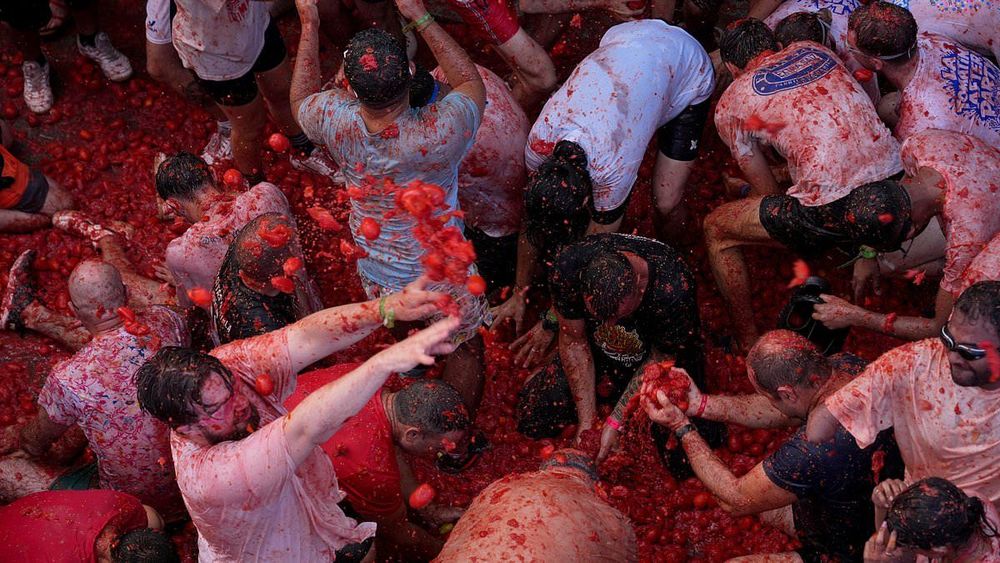
Thousands of participants descended on the small town of Buñol in Spain's Valencia province for the 80th anniversary of La Tomatina, the world's largest food fight that transforms the streets into rivers of red pulp each August.
Up to 20,000 ticketed revelers gathered in the town of approximately 9,000 residents, located 38 kilometers west of Valencia, to hurl an estimated 120 to 150 tonnes of overripe tomatoes at one another during the one-hour spectacle.
The festival began at 11:00 AM with a signal from a water cannon, unleashing chaos as participants pelted each other with approximately 6 to 7.5 kilograms of tomatoes per person. At precisely noon, a second signal marked the end of the battle, requiring all throwing to cease immediately.
From spontaneous brawl to international phenomenon
What started as an impromptu scuffle in August 1945 has evolved into a globally recognized cultural event. The tradition began during the town's Giants and Big-Heads parade honoring the local patron saint, when a group of young people started throwing tomatoes from a nearby vegetable stand.
The festival faced adversity in the early 1950s when dictator Francisco Franco banned the event. However, local residents refused to let the tradition die. In 1957, they staged a mock funeral procession through the streets, complete with a music band playing funeral songs and carrying a coffin containing a giant tomato. The protest succeeded, and authorities reinstated the festival.
Recognition of La Tomatina's cultural significance came in 2002, when Spain's Secretary Department of Tourism declared it a Fiesta of International Tourist Interest.
Managing the masses
The festival's popularity necessitated crowd control measures. Since 2013, participation has been capped at 20,000 ticketed entries, a significant reduction from the up to 50,000 people who previously crammed into Buñol's narrow streets before official ticketing was introduced.
The tomatoes used in the battle are specifically grown overripe varieties deemed unsuitable for human consumption, sourced from regions like Extremadura. These low-grade fruits would otherwise be discarded, addressing concerns about food waste.
Economic windfall for small town
The annual event delivers substantial economic benefits to the region, generating an estimated €2 million in regional impact. Local accommodations experience occupancy rates exceeding 90% during the festival period, as visitors from around the world flock to participate in or witness the spectacle.
After the hour-long tomato battle concludes, fire trucks spray down the streets and participants, washing away the crimson remnants of the world's messiest celebration until the tradition resumes next year.