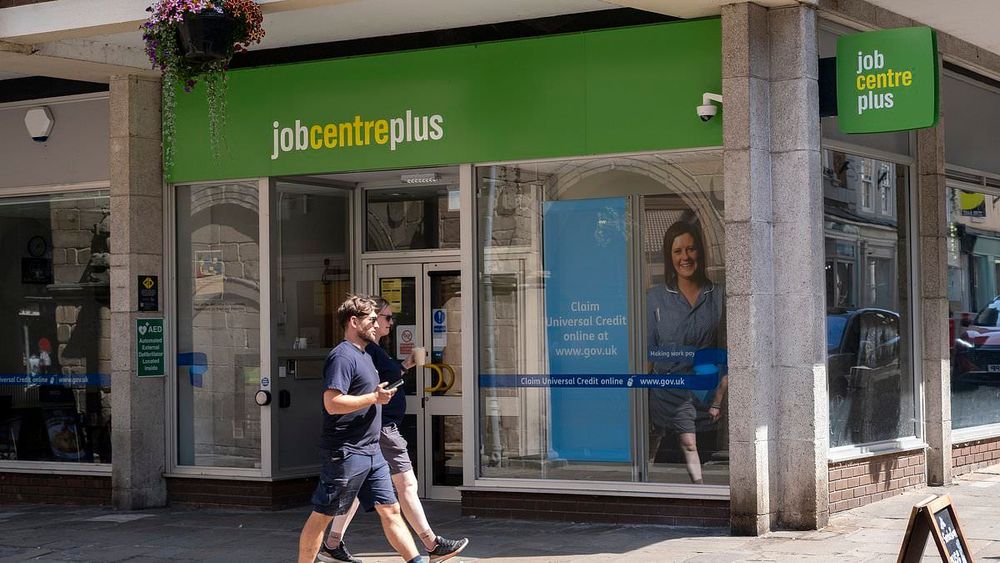
Demand for staff in Britain fell for the 34th month in a row in August, according to a new survey, as employers hold back on hiring and the number of people looking for work continues to grow.
The monthly report by the Recruitment and Employment Confederation (REC) and accountancy firm KPMG said firms were 'keeping the brakes' on recruitment because of continued uncertainty linked to the Iran war and higher borrowing costs. It echoes recent official figures showing that job opportunities are shrinking.
More people seeking work
The survey of recruitment consultancies found that the number of people seeking new employment rose at its sharpest rate for three months in August. Redundancies were described as 'a prominent theme' behind the trend. Recruiters also pointed to 'fewer job opportunities and concerns over current job security'.
Overall demand for staff fell for the thirty-fourth month in a row in August. Permanent vacancies fell at a solid pace that was unchanged from July, while demand for short-term staff fell following a brief rise in the previous month.
There were, however, some signs of a turnaround in sentiment. Permanent placements rose slightly in August, for the first time in four years.
The KPMG/REC Report on Jobs is compiled by S&P Global from questionnaires sent to a panel of around 400 UK recruitment and employment consultancies. It is a poll of recruiters rather than official statistics, but is regarded as a leading indicator of the labour market.
Cost pressures on employers
Many firms blame Labour's increase in employer national insurance and steep rises in the minimum wage for making it costlier to hire. Employer National Insurance rose from 13.8% to 15% in April 2025, while the pay threshold above which employers pay it was cut from £9,100 to £5,000 a year. The Employment Allowance was doubled from £5,000 to £10,500 at the same time.
Businesses are also anxious about the impact of a raft of new workers' rights rules. At the same time, high energy prices caused by the war are biting and fears of an interest rate rise loom.
Comments from KPMG and the REC
KPMG boss Jon Holt said:
The jobs market continues to contract overall. Vacancies are still falling, the number of people looking for work continues to rise, and some employers are keeping the brakes on recruitment because of continued geopolitical uncertainty and elevated borrowing costs.
Looking ahead to the Budget the following month, he said:
With the Budget next month, the Government has the opportunity to turn these green shoots into sustained positive momentum. A clear and credible plan for growth would give businesses greater certainty over the outlook and help unlock stronger demand across the jobs market.
Maxine Bligh, interim chief executive at the REC, said:
This is not the time to take the job market for granted. Instead, government should follow through on its commitment to lessen burdens on business.
Ms Bligh said that should mean 'greater pragmatism on the employment rights agenda', including 'the gamble the government is taking with its guaranteed hours policy'.
Business groups argue the policy, which promises contracts to casual workers based on their recent working hours, will deter employers from hiring temporary seasonal staff during busy periods such as Christmas. The guaranteed hours right forms part of the Employment Rights Act 2025, which received Royal Assent in December 2025 and is being phased in. The guaranteed hours provision has no implementation date yet, pending consultation.
What happened next
Later data painted a more mixed picture. The next KPMG/REC report, published on 8 October and covering September, showed permanent placements rising for a second consecutive month. Reports described this as the fastest pace in four years. Overall demand for staff still fell, but at the weakest pace since August 2024.
Official figures from the Office for National Statistics showed vacancies falling by 21,000 to 691,000 in the three months to September, a five-year low. That left the vacancy rate at 2.1%, with vacancies down 37,000, or 5.1%, on the year and below pre-pandemic levels. Payrolled employees fell by 37,000 in the three months to August.
The ONS also put the unemployment rate at 4.7% in the three months to August, the lowest since the three months to July 2025 and down from 5.2% in October to December 2025. The House of Commons Library has cautioned that Labour Force Survey data should be treated with care, as some volatility remains.
On the borrowing-cost front, the Bank of England raised Bank Rate from 3.75% to 4% on 5 November, its first increase since 2023. All nine members of the Monetary Policy Committee voted for a rise, with one preferring a larger half-point move. Governor Andrew Bailey linked the decision to inflationary pressure from higher energy prices caused by the Iran war. UK inflation had hit an 11-month high of 3.5% in September, well above the Bank's 2% target.