Strategic Minerals poised to benefit from tungsten supply crisis with Cornwall project
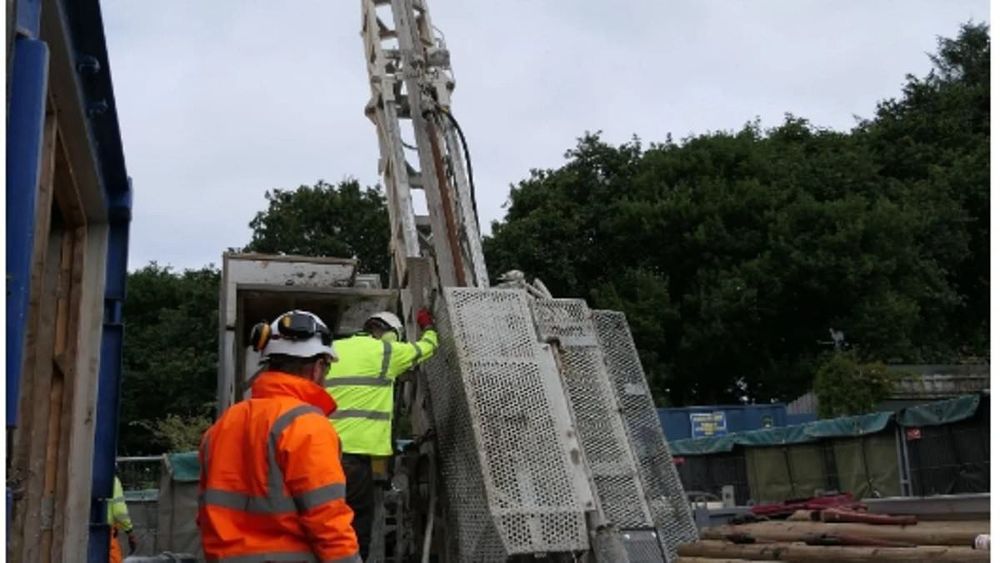
In a corner of Cornwall's Tamar Valley, three drill rigs are methodically probing the earth for what could become one of the West's most strategically important mineral deposits. The Redmoor Project, being developed by AIM-listed Strategic Minerals through its Cornwall Resources subsidiary, sits atop a tungsten ore body that is gaining critical importance as global supply chains fracture.
The timing could hardly be better. China, which controls approximately 85 per cent of global tungsten supply, implemented export licensing controls in February 2025 and designated only 15 companies authorised to export tungsten products in January 2026. The impact has been dramatic: Chinese tungsten APT export volumes plummeted roughly 70 per cent from 782 tonnes in 2024 to just 243 tonnes during January-November 2025.
The supply squeeze sent prices soaring. Tungsten surged from approximately $900-940 per mtu WO3 in January 2026 to $1,650-1,900 by mid-February, with European APT prices exceeding $3,100 per MTU by March 2026. These figures sit well above even the optimistic pricing scenarios used in Redmoor's economic assessments, significantly improving the project's already compelling financials.
A globally significant deposit
The project's 23.68 square kilometre licence area covers part of the historic Tamar Valley Mining District, where over 100 mines once operated during the 18th and 19th century boom, supplying much of the world's copper and tin. The area's mining heritage is visible from the drill sites, marked by Kit Hill's ornate 19th-century chimney standing sentinel over the landscape.
What sets Redmoor apart is its exceptional grade. The deposit runs at around 0.5 per cent tungsten trioxide, roughly double the industry norm of 0.15 to 0.25 per cent. One vein intersection last year assayed at 22 per cent. This concentration means Redmoor would move approximately 600,000 tons of rock annually to match the tungsten output of larger, lower-grade operations that process three million tons.
The deposit's compact footprint—running roughly a kilometre along strike and plunging some 760 metres down—contains 17.4 million tons of mineralisation hosting not just tungsten but also tin, copper and silver. Historic mines in the area, including Redmoor Mine, Kelly Bray Mine and Wheal Florence Mine, produced 574 tonnes of tin, 268 tonnes of tungsten trioxide, 852 tonnes of copper and 9,179 oz of silver before closing in 1892 when low tin prices made operations uneconomical.
Britain's largest drilling campaign
Backed by £8.7 million raised by parent company Strategic Minerals, the current programme represents the largest continuous diamond drilling undertaken from surface in Britain this century. The 22,500 metres of drilling, expected to complete in the second quarter of 2027, aims to upgrade the resource classification from Inferred to higher confidence categories required for bankable feasibility studies.
Planning permission allows for seven pad locations across the site, from which the company will complete at least 44 resource infill drillholes plus nine specifically for metallurgical testing. The drill rigs, enclosed behind four-metre hay bale walls to minimise visual impact near the busy A388, operate with surgical precision to tighten the grid between earlier holes and firm up confidence in the ore body's size and grade.
Managing director Dennis Rowland notes that the comprehensive data set being compiled will form the cornerstone of feasibility studies for underground mining operations. The aspiration is to deliver a working mine within three years, though he emphasises this timeline depends on securing funding and navigating Britain's complex planning process.
Strategic timing amid geopolitical shifts
The project's strategic value extends beyond economics. Washington has banned Chinese-sourced tungsten from military applications and their manufacturing, reflecting concerns that mirror Europe's rare earths predicament: not a lack of deposits, but a lack of controlled supply. The United States currently operates no commercial tungsten mines despite having seven projects valued at $522 million in development.
Britain's Critical Minerals Strategy, published in November 2025, set targets to source 10 per cent of UK critical mineral demand from domestic production and 20 per cent from recycling by 2035, with tungsten identified as a priority. The strategy specifically highlights Devon and Cornwall as critical mineral strength areas, providing policy support for projects like Redmoor.
The UK government's £2 billion investment in fusion research adds another dimension to tungsten's importance. Tungsten, with its melting point above 3,400°C, is the leading candidate for plasma-facing components in fusion reactors. ITER, the world's largest fusion reactor, requires between 1 and 1.5 million tungsten tiles. Research predicts that if global production remains stagnant, the fusion industry alone will require 100 per cent of global tungsten output by 2056, with production needing to grow 10 to 16 times current levels by 2100.
A single 2,000 MWth fusion reactor would consume approximately 29,034 tonnes of tungsten over 40 years of operation—roughly equivalent to 2.6 times annual US tungsten consumption across all applications. This underscores Rowland's observation that each reactor would absorb close to Redmoor's entire projected annual output.
Compelling economics
The March economic assessment pointed to an after-tax net present value of $1.54 billion and internal rate of return of 40 per cent, built on pre-production capital of just $109.7 million. Push tungsten pricing to the higher end of recent market levels and the upside case reaches $2.71 billion. These figures were calculated using tungsten prices well below current market rates, suggesting significant additional upside potential.
Recent reforms to UK critical minerals policy have shifted planning rules so that qualifying projects start from a presumption in favour rather than neutral. Rowland, who was consulted during the reform process, views this as progress but remains measured about government funding. An initially anticipated pot has been reduced to £50 million, with perhaps £25 million available for mining, processing and recycling projects combined.
The implication is clear: development costs will be largely met by private capital, with potential for limited government grants. For investors, the usual small-cap mining cautionaries apply regarding funding access, planning risks and the inherent uncertainties of resource development. Yet if the project advances as planned, Redmoor could restore Cornwall to the international mining stage while addressing a critical Western supply vulnerability.
Tungsten's role in advanced manufacturing—from the carbide tips on drill bits to the heat-dissipation layers in AI semiconductors and stabilisers in fast-charging batteries—means it underpins production across multiple strategic sectors. As Rowland puts it, consumers may never see tungsten in finished products, but those products cannot be made without it. In an era of fragmenting supply chains and competing industrial strategies, that makes deposits like Redmoor increasingly valuable.