
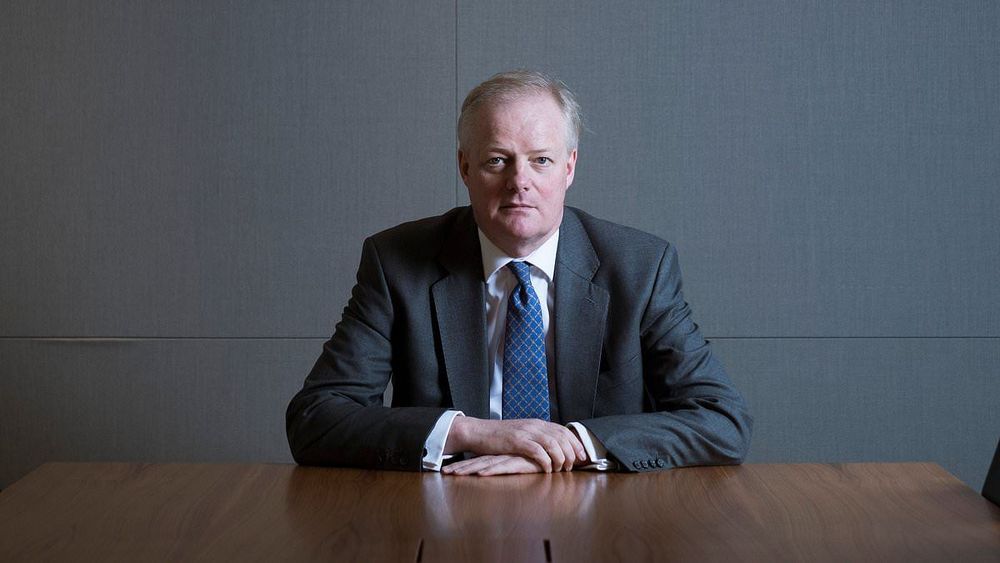
Britain needs to rediscover its 'buccaneering spirit' if it is to lift the stock market and the wider economy, according to Simon Peckham, one of the country's best-known industrialists. The former Melrose chief executive, who built a fortune on a 'buy, improve, sell' model of turning around industrial companies, said business leaders in the UK should be 'a bit braver' about raising money to grow.
Peckham called on the Government to 'stop discouraging' investors from putting cash into the London stock market. He warned that in an 'over-regulated and over-safe environment you end up with less investment going into UK companies'.
Call for a more entrepreneurial mindset
'The UK needs an outward-going entrepreneurial mindset,' said Peckham, 64.
He criticised high tax rates in Britain and said:
'It needs to encourage people to be entrepreneurial. If people take these risks, there has to be an appropriate trade-off in terms of what they pay in tax.'
In his view the tax system should help 'to make the cake bigger' rather than concentrate on 'dividing a shrinking cake'.
Rosebank's rapid rise
Peckham's new venture, Rosebank Industries, aims to repeat the success of Melrose. Peckham co-founded Melrose in 2003 and left as chief executive in 2024 to set up Rosebank with fellow co-founder Christopher Miller. At its flotation Rosebank said its aim was to recreate the model its team used at Melrose, which it says created more than £6bn of shareholder value.
Rosebank floated on AIM in July 2024, raising £50m by placing 20 million shares at 250p. It moved to the London Stock Exchange Main Market on 1 May 2026 and joined the FTSE 250 on 22 June 2026. It is now one of the index's largest companies and is eyeing promotion to the FTSE 100.
The company has raised £3bn from shareholders to buy three US manufacturers in under a year. They are Electrical Components International, bought in August 2025 for about $2bn, and CPM and MW Components, agreed in March 2026 with private equity firm American Securities for a combined enterprise value of about $3.05bn and completed in May. Together the three platforms have enterprise values of around $5bn.
Last week Rosebank announced its first dividend. In its first interim results, covering the six months to 30 June 2026, it reported revenue of $733m and adjusted operating profit of $110m. It also posted a statutory operating loss of $34m after $144m of adjusting items. Net debt stood at $1,069m, up from $494m at the end of 2025, equal to leverage of 2.4 times. The interim dividend is 2.1 cents per share, about 1.55p, and the company targets roughly three times dividend cover.
Focus on the US
Peckham said he hopes to complete another deal within the next 12 months, most likely in America.
'We are focusing on investing in the US. We are very happy with our exposure to the US market. Bits of the US economy are coming back nicely,' he said.
He said regulation in Europe and the UK, particularly employment law, means the 'timescale' for a successful turnaround 'is much shorter in the US'. Even so, he insisted funding can be found in London, as Rosebank has shown.
'We have raised £3bn from the UK stock market in the last 12 to 18 months to deploy into acquisitions,' Peckham said. 'If you have the right story, I don't accept the premise that the funding isn't there.'
Pension funds and the UK market
Peckham pointed out that pension fund investment in the UK stock market has fallen from over 50 per cent to around 4 per cent over the past quarter of a century. He said ministers must 'find a way to encourage – or stop discouraging – people to invest in our local domestic market'.
Other figures point the same way. A figure cited in a House of Commons debate in November 2025 put UK pension funds' allocation to domestic equities at 4.4%, against an international average of 10.1%. The think tank New Financial found only Canada, the Netherlands and Norway had a lower allocation among developed pension systems. Over a similar period, pension funds shifted towards bonds. Analysis cited by ICAEW showed fixed income rising from 15% to about 60% of average portfolios between 2001 and 2022, while UK equities fell from over 50% to about 4%.
The London Stock Exchange Group (LSEG) has also estimated that more than £1.9 trillion has left UK equities since 2000 as pension funds and wealth managers moved into global markets, particularly the US. It says UK individuals' and institutions' ownership of the UK market fell from 96.4% in 1981 to 42.3% in 2022.
Government efforts so far
The Government has backed a voluntary Mansion House Accord, signed on 13 May 2025 by 17 of the UK's largest workplace pension providers. They pledged to put at least 10% of defined contribution default funds into private markets by 2030, with at least 5% in UK private markets, covering about £252bn of assets. By the end of 2025, signatories held £11.1bn in UK private markets. The Accord covers unlisted assets such as private equity, infrastructure and private credit rather than London-listed shares.
Melrose's record
Peckham's Melrose is perhaps best known for its 2018 hostile takeover of the engineering group GKN, worth about £8bn. The deal drew criticism from politicians and trade unions over fears for UK jobs and investment, and Melrose later faced cross-party criticism over the 2021 closure of GKN's Erdington plant. Melrose said it had kept its promises. GKN's automotive and industrial parts were later spun off as Dowlais, leaving Melrose as a pure-play aerospace business.