Different costs depending on where drivers charge
The domestic electricity VAT rate fell from 5% to 0% on October 1, 2026. The temporary cost-of-living measure runs through March 31, 2027, giving EV owners who charge at home a further reduction in their electricity bills.
An AOL commentary calling for equal rates cites home charging costs as low as 7p per kWh, or 2p per mile, compared with closer to 50p per kWh, or almost 15p per mile, at public chargers. The VAT difference is part of that wider price gap.
Access to home charging is a constraint for many residents of terraced homes, apartment buildings and major cities. English Housing Survey estimates suggest about eight million households in England lack a driveway, garage or other off-street parking. Separately, the charging trade association ChargeUK estimates that around 10 million households cannot charge a vehicle at home.
Labour is reducing red tape for cross-pavement charging arrangements so residents can more easily install pavement gullies and use domestic electricity rates. That route still requires planning permission for residents in the country's 10,000 conservation areas.
Industry seeks an end to the VAT gap
ChargeUK organized a letter to the Prime Minister urging an end to the different VAT treatment. Signatories included EVA England, EVA Cymru, the AA, Auto Trader and the FairCharge campaign. The association estimates that a typical driver relying entirely on public charging now pays £200 more in VAT annually than a home-charging driver.
The motoring industry has sought a change for years. Earlier Hippo Leasing analysis estimated that reducing public charging VAT to the former 5% domestic rate could save high-mileage EV drivers around £389 a year. The AOL commentary argues that matching the current 0% home rate would produce still greater savings and calls on Burnham and Labour to equalize the rates.
Transport research organization New Automotive put the collective impact on drivers unable to charge at home at the equivalent of a £172 million annual penalty once the domestic cut took effect. Its analysis estimated that a reduction in public charging VAT to 5% would mean £120 million in lost revenue, compared with £40 million raised from domestic EV charging. It described the proposal as "a straightforward and fundable fix".
Revenue concerns behind an earlier rejection
The government rejected a previous recommendation to cut public charging VAT from 20% to 5%. Responding in April 2024 to the House of Lords Environment and Climate Change Committee's report, "EV strategy: rapid recharge needed", it said the change would "impose additional pressure on the public finances to which VAT makes a significant contribution".
ChargeUK estimates that public EV charging generated around £180 million in annual VAT receipts based on 2025 charging volumes. Its forecasts put the potential total at around £260 million for 2026 and £354 million for 2027.
The association contrasts those receipts with the roughly £1.1 billion the Treasury is forecast to collect from EV drivers in 2028/29 through the planned 3p-per-mile Electric Vehicle Excise Duty.
Tribunal ruling has not changed HMRC's position
A separate dispute concerns whether some public charging supplies already qualify for reduced VAT. The First-tier Tribunal ruled in favor of community charging operator Charge My Street, finding that electricity supplied at public EV charge points can qualify for the 5% domestic rate under the de minimis rule. That rule covers supplies of up to 1,000 kWh per customer per month.
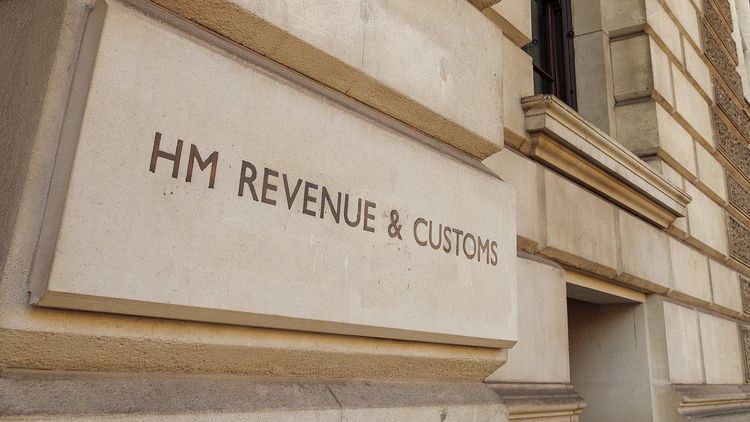
HMRC has applied for permission to appeal. In Revenue and Customs Brief 4/2026, it says its position remains that public EV charging is subject to the standard 20% VAT rate.