Technology losses weigh on the broader market
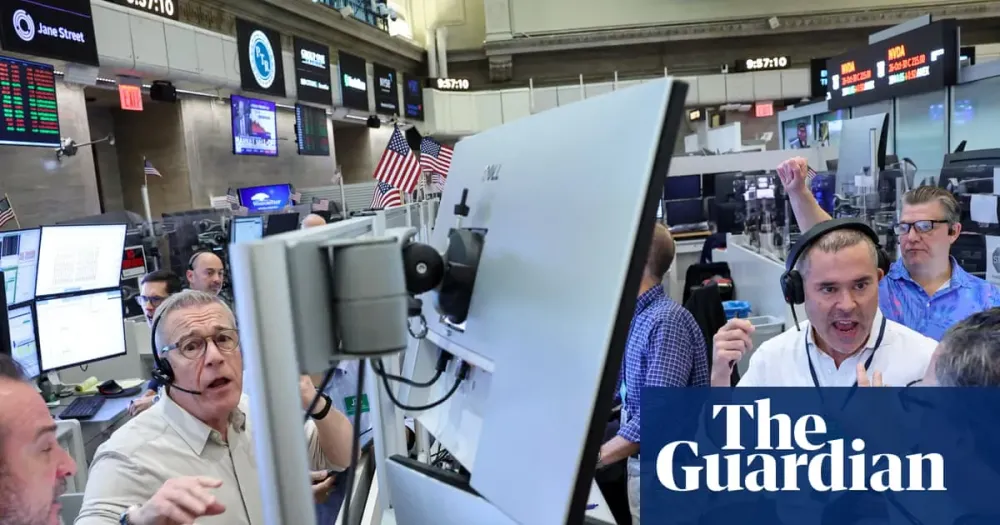
The Nasdaq composite slid more than 3% on Friday, while the S&P 500 lost more than 1%, wiping hundreds of billions of dollars from each. The Dow Jones Industrial Average recorded a smaller decline. Despite reaching a record earlier in October, the S&P 500 was on course to surrender its gain for the month.
The Nasdaq 100's October decline exceeded 5.8%, putting it on track for a monthly loss of more than $2 trillion in market value. That would be slightly more than SpaceX's entire valuation.
Nvidia shares fell 3.1%. The chipmaker, previously valued at about $5 trillion, contributed more to the S&P 500's decline than any other stock. The index's constituents were otherwise divided roughly equally between gains and losses, underscoring how heavily technology weighed on the day's trading.
Investors had pushed the S&P 500 to its record on expectations of stronger corporate profits, despite widespread unease over inflation and fuel prices. Technology earnings have sharpened a more specific concern: whether vast AI investments can deliver sufficient profits and productivity gains quickly enough. High interest rates have also pressured chipmakers and other beneficiaries of data center construction amid fears that financing costs could slow further expansion.
AI spending tests earnings and cash flow
Meta Platforms, Alphabet and Amazon have increased their spending forecasts as they expand AI infrastructure. Amazon shares lost 1.8% after its summer profit missed analysts' expectations and the company disclosed higher spending this year than it had anticipated.
Alphabet's sell-off came a day earlier: its shares plunged more than 12% in their worst session on record, erasing $500 billion in market value. The company said its enormous AI investments had consumed more cash during the summer than in the spring.
CNBC reported that Alphabet's third-quarter free cash flow was negative $9.07 billion, compared with analysts' $2.7 billion estimate. The company kept its full-year capital spending forecast at $195 billion to $205 billion. Search advertising revenue rose 12% to $63.35 billion, but that too fell short of expectations.
Microsoft offered a more encouraging picture. According to CNBC, its quarterly capital expenditures and finance leases totaled $45.2 billion, up 30% from a year earlier but below the $50.67 billion analysts had projected. Free cash flow declined 27% to $18.63 billion, remaining positive.
In its October 30 roundup, Reuters identified Microsoft and SpaceX as exceptions to the broader gloom, with results indicating that AI investment was beginning to produce returns.
Intel's outlook triggers a nearly 30% plunge
Intel approached its worst trading day since 1974 as its shares tumbled nearly 30%. Although its latest quarterly profit beat analysts' estimates, its forecast for the final quarter of 2026 fell well short.
The company projected fourth-quarter revenue of $15 billion to $16 billion, compared with expectations of roughly $17 billion, Yahoo Finance reported. Its earnings outlook was $0.25 per share, versus the $0.43 analysts had forecast.
Intel also expects PC shipments to shrink about 12% this year and a further 10% in 2027. An accident at its factory in Israel will reduce fourth-quarter revenue by about $300 million, according to Yahoo Finance.
The stock's decline follows an earlier surge. Intel had nearly quadrupled between the start of 2026 and its June 22 record. Friday's plunge still left it more than 80% higher for the year, though it had lost about half its value from that peak, Yahoo Finance reported.
Financing plans bring scrutiny to credit markets
The cost of funding AI expansion is drawing attention alongside the earnings results. Reuters reported that Meta plans a record $97.5 billion fundraising. The plan intensified concerns about dilution for existing shareholders and the prospect that other large technology companies might increasingly need capital markets to support their AI spending.
Microsoft is also reportedly preparing to raise about $25 billion in its first US investment-grade bond sale in more than nine years, according to Reuters.
As AI companies rely more on borrowing, investor concerns are extending into credit markets. Reuters reported that investors are beginning to account for the risk that higher financing costs and slower returns on AI investment could squeeze companies previously considered relatively insulated.
Forecasts point to substantial spending ahead. Morgan Stanley expects overall capital investment in AI infrastructure to exceed $1 trillion in 2027. J.P. Morgan projects global AI capital spending of $5.5 trillion by 2030, including $900 billion in 2026, according to the Reuters roundup.
More earnings reports are approaching: as of October 30, Apple was scheduled to report the following week, with Nvidia due in mid-November, Reuters reported.