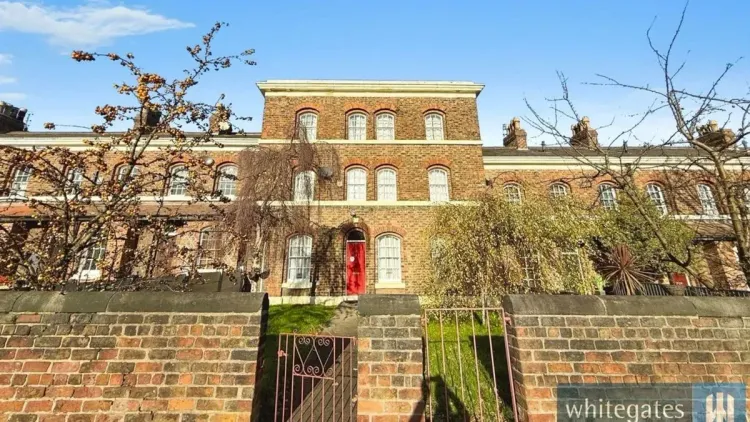

Why Birmingham appeals
"Birmingham, when I look across the UK today, has got more potential inbound investment than any other city," Gittins told TheBusinessDesk.com.
His argument starts with affordability. He says both average property prices and rents are less than half their London equivalents, making Birmingham a more affordable option for people pursuing city-center careers. Foxtons also cites the city's demographics, with more than half its residents under 35, and the improved connections to London being developed through HS2.
Figures reported by IFA Magazine provide a snapshot of the local market. ONS UK House Price Index data cited in August put Birmingham's average home price at £234,000 in June 2026, a 2.2% annual increase. The corresponding averages were £251,000 for the West Midlands and £272,000 for the UK. Birmingham's average monthly rent reached £1,093 in July, up 2.8% from a year earlier.
Private renting has also become more common. Census data showed that 22.6% of Birmingham households rented privately in 2021, compared with 17.9% in 2011. Only one other West Midlands local authority had a higher proportion.
The city has major regeneration projects planned and underway. According to IFA Magazine, a development corporation launched in May 2026 is intended to help advance £11 billion of regeneration along a corridor encompassing the Birmingham Knowledge Quarter, HS2 Curzon Street and Smithfield. The £1.9 billion Smithfield project is planned to include more than 3,000 homes. At Curzon Street station, construction moved above ground in June with the start of work on the deck for its seven platforms.
Gittins says build-to-rent was an important reason for entering Birmingham, citing Foxtons' relationships with operators such as Greystar. But he does not see those developments as a substitute for the rest of the rental market. "Not everybody wants to live in a brand new development in an area of regeneration," he says.
Three purchases establish a foothold
Birmingham represents Foxtons' first expansion beyond London and its commuter belt in the agency's 45-year history. It entered through the January purchase of FleetMilne, then added Maguire Jackson and Davidson Estates in September.
FleetMilne had spent 20 years building its business, about 95% of which comes from lettings. Foxtons paid £3.2 million initially, with another £0.8 million deferred. Maguire Jackson specializes in the city center and was established more than 23 years ago; Davidson Estates operates from Edgbaston.
The September purchases formed part of a four-deal package announced on September 23, 2026, alongside Warren Anthony in Watford and a lettings portfolio in the Reading area. Across those four transactions, Foxtons agreed to pay £4.8 million initially on a cash-free, debt-free basis, plus £1.2 million in deferred and contingent payments.
The four businesses had combined unaudited revenue of £3.2 million in their respective latest financial years. Foxtons expects the acquisitions to add to earnings from fiscal 2027 and generate returns on invested capital consistent with its 20% target.
The group also paid £6.5 million for Milton Keynes agency Cauldwell in January. Of these recent expansion locations, Birmingham alone lies outside the London commuter belt.
Lettings holds steady as sales weaken
The acquisition campaign comes as Foxtons anticipates that London sales transaction volumes in 2026 will be among the lowest on record. Its results for the six months ended June 30, released July 30, showed revenue of £83.7 million, down 3%. Adjusted operating profit declined 29% to £8.9 million, while statutory pretax profit dropped 57% to £4.4 million.
Lettings, now the largest source of group income, generated an unchanged £54.7 million. Sales revenue fell 13% to £23.5 million, while financial services revenue increased 20% to £5.4 million.
Rental reforms nevertheless had a financial cost. Foxtons said the introduction of the Renters' Rights Act on May 1, 2026, prompted more tenant-led tenancy terminations, requiring it to reverse £3 million of previously recognized revenue that had been contractually due.
Across its portfolio of 32,000 tenancies, the company recorded about 150 additional terminations a week. It said the financial effect peaked in May and eased during June and July.
Foxtons forecast full-year adjusted operating profit of £17 million to £19 million, with more of that profit expected in the second half. The outlook reflected savings put in place during the first half and an anticipated stabilization in tenancy terminations following the law's introduction.
Gittins argues for a broad rental market
The Renters' Rights Act abolished Section 21 "no-fault" evictions and introduced further compliance obligations for landlords and agents. Gittins argues that it has not addressed the underlying shortage of rental homes. He is similarly critical of the government's house-building plans, saying they will not resolve the mismatch between supply and demand.
He says he is not witnessing a mass departure of landlords. Some owners sought to sell when tenancies ended, but a weak sales market has led many to offer their properties for rent again. Falling capital values, especially for leasehold apartments, are also drawing investors back, he says, with some able to earn net yields of 6% to 9% in Birmingham and London.
"In my entire career I've never seen that," Gittins says of those yields.
He wants the government to treat private landlords as a necessary part of housing provision and strike a balance between their interests and those of tenants. "The whole of the UK needs the private rented sector desperately, and if it disappeared tomorrow, people would be homeless," he says. In his view, tenants would not benefit from a market controlled entirely by large institutional operators.
Buyer support is no threat to rental demand
Gittins welcomes Prime Minister Andy Burnham's Your First Home scheme, announced at Labour's party conference last month. It will provide first-time buyers purchasing new-build homes with a government equity loan of up to 20%, alongside a deposit requirement of 2.5%.
He does not expect the scheme to threaten Foxtons' lettings business because rental demand so greatly exceeds supply. He says the agency receives nearly half a million tenancy inquiries annually in London, while having about 2,000 properties available at any given time.
Calling the proposal "a welcome boost for first-time buyers," Gittins says it encourages developers to build homes for that market but does not solve the wider housing shortage. He wants support extended to all first-time buyers, rather than restricted to new construction, and wants stamp duty abolished for them.
For Foxtons, he sees continuity between serving tenants and serving purchasers: "Today's renter very quickly can become tomorrow's buyer, who can very quickly become tomorrow's landlord," he says.
Integration before further expansion
Finding a suitable business, rather than choosing a fixed entry date, determined the timing of the Birmingham expansion, Gittins says. Acquisition discussions can last five or six years, although some move from an initial conversation to heads of terms within three or four weeks.
Foxtons spent well over four years in discussions with FleetMilne founder Nicola Fleet-Milne. Her brother has worked for Foxtons for nearly 15 years and manages one of its largest London offices. Gittins says announcing that acquisition helped turn previously tentative discussions with other agencies into firmer prospects.
He argues that independent agencies can reach a stage where further growth becomes difficult, creating an opening for Foxtons. The acquired Birmingham businesses are due to adopt the Foxtons brand over the next year or so, but he says the transition will be gradual to avoid disrupting established teams and client relationships.
"One thing we don't do is just turn up, paint it green and expect everybody to act differently," he says.
The group's regional operations already include a property management hub in Worcester, where Gittins says between 50 and 100 people work. He expects further industry consolidation as regulatory demands put smaller agencies under pressure.
Gittins says a strategy presented to the board last week departs from the five-year plan outlined 18 months earlier, particularly in sales. His longer-term ambition, expressed in 2024, remains a network of 500 to 600 Foxtons offices across the UK.
He says expansion will be more controlled than at private equity-backed competitors because the listed group does not have their "infinite supply of cash." He also views the scrutiny of public-market investors as a discipline on strategic decisions. "We will continue to buy great quality businesses outside of London," he says.
A return to his first employer
Gittins joined Foxtons in the early 2000s after growing up between Chester and Wrexham, attending school in Shropshire and studying engineering. He became its top salesperson and, by age 25, was managing its largest office in South Kensington.
His subsequent career included developing Caribbean marinas and hotels, selling at One Hyde Park and spending a decade at rival Chestertons. He returned to Foxtons as CEO in 2022 after a call from Peter Rollings, now a non-executive director, who had also given him his first job at the agency.
Foxtons now has nearly 1,500 employees. Gittins continues to greet every new starter at head office on their first Monday, telling them that their upbringing, schooling and family background do not determine their prospects: "It's a level playing field."