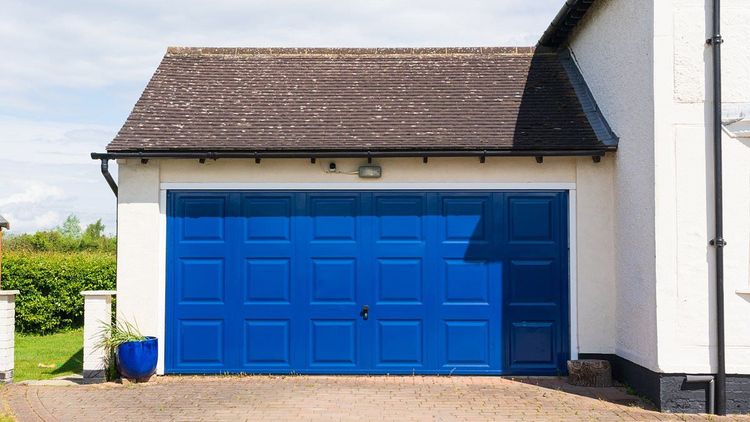

Neighbour places hairdressing business sign on homeowner's driveway without permission
A homeowner has been left wondering what action to take after discovering their neighbour had placed a sign advertising a mobile hairdressing business on their driveway without asking permission.
The incident highlights a growing problem across Britain, where around 6.2 million people have been involved in boundary disputes with neighbours in the last year. Rows over driveway access make up 31 per cent of these disputes, while fencing disagreements account for nearly half at 47 per cent.
Under UK law, all business signage must have the site owner's consent, even if the sign is exempt from formal planning permission. This requirement stands as one of the standard conditions that must be met for any business sign, regardless of its size or purpose.
The Town and Country Planning (Control of Advertisements) (England) Regulations 2007 governs business signage in the UK. Advertisement consent may be required to display signs bigger than 0.3 square metres, or any size if the sign is illuminated, on the front of or outside a property.
Placing a sign on someone else's driveway without permission could constitute trespass, which in the UK is generally a civil matter rather than a criminal offence. Trespass involves entering or making use of private land without the legal right or permission to do so.
Legal options for homeowners
Property owners facing similar situations should be aware that resolving such disputes can prove costly. The average initial cost of starting a legal boundary dispute for British homeowners stands at around £750, though one in ten admit to spending over £2,000. Costs rise significantly higher when litigation becomes involved.
For shared driveways, details about use and boundaries are typically outlined in property title deeds. Common law dictates that shared driveways should be used reasonably by all parties, with property deeds often covering maintenance responsibilities equally between neighbours.
The hairdressing industry itself is currently unregulated in the UK, with no general licensing requirements and no statutory requirement for hairdressers to hold specified qualifications. However, local authorities may place registration requirements on hairdressing establishments.
According to the Office for National Statistics, there were 50,400 hairdressing and beauty salons operating in the UK in 2025, though this figure does not include sole traders. The sector's size demonstrates how common small-scale hairdressing operations have become.
Requirements for home-based businesses
Before running a hairdressing business from home in the UK, operators need permission from their mortgage provider or landlord, their local planning office, and their local council. These requirements apply regardless of whether the business operates from a fixed location or as a mobile service.
Homeowners discovering unauthorised signs on their property should start by speaking directly with the neighbour to request removal of the sign. If this approach fails, contacting the local council's planning enforcement team may be necessary, as they can investigate whether proper permissions have been obtained.
Property owners can also seek legal advice about their rights and options for removal, though the financial implications of pursuing formal legal action should be carefully weighed against the inconvenience caused by the sign.