Wildlife officials search for two men captured on video poaching black bear from private property
Wildlife authorities in Washington have launched an active investigation to locate two men suspected of illegally killing and removing a black bear from private property in Oso, a small community of 172 residents in Snohomish County located approximately 50 miles from Seattle.
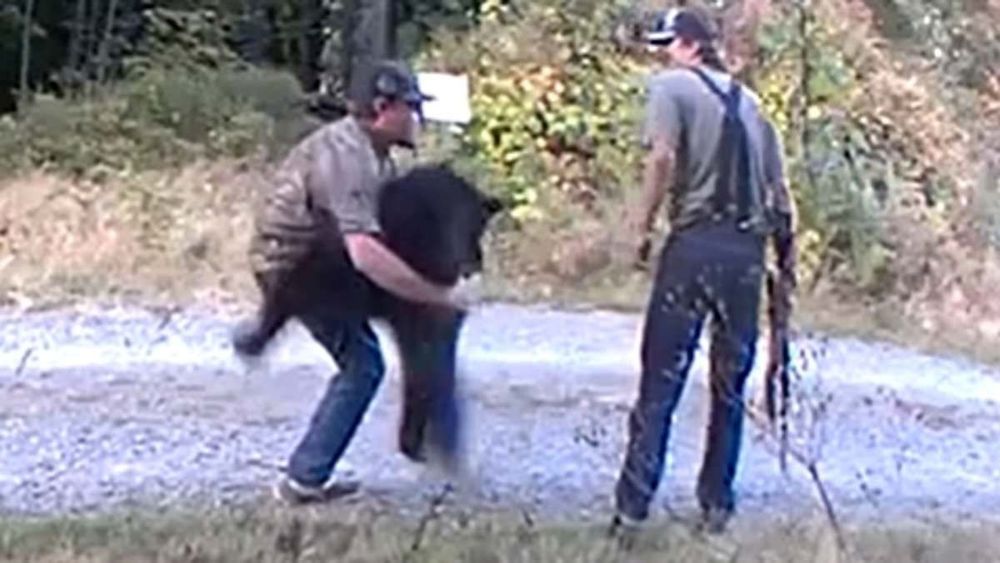
The Washington Department of Fish and Wildlife received a tip from a local resident on September 20 about the suspected poaching incident. Video footage captured the two men arriving at the scene around 7:00 p.m., where a dead black bear lay on the ground.
The footage shows one suspect, dressed in hunting attire and wearing a cap, dragging the animal and lifting it with his shin before carrying it away. His companion stood nearby holding a rifle. The two men can be heard laughing as they examined their catch before quickly departing the area.
The incident occurred on clearly marked private property. A square "no trespassing or hunting" sign is visible in the background of the video. Under Washington law, hunters are prohibited from pursuing or retrieving wildlife from private property without permission, and landowners are not required to post their land for trespassing laws to apply.
Legal hunting season versus illegal poaching
While Washington's fall black bear season is currently open, running from August 1 through November 15, the suspects allegedly took the bear from private property where they had no permission to hunt and which does not allow public hunting access. Washington is home to an estimated 20,000 to 30,000 black bears, one of the largest populations in the lower 48 states. In 2023, hunters legally harvested 1,799 black bears during the general season, with approximately 20,653 hunters participating.
Legal hunters are required to obtain both a license and a hunting tag before pursuing black bears. Hunters may pursue up to two black bears and must extract and submit a tooth from each bear killed.
Potential penalties and enforcement challenges
The charges in this case could include hunting while trespassing, classified as a misdemeanor offense. Individuals convicted face fines up to $500 and up to one year in jail. Additionally, those convicted must pay a criminal wildlife penalty assessment of $2,000 for illegally taking big game such as black bears.
Convicted poachers also face mandatory revocation of their hunting licenses and a two-year suspension of hunting privileges. Wildlife officials have the authority to confiscate equipment, including firearms, used by trespassers in pursuit of game.
Becky Elder, a spokesperson for WDFW police, emphasized the seriousness of poaching violations.
Poaching is serious and widespread, often going undetected.
Elder said. She noted that officers rely heavily on tips from the public, who are often the eyes and ears that lead to potential arrests.
This reliance on public reporting reflects enforcement realities in Washington, where there is approximately one Fish and Wildlife Police Officer for every 45,000 citizens. Wildlife officials estimate they detect only about 10 percent of poaching incidents in the Northwest, making video evidence and public tips particularly valuable.
Elder told reporters the bear in the video is believed to be approximately two years old and not considered a cub.
The Washington Department of Fish and Wildlife is urging anyone with information about the case, including details about the weapon shown in the video or the whereabouts of the bear, to contact WDFW Police immediately.