A shared pitch, but separate systems
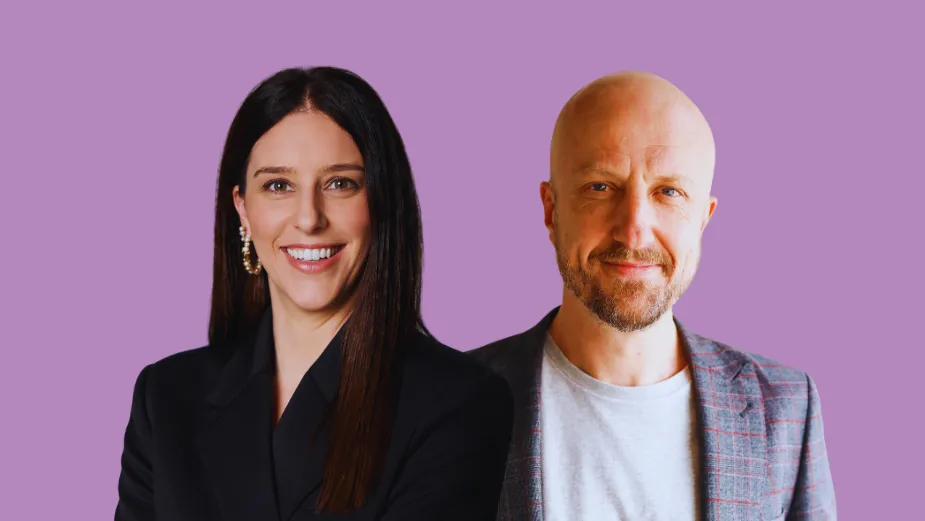
For Wilkinson, Hatched's national head of investment, the distinction between television and platform upfronts has largely vanished. Networks and companies including Amazon, YouTube, Snap and Pinterest presented similar commercial propositions: connected data, AI-assisted trading, easier transactions and demonstrable outcomes. He saw more significance in those pitches than in programming slates he described as largely familiar, with sport attracting the strongest emphasis.
His concern is that owners are developing their systems separately. "Commercially, I understand why, but as a media buyer, I want simplicity -- and ironically trading may actually become more complicated rather than less."
Romeo, Starcom Australia's chief commercial and operating officer, viewed the presentations as evidence that owners want a broader role in advertisers' growth, combining audience knowledge with content, technology and commerce rather than simply selling inventory. She said the test is whether those combinations produce incremental growth, not how much technology an owner can assemble.
The Nine-Seven venture faces a delivery test
Wilkinson singled out Nine and Seven's joint buying venture as the season's most important structural development. The proposed solution aims to direct more advertising spending to the screen and give advertisers greater clarity about their return on investment. "Two competitors working together to put more dollars into working media is the right instinct. What matters now is who else joins and whether advertisers see the savings," he said.
Nine announced the venture at its September 17, 2026, upfront, with a launch scheduled for early 2027. According to Nine for Brands, it responds directly to estimates that opaque technology fees and excess costs in the programmatic supply chain consume more than A$300 million annually from Australia's roughly A$1 billion broadcast video-on-demand market.
Preparatory work was already described in a March 30, 2026, Nine for Brands and Mediaweek article. Nine reported that consolidating its supply-side platforms and removing non-transparent partners had doubled programmatic revenue in that pool over the preceding eight months. Nine and Seven had also sent a request for information to 13 demand-side platforms, seeking capabilities in identity resolution, data privacy and handling live-broadcast sports. Nine's Nick Young said the solution would not combine competitors' inventory into a single pool.
Wilkinson cautioned that many upfront announcements remain plans rather than available products. He cited Neo, Phoenix Exchange and DAZN's AI sales agent as offerings due in 2027 or later: "so the proof will sit in the delivery."
Measuring sales is not the same as proving them
Mellon, Innocean Australia's head of investment, said the emphasis has shifted from audience rankings and impressions to what people do after seeing advertising. She identified NineNeo, SBS's Data Lab and DAZN Media+'s Sports Audience Graph as examples of offerings that collectively use spending, store-visit and web data to report results.
Nine for Brands' September 17 release says NineNeo uses AI to produce an optimized media plan ready for booking in minutes instead of days. The platform incorporates 22 million verified individual user IDs. Its attribution system, developed with CommBank iQ, draws on transaction data from more than 7 million cardholders, alongside Azira for footfall, AdGile for website and app visits, and Brand Metrics. NineNeo is scheduled to launch in the second quarter of 2027.
DAZN Media+, formerly Foxtel Media, introduced its Sports Audience Graph at its September 3, 2026, upfront. According to the Foxtel Group newsroom, the database draws on observed behavior from six million first-party sports fans gathered since Kayo Sports launched in 2018. It links club members and Kayo viewers with verified transaction data and will become available to agency and brand partners in 2027. DAZN Media+ has separately partnered with AudienceProject for independent cross-media audience measurement across its video portfolio starting that year.
Mellon wants networks to go beyond reporting outcomes and trade against them, taking on some of the risk themselves. She noted that networks currently choose the definition of exposure, the control group, the attribution period and the required match rate. "The networks that open their outcomes to independent verification will earn the trust, and the budget, first," she said.
When a combined package earns its place
The season also showcased newly expanded media groups. Seven held its first upfront after merging with Southern Cross Austereo to form Seven Media Group, while Nine presented for the first time since completing its QMS acquisition. Mellon said partnerships are extending the consolidation story, as broadcasters offer routes from viewing to purchasing through propositions such as Nine's "Sofa to Street" and SBS's "Couch to community to counter."
She cited Nine's Olympic broadcast rights and QMS's role as the Olympics' outdoor partner as a combination with a shared association that can extend across screens and outdoor advertising. Nine's September 17 media release says QMS Australia will become Nine Outdoor in January 2027. The company describes it as a national digital out-of-home network spanning more than 2,000 sites in major cities, with all assets controlled and operated by Nine.
Other packages may share little beyond timing, Mellon warned, without an extension of intellectual property or continuity in the creative work. A single brief and idea can be useful, but buyers must distinguish a strategically coherent, cost-efficient offer from "padding for padding's sake." Her test was whether they would purchase each offering independently, at the proposed price and for the idea.
Romeo likewise argued that media owners do not need to control every component of an advertising ecosystem. They need to establish where their contribution is distinctive. As automation takes on more planning, buying, optimization and measurement, she said, the agency's judgment about where and how to use those capabilities becomes more important.
Global competition raises the stakes
Wilkinson placed the season against growing pressure on Australian owners: fragmented audiences, advertisers' demands for proof of effectiveness and buyers' frustration with complexity. In his assessment, television networks that once enjoyed some protection have faced much more direct competition over roughly the past five years from global companies seeking Australian advertising spending.
Amazon, YouTube, Snap, Pinterest, Netflix and Samsung now run their own upfront presentations in a calendar once dominated by television networks. Samsung's first Australian upfront/NewFront took place in Sydney on October 15-16, 2026.
At that event, Samsung Ads said Australian advertisers would be able to buy Samsung TV home-screen inventory programmatically through Magnite's SpringServe by the end of 2026, according to B&T. Its Video Masthead and 3D Video formats were in beta for the fourth quarter. Samsung also said TV Plus offered more than 200 channels and would introduce Mamamia's first round-the-clock channel in early 2027. The company cited its own Australian viewing research showing streaming accounted for 73% of viewing time.
Romeo said successful brands would not necessarily be those using the most platforms or adopting every product. Their advantage would come from choosing where technology, content, data, culture and trusted human influence can work together to generate commercial results, with better data supporting better decisions.
For local owners, Wilkinson framed the competitive test more specifically: "The test for 2027 is whether the local owners can match the global players on technology and simplicity while leaning on what the globals can't copy: Australian news, sport, and production."