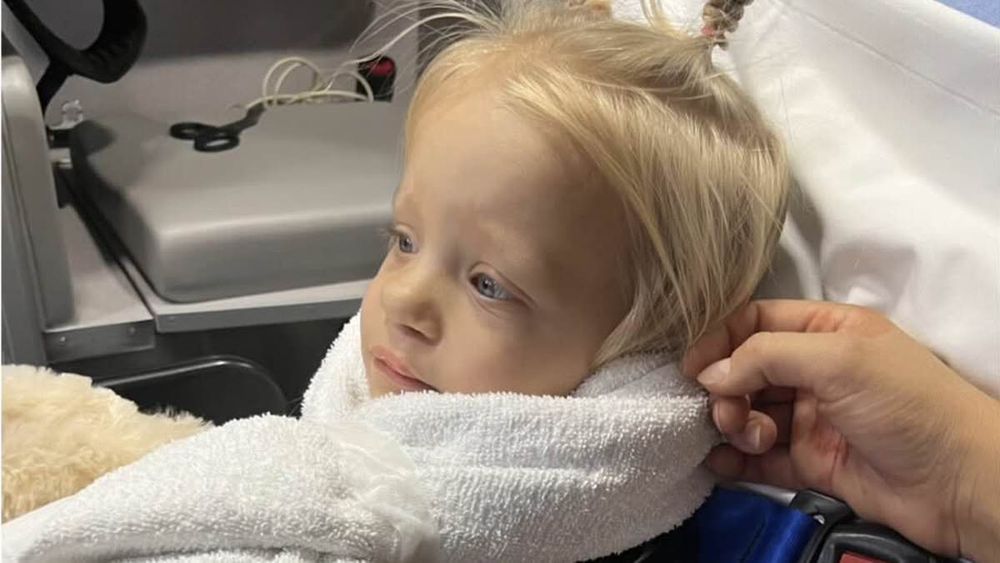
Family says cop neighbor's K-9 attacked their 2-year-old daughter
A Colorado family is confronting hundreds of thousands of dollars in medical bills after their police officer neighbor's K-9 escaped and viciously attacked their toddler daughter during what was supposed to be a joyful birthday celebration.
Nick and Bethany Dean were hosting a backyard party for their twins in Castle Rock on August 11, 2024, when a large black dog leaped over their fence and charged directly at two-year-old Lily. The animal was Ragnar, a Jefferson County Sheriff's Department K-9 who lived next door with his handler, Deputy Zachary Oliver.
Ragnar had joined the sheriff's office in July 2023 as Oliver's new partner after the deputy's previous K-9, Graffit, was shot and killed in February of that year.
Desperate Struggle to Save Child
Nick Dean spotted the dog from an upper porch and sprinted down stairs, but arrived moments after the attack had begun. The K-9 had already latched onto Lily's leg and was violently shaking her.
"He dragged her across the grass in the backyard," Nick told CBS News. "When I was wrestling the dog, I could hear the cracking of her femur bone."
Family friend Lindsey Speer, who witnessed the incident, said the dog "whipped her like a rag doll." Three male guests piled onto the animal in a frantic attempt to stop the mauling. Around 2,500 police departments across the United States maintain K-9 units, and up to 75 percent train their dogs using the bite-and-hold technique that likely contributed to the sustained nature of this attack.
Lily sustained deep lacerations across her stomach and a punctured femur. Her father suffered injuries to his chest, neck, back and hip while attempting to protect her.
Lasting Physical and Psychological Toll
Nearly two years later, both father and daughter continue to suffer from the attack's effects. Nick Dean struggles with post-traumatic stress disorder and chronic pain that he describes as exhausting.
"It's just the combination of not feeling strong enough to protect my family, and the pain," he explained. "The chronic pain is like having an operating system going on in the background that just never shuts off, and it's tiring."
Medical statistics indicate that 15 to 20 percent of dog bite wounds become infected, with occasional cases leading to serious complications. The Dean family's mounting medical costs reflect both immediate treatment and ongoing care for complications from the severe injuries.
Legal Battle Yields No Resolution
Following the incident, the Jefferson County Sheriff's Office placed Oliver on administrative leave and Ragnar under a mandatory 10-day quarantine. Both the sheriff's office and Castle Rock Police Department conducted investigations into the attack.
Prosecutors ultimately charged Oliver, but a jury acquitted him after his legal team successfully argued that his county employment contract shielded him from criminal liability. Oliver has since left the sheriff's office, and Ragnar was retired from duty. The dog and handler relocated from the neighborhood nine months after the incident.
The Deans hoped Jefferson County would assist with their medical expenses, which have reached $300,000. However, a county attorney informed the family's lawyer that taxpayer funds cannot be used to cover claims when the county bears no legal liability. Many states specifically exempt police dogs from strict liability statutes that apply to civilian-owned animals, complicating victims' ability to seek compensation.
Part of a Broader Pattern
The Dean family's ordeal reflects a larger national issue. Police dogs in the United States bite thousands of people annually, with more than 3,600 K-9 attacks requiring emergency medical care each year, according to research by The Marshall Project. Analysis of 30 police departments found that dog bites cause more hospital visits than any other form of police force.
Despite the scale of the problem, no federal system tracks police K-9 usage, bite incidents or victim information, leaving families like the Deans without comprehensive data or established legal precedents to guide their cases.
A GoFundMe campaign established by the family to cover their overwhelming medical debt had raised more than $67,000 as of Monday, still far short of their total expenses.
"When the criminal proceedings turned into nothing, we thought, well, of course, the Jefferson County Sheriff's Department is going to do what's right by our family," Nick said. That expectation has not been realized, leaving the Deans to navigate recovery and mounting bills on their own.