Endangered Irish cattle breed deployed to restore Scotland's temperate rainforest
A herd of rare Irish cattle has been brought to the Scottish Highlands as part of an innovative project to restore one of Europe's most threatened ecosystems—the temperate rainforest that once covered much of the British Isles.
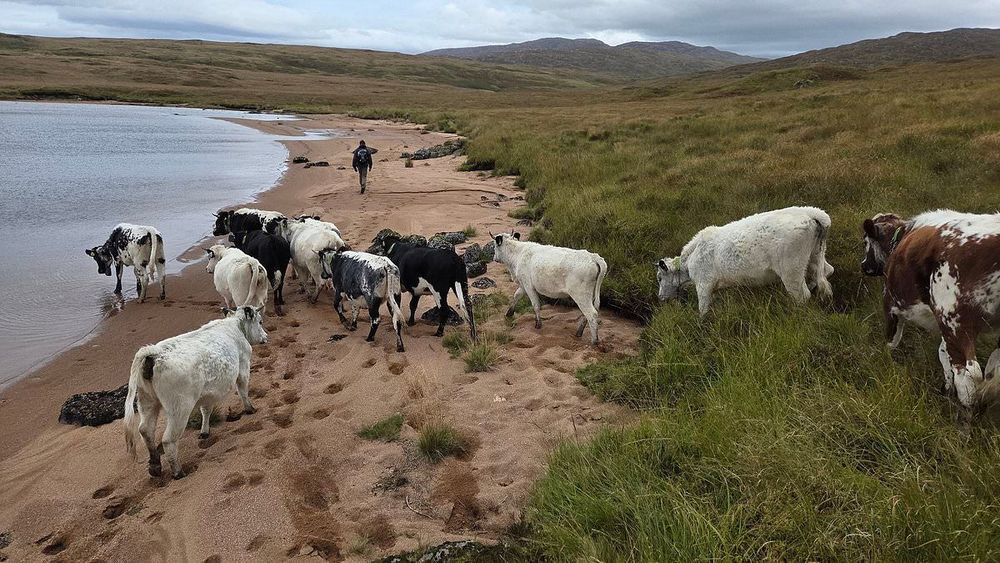
Twelve Droimeann cattle arrived at Ardtornish estate on Scotland's west coast in October 2026, marking what is believed to be the first time in centuries that this ancient breed has been introduced to Scotland. The endangered animals will play a crucial role in regenerating the area's depleted Celtic rainforest through controlled grazing.
The UK and Ireland possess temperate rainforests, also known as Celtic or Atlantic rainforests, yet their forest cover stands at just 13% and 11% respectively—among the lowest rates in Europe. Only one-tenth of this coverage consists of natural forest rather than planted woodland.
These rainforests have suffered long-term decline through historical clearances, chronic overgrazing by sheep and deer, and conversion to other land uses. Livestock grazing remains the most common factor currently preventing their recovery.
Controlled grazing as restoration tool
The Droimeann cattle will address this problem through a counterintuitive approach: using livestock to reverse the damage caused by livestock. Their grazing, browsing and movement will break up dense bracken, manage coarse grasses, and create conditions for a wider range of native plants and habitats to recover in areas previously shaped by heavy sheep and deer grazing.
The project represents a stark contrast to cattle's typical environmental impact. Globally, cattle ranching drives 80% of current deforestation in the Amazon rainforest and was responsible for 36% of all agriculture-linked deforestation worldwide between 2001 and 2015.
The Droimeann breed's specific characteristics make it uniquely suited to this restoration work. Known for hardiness, docility, and ability to forage on difficult terrain, these cattle consume a variety of vegetation from seaweed to thistles and browse woodland species like ivy almost as much as they eat grass.
Part of broader European rewilding movement
The Scottish project fits within an increasingly widespread approach to European ecological restoration. Rewilding initiatives across the continent now regularly employ domestic cattle and horses as functional substitutes for their extinct wild ancestors, creating spatial heterogeneity and contributing to species richness and biodiversity.
The Droimeann itself carries historical significance beyond its conservation value. Formally recognized as a distinct native Irish breed only in 2016, it represents one of several endangered Irish cattle breeds including the Irish Moiled, Kerry, and Dexter. Conservation programs work to maintain the genetic diversity and traditional traits of these animals, which are particularly suited to grass-based systems.
This genetic heritage may prove increasingly valuable. Locally-adapted native livestock breeds with distinct evolutionary histories have accumulated novel genomic variation for health, fertility and production traits, potentially making them key to future breeding programs as agriculture adapts to new environmental conditions under climate change.
The Ardtornish project will also produce food from land previously dominated by sheep and deer, demonstrating that conservation and agricultural productivity need not be mutually exclusive goals in landscape restoration efforts.