No exemption from the rules
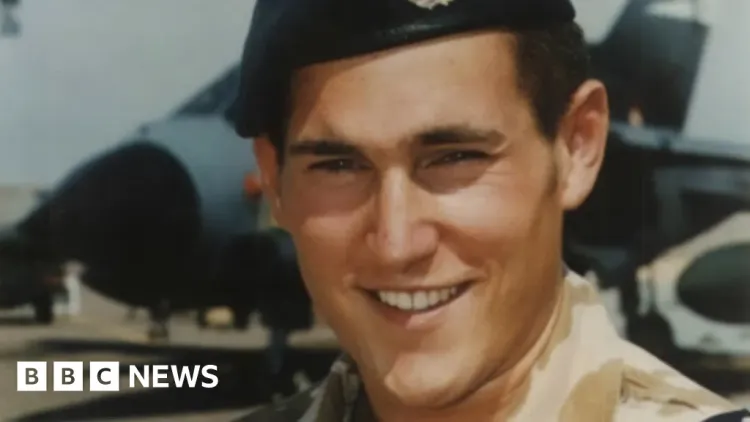
Lamb, 73, describes himself as "comfortable with violence" after 35 years serving with the SAS and the wider Army in Europe, Africa and the Middle East. But he rejects the idea that Special Forces should operate outside the legal constraints governing warfare.
"I have never had any doubt that the law of armed conflict – Queen's regulations, and the like – has been anything other than what I call an absolute ceiling," he says. Special Forces must accept those constraints, he adds, and retain the humility and humanity that he believes distinguish Britain from its adversaries.
He declines to address individual cases involving British troops. His argument concerns the principles behind a debate sharpened by the government's Northern Ireland Troubles Bill, the Afghanistan war crimes inquiry and disclosures about a criminal investigation following an SAS operation in Syria.
For Lamb, soldiers cannot be treated as a separate class from the society they serve. He objects to the familiar line attributed to George Orwell about people sleeping safely because rough men stand ready to commit violence. He attributes that wording to American columnist Richard Grenier and says it obscures the connection between soldiers and civilians. In his view, British troops belong to the same civilization as everyone else, with a moral outlook distinct from that of Vladimir Putin or Iran's Islamic Revolutionary Guard Corps.
Understanding combat without excusing wrongdoing
Lamb says the demands placed on Special Forces do not make them psychologically invulnerable. They have families and personal difficulties, and combat leaves them "hanging on between fear, adrenaline and anxiety." He describes the strain of approaching a third target in one night while expecting that each operation could end in death.
Asked when empathy becomes an excuse, he replies: "It should never be an excuse. What it should be is at least a recognition – looking at a situation and understanding the context." A soldier disoriented by an explosion, he argues, is making decisions under conditions far removed from those of a courtroom.
That is why he emphasizes mens rea, the legal concept of a guilty mind. He distinguishes a disastrous decision made under fear and adrenaline from an operation begun with malevolent intent. Asked whether he had come close to making such a wrongful decision himself, he says no.
Instead, he offers a hypothetical example of a legally authorized choice he finds deeply troubling: striking a building occupied by three identified targets and potentially 22 innocent people. In his example, the building's estimated occupancy of 25 falls within the collateral-damage authority granted to him by the government, allowing him to drop three JDAM bombs. He calls that detached decision "far colder" than a wrong decision made in a dark room. He presents it as an illustration of war's moral difficulty, not as an account of a particular strike.
The investigations behind the debate
The Independent Inquiry relating to Afghanistan is examining alleged SAS war crimes between 2010 and 2013. Then-Defense Secretary Ben Wallace established it in 2022 under Lord Justice Sir Charles Haddon-Cave. BBC News reported that, by March 2026, it had cost British taxpayers £58 million without publishing findings, despite an initial reporting target of 12 to 18 months.
In September 2026, the Ministry of Defence disclosed that 97 million potentially relevant documents had been found more than three years into the inquiry. The ministry described the discovery as a "regrettable failure." Haddon-Cave set April 30, 2027, as the deadline for hearing all evidence.
Separately, reports in the week before Lamb's interview disclosed that SAS soldiers had been arrested in 2023 on suspicion of murder after an operation against ISIS in Syria. Military prosecutors decided in 2025 not to pursue charges against anyone over the incident.
According to Yahoo News UK, the July 2022 mission targeted a senior ISIS militant. Five SAS soldiers killed two teenagers who were subsequently found to have links to Islamic State. The Royal Military Police investigation, Operation Tanglement, ran from July 2022 to May 2025. The soldiers were returned to combat 48 hours after questioning and had their homes raided; all five have since left the military.
The regiment's commanding officer and two junior officers were also investigated on suspicion of perverting the course of justice, following a military police decision in September 2023. Reporting noted no known precedent for police investigating a serving officer as senior as the commander.
A career combining force and reconciliation
Commissioned into the Army in 1973, Lamb passed SAS selection in 1976. He later became director of Special Forces and Commander Field Army, retiring in 2009 as a lieutenant general.
His work also included efforts to bring insurgents into negotiations. From September 2006, as Senior British Military Representative and Deputy Commanding General of Multi-National Force–Iraq, he led a strategic engagement initiative seeking out Sunni insurgents considered open to reconciliation. Historians credit him with substantially influencing coalition counterinsurgency and helping establish conditions for the 2007 surge and the Sunni Awakening.
Lamb is credited with developing the "inverse ink-spot" approach: targeting an insurgency's middle ranks rather than following the traditional oil-spot method. He also helped popularize "reconcilable" and "irreconcilable" as more discriminating alternatives to the labels "enemy" and "insurgent."
In August 2009, at US Gen. David Petraeus's direct request, Lamb was sent to lead a program in Afghanistan intended to apply his Iraq reconciliation approach by persuading insurgents to surrender their weapons. He had arrived by late October that year.
Although he has largely avoided becoming a public commentator in retirement in Surrey, he has intervened on national security. On October 15, 2026, he appeared at the Royal United Services Institute alongside former MI5 chief Lord Evans and proposed a "Ministry of Resilience." He likened it to "Bletchley Park on steroids," coordinating responses to hybrid warfare, cyberattacks on critical infrastructure and threats to logistics, electricity and water. He also identifies an adversary-driven social media narrative of British decline as the country's biggest current national security threat.
The responsibility of those who authorize force
Lamb's insistence on legal limits comes with a demand that society acknowledge its own role. If soldiers receive no exemption from the rules, he argues, they should not carry the entire moral burden of violence undertaken on others' instructions. "We're all part of the same civilisation," he says.
He wishes he had taken visiting parliamentary delegations to the aftermath of the latest strike rather than simply briefing them. Seeing the human consequences of bombing, whether caused by British forces or their opponents, would have made the responsibility behind terms such as "collateral damage profiles" harder to keep at a distance.
"You know, they need to share that discomfort in violence," he says. "They need to realise that they were part of the same equation."