Court finds treason charge unproven
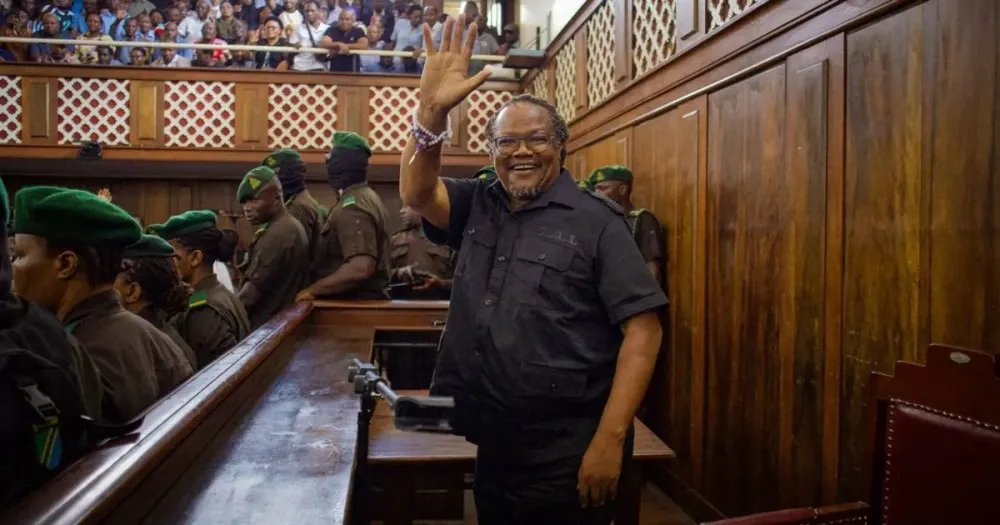
Prosecutors failed to establish that Lissu intended to intimidate or overthrow the government, a necessary element of the treason charge, The Citizen reported. The court instead found the Chadema chairman guilty of the lesser alternative offense of incitement under Section 390 of the Penal Code, exercising its authority under Section 319 of the Criminal Procedure Act.
Justice Dunstan Ndunguru chaired the three-judge panel at the High Court's Dar es Salaam Sub-Registry, joined by Justices James Karayemaha and Ferdinand Kiwonde.
Chadema's legal representatives announced immediately after the ruling that they would challenge the conviction and request bail while the appeal is pending. Party spokesperson Brenda Rupia also told Reuters that Lissu intended to appeal the four-year sentence.
Amnesty challenges fairness of proceedings
"Tundu Lissu should never have been arrested, let alone prosecuted and convicted," said Tigere Chaguta, Amnesty International's East and Southern Africa director. Chaguta described the sentence as the result of a process that had been unjust from the outset. Amnesty said Lissu had spent 577 days arbitrarily detained solely for peacefully exercising his human rights.
Amnesty's objections included restrictions on Lissu's ability to consult his lawyers in confidence, which it said effectively forced him to conduct his own defense. The organization also said broadcasts of the hearings were cut off and at least two international trial observers were subjected to arbitrary arrest and deportation, with allegations that they were tortured.
Lissu was confined in a death row cell under conditions Amnesty described as inhumane, with restricted access to religious services. Taken together, the organization said, the violations meant the conviction and sentence could not be regarded as the result of a fair trial.
Amnesty urged authorities to overturn both the conviction and sentence and free Lissu immediately and unconditionally. It also demanded an end to the use of treason and other laws to silence government critics, and called on authorities to halt their crackdown and protect freedom of expression and peaceful assembly.
From rally arrest to trial
Lissu's arrest followed a political rally he held in Mbinga, southwestern Tanzania, on April 9, 2025. According to Amnesty, police reportedly used excessive force to disperse his supporters, firing tear gas and shooting into the air. Authorities moved him that night to Dar es Salaam, more than 1,000 kilometers away.
Police brought the non-bailable treason charge the following day, April 10. It concerned social media posts from April 3 in which Lissu urged Tanzanians to boycott the October 2025 elections because of concerns about possible electoral malpractice.
The Citizen reported that Lissu was initially held on remand at Keko Prison, then moved to Ukonga Prison, where he stayed throughout the proceedings.
The case was mainland Tanzania's third high-profile treason trial, according to Al Jazeera. The two earlier trials, in the 1970s and 1980s, concerned alleged plots to overthrow and assassinate founding President Julius Nyerere.
Lissu, 58, previously survived a 2017 assassination attempt in which he was shot 16 times. He believes the attack was politically motivated. His treatment required nearly 20 surgeries, according to reporting by DW and Al Jazeera.
Election and political context
The election Lissu had urged voters to boycott took place on October 29, 2025. President Samia Suluhu Hassan was declared the winner with 97.7% of the vote, and her ruling CCM party took 270 of the National Assembly's 272 directly elected seats, according to International IDEA's Global State of Democracy Tracker. The main opposition parties, Chadema and ACT-Wazalendo, had been excluded earlier that year. Turnout was nearly 87%.
In April 2026, a commission appointed by Hassan reported that at least 518 people had died in post-election violence and attributed the violence to protesters. The government denied allegations of excessive force by security forces. Opposition figures and rights groups estimated that the death toll was in the thousands.
Amnesty said it has documented repeated use of counterterrorism and other security laws against opposition supporters and government critics in Tanzania.
British and European Union lawmakers also described Lissu's case as politically motivated and sought his immediate release. They warned that using capital punishment against a political opponent risked making the justice system an instrument of political repression.