Heating upgrades and the council's role
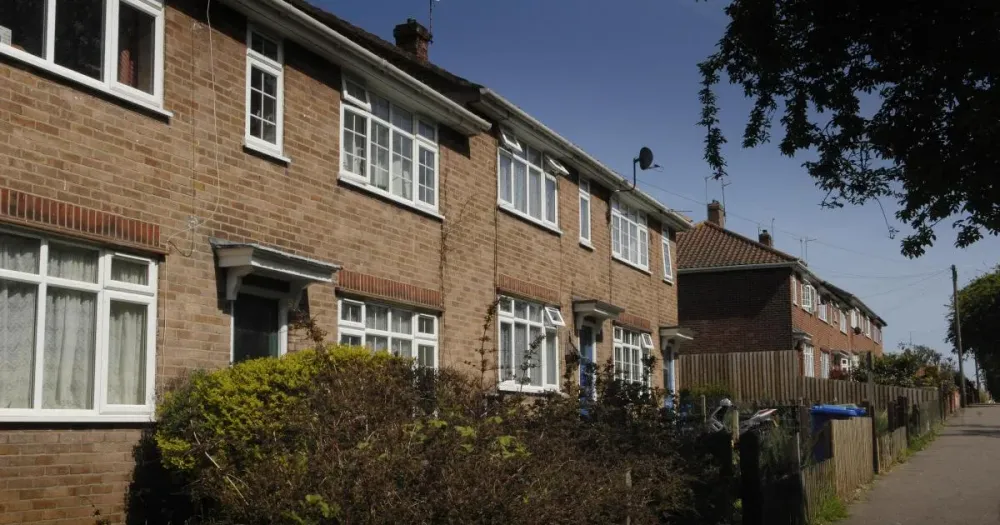
The Green-led council identifies heating as one of Norwich's largest challenges in cutting emissions. Its plan calls for homes to adopt low-carbon systems such as heat pumps over the next two decades, while acknowledging that the council has limited authority over individual households' decisions.
Of Norwich's 68,590 dwellings, 6,421, or 9%, already use electric heating. Energy efficiency is another part of the task: 35,783 homes, representing 52% of the total, have an Energy Performance Certificate rating below band C. The plan requires all of those homes to reach band C and sets an overall goal of electrifying 90% of buildings by 2045.
For its own properties, the council has set an earlier deadline. The draft commits it to installing heat pumps, solar panels and energy-efficiency measures across its 14,000 homes in the city and its operational buildings by 2030.
Toby Bolton, the council's cabinet member for climate and environment, described the plan as a way to open a citywide discussion about reaching Norwich's climate goals. He said: "While the council will lead and coordinate, this is the city's plan and everyone has a role to play in supporting Norwich to reduce its emissions and combat climate change."
Bolton said the council was continuing to explore funding to help residents adopt low-carbon energy. He also highlighted its annual Switch Together Solar collective buying scheme, through which households can purchase electric vehicle charge points as well as solar panels and other clean energy technologies.
Emissions cuts would need to accelerate
Norwich's direct emissions dropped 56% from 2005 to 2024, according to the draft, an average annual reduction of 4.1%. Over the same period, the population grew 17% and the economy grew 75%. The plan says annual emissions reductions must exceed 9% to meet the 2045 goal.
The council and its consultants calculated a remaining carbon budget of 2,716 kilotonnes of CO2e, intended to keep the city's contribution to warming below 2 degrees Celsius. The draft warns that emissions of about 445 kilotonnes a year would exhaust that budget within 6.5 years.
The plan also calls for 587 kilotonnes of CO2e to be removed by 2045, equivalent to about 30 kilotonnes annually. Norwich's land currently removes around 7 kilotonnes a year. The plan's plain-English summary includes an ambition to expand tree canopy cover from 20% to 30% by 2035.
Electric vehicles and public charging
The draft's transport pathway requires 89% of vehicles in Norwich to be electric by 2045. That means about 2,969 vehicles a year would need to switch, including cars, vans, motorcycles, buses and heavy goods vehicles.
Public charging provision rose from 46 charge points in October 2019 to 293 in January 2026. The plan estimates that Norwich may need as many as 11,780 by 2045. It also cites UK Power Networks figures showing that 31,761 households, roughly half of the city's households, have only on-street parking.
A survey reported earlier in 2026 found that 32% of Norwich respondents would "never consider" switching to an electric vehicle. Norwich and Liverpool were tied for third among UK cities whose drivers were least likely to buy an EV, according to the findings.
Public consultation
The council opened consultation on the draft Energy Plan through Get Talking Norwich on July 29, 2026, with a scheduled closing date of Tuesday, September 22, 2026. It said the survey would take about 10 minutes to complete.