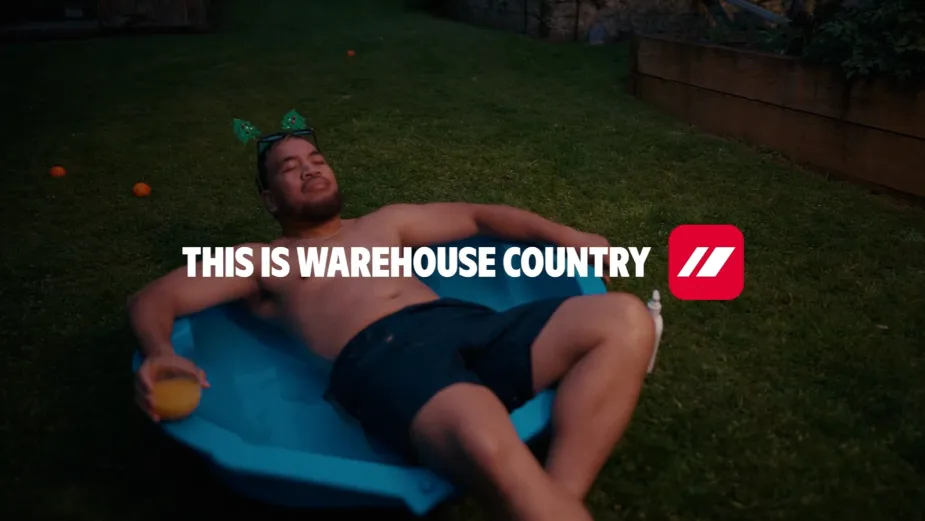
From the gift rush to a moment's rest
The Christmas work focuses on familiar New Zealand household rituals rather than a picture-perfect celebration. Its four executions follow families gathering gifts and essentials before Christmas, the cheerful disorder of opening presents, a last-minute trip for a gift, and a host finally finding time to relax.
Those scenes connect the campaign to the retailer's longstanding role in family celebrations, whether supplying toys, helping shoppers find forgotten presents or providing wrapping paper and supplies to pack into the car for Christmas Day.
Frankie Coutler, chief marketing officer of The Warehouse Group, said the season offered an opportunity to develop the platform through experiences that friends and whānau would recognize. "The moments themselves aren't particularly remarkable and that's exactly the point," Coutler said. She described them as nostalgic scenes repeated in New Zealand homes and said The Warehouse had helped make them possible for more than 40 years, without missing a Christmas.
Shane Bradnick, chief creative officer at TBWA\New Zealand, described the Christmas work as another chapter in a platform about life in New Zealand. Although families have different rituals, he said, they share experiences such as preparation, panic and excitement, with some also feeling relief once the celebrations are over.
Building on the August launch
Developed by TBWA\New Zealand, 'This is Warehouse Country' launched nationally on August 23, 2026. Television, digital, social media and outdoor advertising carried the launch alongside activity in all 84 The Warehouse stores. The company described it as the first major brand expression of its broader business transformation.
The Christmas campaign extends the platform's 'Never Missed' concept: the idea that the retailer has been present for moments in New Zealanders' lives, large and small.
The platform also uses the te reo Māori phrase 'Ko Te Warewhare Te Kāinga'. The Warehouse said this is not a direct translation of 'This Is Warehouse Country'; instead, it expresses a sense of familial belonging. Its inclusion forms part of the retailer's efforts to help normalize the indigenous language of Aotearoa New Zealand.
The retailer's network spans urban and regional New Zealand and employs more than 10,000 team members. Group CEO Mark Stirton said 80% of New Zealanders live within 20 minutes of a store, while about 1.5 million customers visit each week.
The business context
The Warehouse Group has called the platform the next phase for The Warehouse. In its FY26 results, covering the 52 weeks ended August 2, 2026, the group reported net profit after tax of $11.2 million, compared with a $2.8 million net loss after tax in FY25. Operating profit increased from $1.3 million to $22.6 million.
The same results included a seasonal category milestone: The Warehouse said it recorded its highest toy sales and remained New Zealand's preferred toy retailer for the second consecutive year.