FTSE 100 ends the week down nearly 1.8%
London's blue-chip index closed at 10,690, a decline of 0.3% for the day and nearly 1.8% for the week, as investors faced renewed worries about AI spending and rising oil prices.
The FTSE 100 had fallen further earlier in the session, shedding 62 points, or 0.6%, to 10,663, just above its intraday low of 10,662. Mid-cap stocks fared better: the FTSE 250 extended its gains while the larger-company index remained under pressure.
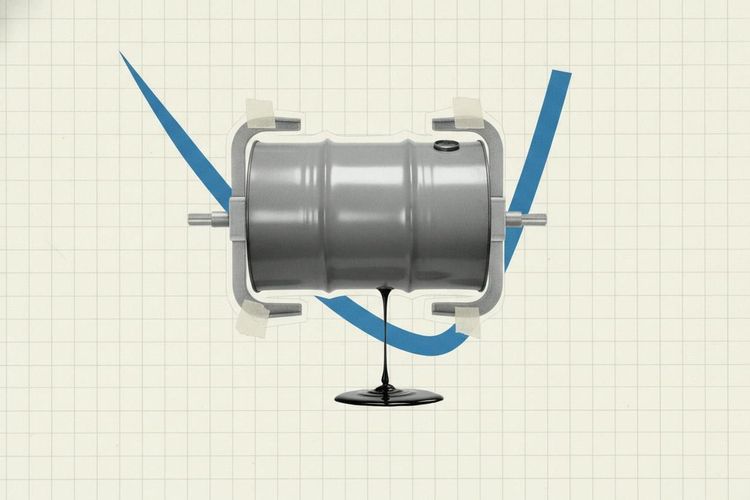
Oil rally adds to market unease
IG chief market analyst Chris Beauchamp said the oil rally had delivered another setback to stock market sentiment. Brent had surpassed its May highs amid concern about further escalation, he said.
"Everyone is on notice for potential US attacks on Iran in conjunction with Israel, and as a result Brent crude futures have lurched to their highest level in over four years," Beauchamp said. He warned that reduced energy stockpiles would leave the global economy with little breathing room and that Iran was unlikely to hold back from a broader response to an attack. "This could all get very ugly, very quickly."
CNBC reported Brent futures up 2.6% at $116.13 a barrel on Friday, with U.S. West Texas Intermediate about 3% higher at $102.56. Brent was heading for a gain of nearly 6% over the week, which would mark its third straight weekly advance.
The potential for renewed strikes remained in focus. According to CNBC, U.S. officials told The New York Times that the United States and Israel had plans for fresh attacks on Iran after the midterm elections. President Donald Trump said Wednesday that Washington was not negotiating with Iran and that something would happen "fairly soon."
CNBC also reported continued attacks on Saudi Arabia by Iran-allied Houthi militants. The strikes prompted the State Department to order all non-essential U.S. personnel to leave the country. A drone attack at the Shaybah oil field on Wednesday killed two people and injured two; an attack on King Fahd International Airport in Dammam left at least two dead and eight injured. Saudi Aramco instructed employees to evacuate its Dhahran headquarters and work remotely.
OpenAI lowers its fundraising valuation target
Resistance from prospective investors has led OpenAI to lower the valuation it is seeking for a planned $30 billion funding round. Its target is now $1.25 trillion, down from $1.4 trillion, as investors scrutinize the cost of developing AI models and the computing infrastructure behind them.
In an October 22 report, CNBC said the company was nearing completion of financing of up to $30 billion at a $1.25 trillion pre-money valuation. Investors from the United Arab Emirates and Coatue are leading the round, which is being presented as an "opportunistic" bridge to a potential initial public offering.
OpenAI told investors it wanted signatures by the end of the following week, although the final amount to be raised remained undecided. Alongside the financing, the company was negotiating a commercial agreement for additional computing capacity from the UAE, CNBC reported.
The scale of OpenAI's spending plans is substantial: it told investors in February that it was targeting roughly $600 billion in total compute spending by 2030. CNBC also reported that the company confidentially submitted its prospectus to the SEC in June 2026. In August, CFO Sarah Friar told employees that OpenAI "will be a public company in 2027."
Rival Anthropic is also preparing for an IPO, according to CNBC, and is reportedly seeking an offering valuation of $1.5 trillion to $2 trillion. It completed a $65 billion funding round in May 2026 at a $965 billion valuation.
Broker ratings hold despite earnings and growth questions
Ahead of BP's third-quarter results, Citi retained its "Buy" rating and £6.80 price target, pointing to valuation discounts of 25% to Shell and 30% to European peers. RBC kept Aviva at "Outperform" and lifted its target from 780p to 790p despite higher catastrophe losses in Canada.
Barclays retained a "Buy" rating from UBS, with a 588p target, and an "Outperform" rating from RBC, with a 525p target, even after third-quarter earnings missed expectations.
Following IG Group's capital markets day, Panmure Liberum maintained "Buy" with a 1,500p target, while Peel Hunt retained "Add" with a 1,150p target. The brokers differed on the company's growth outlook.
Citi also kept its "Buy" rating on London Stock Exchange Group after its $3.535 billion acquisition of Octus, citing stronger private-markets data capabilities and attractive returns from the deal.