The costs reaching Britain
UK diesel prices passed £2 per liter in November, while grocery inflation rose from 2.3% to 2.5%, Cherwell reports. Its analysis links the election's significance for Oxford students to the pressures on household spending and travel, noting that many attribute Britain's inflation to the continuing US-Iran conflict.
The war began on February 28, 2026, when Israel and the United States attacked Iran. Iran responded with strikes and threats to shipping through the Strait of Hormuz. A House of Commons Library briefing published March 24 reported that Brent crude, which had traded at about $70 a barrel before the conflict, temporarily exceeded $100.
The same briefing recorded the Bank of England's March 19 assessment that higher energy prices were likely to leave consumer price inflation between 3% and 3.5% in the second and third quarters of 2026. The bank kept its main interest rate at 3.75%; markets at that point no longer expected a rate cut during the year.
Trade policy presents a separate risk. Alongside the existing 10% US tariff on UK goods, the Trump administration has threatened a 100% tariff unless Britain drops its digital services tax.
What it takes to change control
House members serve two-year terms, putting every seat before voters both in presidential election years and in the midterms between them. Republicans currently have a narrow majority; a net Democratic gain of three seats would transfer control.
The Senate's elections follow a different schedule. Its 100 members serve six-year terms in three staggered classes, with roughly one-third ordinarily facing voters every two years. Encyclopaedia Britannica puts the Republican majority entering this election at 53 to 47, with the opposition total comprising 45 Democrats and two independents who caucus with them.
This year's Senate ballot includes 35 seats: 33 regular elections and two special elections. Republicans are defending 22 of those seats, according to Britannica. Democrats need a net gain of four to win the chamber.
The House contest also follows an unusual round of mid-decade redistricting. Britannica reports that Trump urged Texas in 2025 to redraw its districts to add about five Republican seats. California voters backed a counter-initiative with 64% support in November 2025. Missouri, North Carolina, Ohio, Utah and Virginia were among other states that changed their maps or attempted to do so.
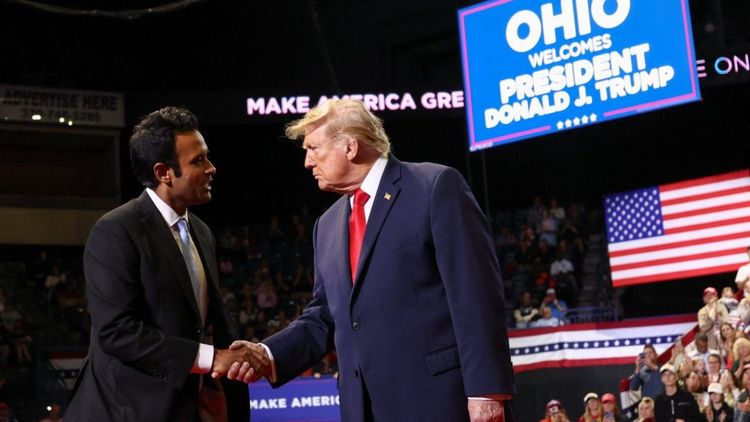
Although voters are choosing lawmakers, midterms are often interpreted as a judgment on the president. Cherwell notes that, since 1946, the president's party has gained House seats in only two midterm elections: 1998, the year of President Clinton's impeachment, and 2002, the first election after 9/11.
Britannica's longer historical comparison covers the 22 midterms from 1934 through 2018. Over that period, the White House party lost an average of 28 House seats and four Senate seats, and gained seats in both chambers on just two occasions.
Congressional pressure over the Iran war
Congress can challenge a president through its authority over spending, defense, foreign policy and trade. Democratic control of either chamber would create opportunities to oppose Trump's policies, though winning a majority would not by itself remove the obstacle of a presidential veto.
One route over Iran is the War Powers Resolution. Congress could vote to direct the president to begin withdrawing US forces from hostilities within 60 days. Cherwell's analysis says a supermajority would be needed because Trump would likely veto such a measure.
Lawmakers also have options short of directing a withdrawal: restricting military funding, investigating the conduct of the war, requiring Defense Department officials to testify and blocking or declining to consider nominees. Senate refusal to confirm nominees limits the president's choices; Cherwell notes that acting officials tend to have little political power.
Those tools matter beyond the United States because of the conflict's effect on fuel costs. Cherwell attributes average UK gasoline price increases of 16% to 30% and a 20% rise in global airline jet fuel prices to the war. Higher fuel prices also put pressure on travel costs, including flights home for international students.
The tax behind the tariff threat
Britain's digital services tax charges 2% on revenue that search engines, social media services and online marketplaces derive from UK users, according to TIME. Portugal, Spain and Poland have similar taxes. The UK levy brought in more than £2.4 billion ($3.2 billion) between 2021 and 2025.
The threat of a 100% tariff has developed through several statements. According to a Congressional Research Service report, Trump's June 26, 2026, Truth Social pledge targeted European countries with digital services taxes generally, without naming Britain. TIME reported that, as of August, the administration had made no official tariff announcement tied to that threat.
In August, however, US Trade Representative Jamieson Greer told The Times that Trump's threats to abandon the UK trade deal and impose a 100% tariff were "not a bluff". The British government said it "remains open to discussing U.S. concerns".
Tariff legislation and spending leverage
Congress could legislate to end individual tariffs or withdraw presidential tariff authority more broadly. Many of the pressure tactics available over the war also apply to trade. Cherwell argues that Democratic control of both chambers would offer a good chance of passing tariff restrictions with enough support to overcome a presidential veto.
Control of spending provides another source of leverage. In 2019, then-House Speaker Nancy Pelosi blocked appropriations legislation during the dispute over funding a US-Mexico border wall, leading to a government shutdown. Cherwell says such confrontations usually put pressure on whichever party appears unwilling to compromise, and that Trump faced that pressure in 2019.
A funding impasse also carries costs for the public: airport operations, small-business lending, court proceedings and access to national parks can stop or slow. Cherwell's assessment is that congressional pressure could put the existing 10% tariff on UK goods at risk and reduce the likelihood of further tariff threats.