
Running costs outstrip NHS funding
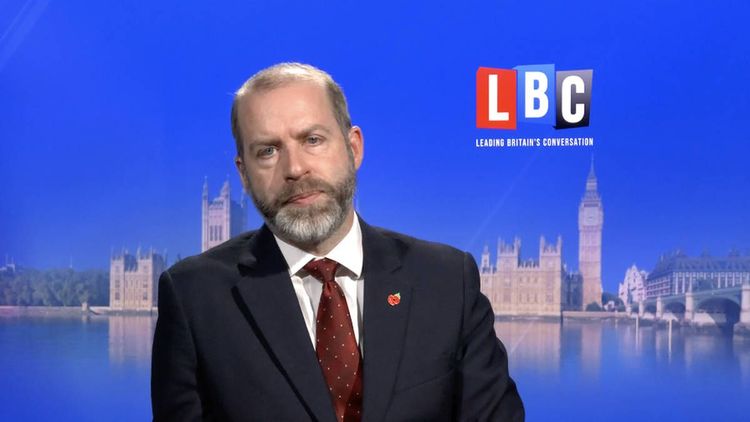
The hospice's open letter seeks more taxpayer support rather than continued reliance on charitable appeals to meet care costs. It is addressed to Healey, the MP for Rawmarsh and Conisbrough, Sarah Champion, who represents Rotherham, and Jake Richards, the MP for Rother Valley.
Rotherham Hospice has a long-term NHS funding agreement, but says it falls £2 million short of the cost of the services it is expected to provide. Its annual funding gap after NHS support exceeds £2 million, with charitable giving used to make up the difference.
Chief executive Mat Cottle-Shaw said a sustainable funding plan would give the hospice "breathing space" and warned that staffing and services were otherwise at risk. Rising employer National Insurance costs and staff pay pressures have already contributed to the closure of its charity shop in Wath-upon-Dearne and café in Swinton.
In September 2026, Cottle-Shaw said government funding met only 36% of running costs, leaving the hospice to generate the other 64% through donations, fundraising and its shops and cafés, according to the Rotherham Advertiser.
Healey said that month that the government had provided an additional £363,202 to Rotherham Hospice as part of what he called "the biggest investment in hospices in a generation". The hospice said those grants were for capital improvements, including buildings and equipment, and could not cover nursing salaries or everyday care.
Care needs expected to grow
The hospice operates 14 inpatient beds alongside community services. It cares for more than 1,700 patients annually and says it must raise more than £6 million a year to sustain its care. For 2024/25, the Rotherham Advertiser reported that it supported 2,121 people and their families and made 11,266 Hospice at Home visits.
Over the coming decade, the hospice estimates that about 25,000 people across Rotherham will need palliative and end-of-life care. That includes roughly 6,000 in Healey's constituency, 9,000 in Champion's and 10,000 in Richards's. These estimates cover care in different settings; they do not mean that everyone will need admission to a hospice.
"We should be preparing to reach more people, earlier in their illness, with care at home and inpatient support when needed. Instead, we are having to consider contraction," Cottle-Shaw told the Yorkshire Post.
A call to fund care outside hospitals
Cottle-Shaw expressed deep disappointment that last week's Budget offered no additional recurring funding for adult hospices. He said funding needed to reflect successive minimum wage increases, higher employer National Insurance costs and the pressure to match NHS pay awards.
"Hospices recruit from the same workforce as the NHS. We cannot indefinitely absorb those pressures through more fund-raising," he said.
The open letter contrasts the hospice's request with the Autumn Budget's extra £190 million for NHS winter and other in-year pressures, according to the Rotherham Advertiser. It argues that hospice and community care should play a central role in reducing avoidable hospital demand.
Cottle-Shaw proposed agreeing measurable expectations for additional investment: preventing unnecessary hospital admissions, helping patients leave hospital earlier and easing pressure on general practitioners. He argued that funding should support care that prevents an admission, not only the hospital bed used afterward.
"Allowing hospice services to contract while finding more money to manage pressure elsewhere in the NHS makes little sense – for families or for the public purse," he said.
He also contrasted hospice funding with the NHS's provision of core staff for hospital maternity services, asking: "Why must hospices rely on charity appeals and collection buckets to pay the specialist nurses caring for people at the other end of life?"
Financial pressure across England
Rotherham Hospice is supporting Hospice UK's campaign for an initial £112.5 million in recurring annual government funding for England. The organization estimates that this would be a first step toward the £450 million needed to fully fund specialist palliative care delivered by hospices.
Hospice UK's August 14, 2026, analysis put the collective deficit for hospices across England at more than £70 million in 2025-26, more than twice the previous year's figure. The findings drew on responses from 87 hospices to its Financial Benchmarking Q4 2025-26 survey.
The analysis reported significant service cuts at at least 33 hospices, with almost 60% making or considering reductions. Specialist community hospice visits were down by 150,000 over a year, while 380 hospice beds across England were out of use.
An earlier National Audit Office report, published in October 2025, found that government funding accounted for 29% of adult hospice income in 2023-24. Nearly two-thirds of adult hospices recorded a deficit that year, with a combined sector shortfall of £78 million. NHS spending on adult hospice care also varied between integrated care board areas, ranging from 23 pence to more than £10 per person.