Borneo is burning - living on the frontline of Asia's toxic haze
In Palangkaraya, the capital of Central Kalimantan province and Indonesia's largest city by land area, the air has turned a rusty orange. Mother-of-three Dianyra Eka Nastiti fears most for her youngest child, whose chest rattles at night with every breath.
"She was hospitalised for bronchopneumonia when she was just a month and a half old, and every single night I worry: Will my child cough tomorrow?" Nastiti says. "Those thoughts haunt me every night."
Nastiti's home sits at the epicentre of an environmental disaster that has been unfolding for months. Wildfires have consumed roughly 1.9 million hectares across Indonesia since the start of the year—an area equivalent to New Jersey or the entire nation of Fiji. This figure represents a 38% increase over the same period in 2019, when fires ultimately scorched 2.63 million hectares by year's end.
The current fire season has proven exceptionally severe. In the first eight months of the year, over 212,000 fire hotspots were detected inside peat ecosystems across Indonesia—more than double the number recorded during the devastating 2015 El Niño event.
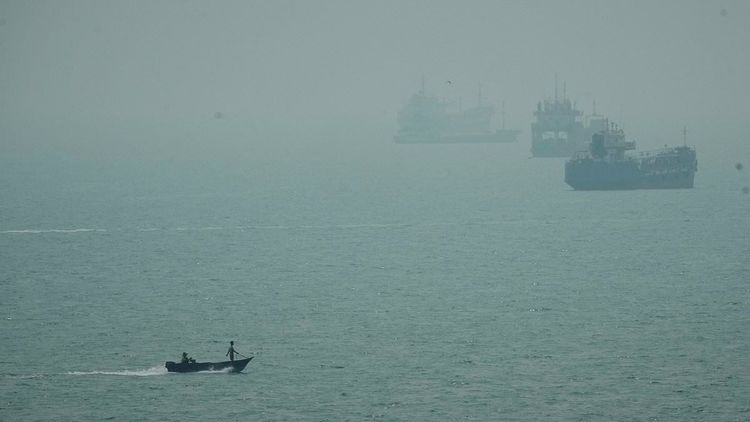
The toxic fallout extends far beyond the flames themselves. Smoke from smouldering forest, swamp and peatlands has created a noxious cloud that has drifted across Indonesia, Singapore, Malaysia and the Philippines. By early October, Indonesian wildfires had emitted 140.5 megatonnes of carbon, accounting for approximately 13% of global fire emissions for the year, according to the Copernicus Atmosphere Monitoring Service.
A health emergency unfolds
Indonesia's Health Ministry had recorded more than 277,000 cases of respiratory infections and chronic coughs by mid-October. More than 62,000 of those affected were infants and toddlers under five years old.
"The forest fires have had a huge impact, especially on everyone's health," says 22-year-old Natari Victoria, who spent more than a week being treated at a Palangkaraya health centre. "I have young cousins, including babies, who are coughing too. It's really taking a toll on them."
The scale of health impacts recalls the catastrophic 2015 fires, which caused more than 500,000 people to be treated for respiratory problems and led to school closures affecting nearly 4 million students in Malaysia alone. Those fires burned more than 2 million hectares and caused economic losses estimated at $16.1 billion by the World Bank—equivalent to 1.9% of Indonesia's GDP that year.
Riduan, head of the Palangkaraya Health Office, explains the immediate danger facing the city's approximately 310,000 residents: "Here in Central Kalimantan, especially in Palangkaraya, the sky has turned yellow and hazy. So what are the residents actually breathing in? It's not fresh oxygen; it's carbon dioxide and pollutants. And what happens as a result? The body—specifically the brain—doesn't get enough oxygen."
Children, older adults and pregnant women face particular vulnerability during prolonged exposure, when health impacts accumulate over time.
Trapped indoors
Official advice urges people to stay indoors and avoid going outside, but for many this remains unrealistic. Nastiti must still shop for food, buy school supplies and handle daily necessities. When the haze grows heavy, however, she keeps her children locked inside.
"With conditions being so unsafe, I have no choice," she says. "Our young children should be at the park, playing with their friends and going to school. Instead, they are locked inside the house."
Fifty kilometres north of Palangkaraya, in the rural village of Ramang, 37-year-old Lola Macitri has watched the smog deepen from dusty grey to amber yellow and, more recently, burnt orange. Her children attend school online while adults struggle to manage half a day's work in the poisonous air.
Countless farmers, daily-wage earners and small vendors face an impossible choice between sacrificing their livelihoods or risking their health outdoors.
"If you ask whether we are afraid of the health risks, of course we are. But where else can we go?" Macitri asks. "We just have to endure and stay strong through this situation, because there is simply no other option."
Why peatlands matter
The persistence and severity of this year's fires stem partly from what burns beneath the surface. Indonesia's peatlands store approximately 57 gigatons of carbon—about 55% of the world's tropical peatland carbon. Though peatlands cover only about 3% of the world's land surface, they store roughly a third of global soil carbon.
When these carbon-rich soils ignite, they create fires that are extraordinarily difficult to extinguish. On the surface, flames may appear out, but underground, smouldering blazes continue burning through deep layers of carbon, vegetation and peat.
Battling an underground inferno
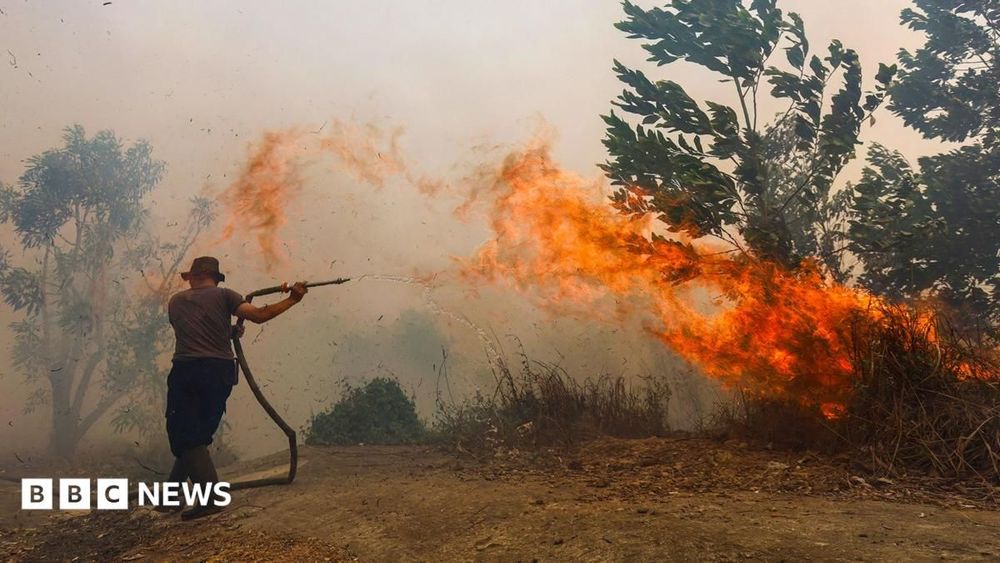
Juni, a firefighter who has been combating the blazes for more than 100 days, describes the relentless toll. The smoke has left him with shortness of breath, a persistent cough and unshakeable pain in his eyes.
"It is truly exhausting," he says. When asked what he needs most, his answer is simple: "air."
Fauzi Rahman, another Palangkaraya firefighter, highlights the challenge of extinguishing peat fires: "Peatland fires are hard to put out because they require a lot of water and a long time. On regular land we can clear 20 hectares in a single day, especially with a large team. On peatland, it can take months."
Water scarcity has become a critical obstacle. Indonesia's weather agency BMKG has predicted that a strong El Niño will persist into early 2027. By mid-July, dry conditions had already affected more than 54% of Indonesia's seasonal zones, with drought conditions expected to peak between August and September. One region, Bantul Regency in Yogyakarta, recorded 131 consecutive days without rain—the country's longest dry spell—while 61.91% of Indonesia's land area experienced prolonged dry season conditions.
Dr Nisa Novita, a forestry expert and peatland researcher at Indonesian conservation NGO Yayasan Konservasi Alam Nusantara, notes that fires have spread into areas with no previous fire history. "So we're not only dealing with fires in the usual hotspots but also seeing them emerge in new areas," she says.
Government response under scrutiny
The government faces mounting public pressure over what many perceive as an inadequate response. Authorities point to measures including aerial waterbombing, experimental weather modification and the deployment of more than 60,000 personnel in land operations, claiming an 80% success rate in extinguishing new fires.
Yet institutional gaps persist. After the 2015 fires, Indonesia established a Peatland Restoration Agency in 2016 with a mandate to restore 2.49 million hectares of degraded peatland. However, the agency's mandate was not renewed when it expired in 2024.
"At this point, I think we need to use every safe and effective option available to suppress the fires," Dr Novita says. "It's a bit like trying to save a sinking ship: we need to act urgently, use whatever tools can help, and prevent further damage while we still can."
For now, those on the ground can only wait and hope. Riduan acknowledges that despite extraordinary efforts from communities, military and police working together, the fires continue burning.
"So what can we hope for?" he asks. "Our greatest hope is that Almighty God will bring us rain soon."