An unsettled count, and a warning against expecting policy change
With 89.8% of ballots counted as of October 28, 2026, Israel's Central Elections Committee projected 53 seats for Benjamin Netanyahu's bloc and 48 for Gadi Eisenkot's opposition bloc, The Times of Israel reported. Neither would reach the 61 seats needed for a majority in the 120-member Knesset. The complete count was due Thursday, with final official results expected November 4. Netanyahu's outgoing coalition held 68 seats, putting his bloc's projection 15 seats below that total.
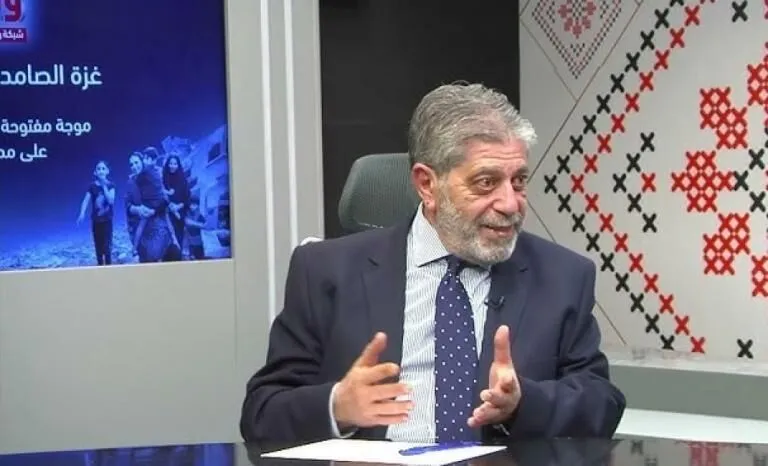
For Toubassi, the close contest offers little assurance that a new government would change Israel's approach to Palestinians. He argues that the competing Zionist parties are primarily contesting how to govern Israel and manage its alliances, rather than whether to end the occupation.
He also sees the performance of the two Arab lists as evidence that Palestinians inside Israel can increase their political influence despite discrimination, exclusion and national oppression. His commentary describes the possibility of roughly 18 seats. Separately, The Times of Israel reported a projection of 19 seats for the Joint List and Ra'am combined after record Arab voter turnout. That would exceed their previous high of 15 and their 10 seats in the outgoing Knesset, potentially making them kingmakers.
Toubassi urges European governments to look beyond the leadership contest and address what he describes as Israel's colonial settlement policies. In his view, welcoming a different prime minister would be inadequate without a commitment to ending the occupation, settlements, the system he characterizes as apartheid and the nation-state law.
Why Toubassi connects Palestine to European unrest
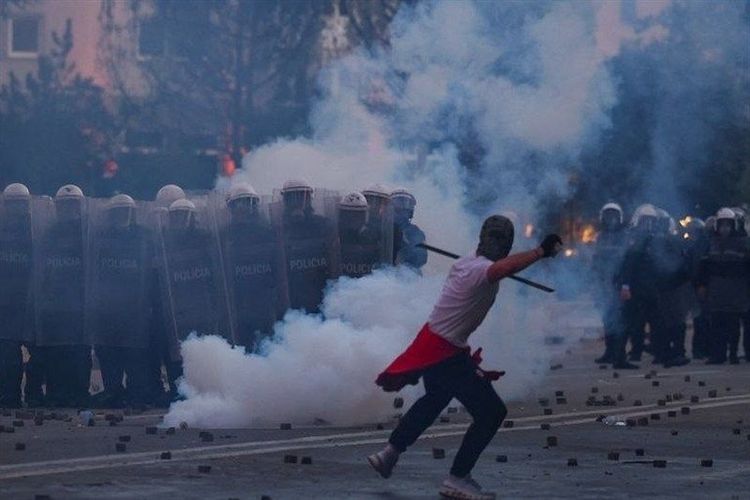
The election argument forms part of Toubassi's broader reading of protests in France, Greece, Italy and elsewhere in Europe. He sees more than disputes over living costs or individual government decisions: the demonstrations, he argues, expose strains in economic and political institutions and a weakening relationship between governments and the societies they represent.
He links those strains to wider class divisions, weaker social protections, falling purchasing power and the growing costs of war and military spending. He also warns that artificial intelligence could reshape employment and production while concentrating advantages among large corporations and deepening inequality.
Foreign policy adds another source of tension in his account. Toubassi points to the Trump administration's trade and security pressures, its dealings with China and Russia, and Europe's continuing dependence on Washington despite its ambitions for strategic autonomy. He argues that this dependence restricts Europe's freedom to act, particularly on Palestine and the Middle East.
He describes opposing political responses to the unrest. Progressive parties, left-wing movements and unions connect economic demands with democratic rights, social justice and opposition to militarism. Nationalist and populist parties on the right, he says, channel insecurity into hostility toward immigration and calls for national isolation.
Within that contest, Toubassi presents Palestine as a test of whether Europe's stated commitments to democracy and human rights guide its actions. He argues that the distance between those commitments and official policy has led young people, universities, unions and rights movements to challenge double standards and connect democratic demands with opposition to colonialism.
Gaza and the limits of international action
Toubassi grounds his criticism in the war in Gaza, which he characterizes as genocidal and destructive, as well as continuing occupation, settlement activity, annexation and displacement plans. He also cites efforts to implement the Gaza arrangements under UN Security Council Resolution 2803. In his assessment, European measures to hold Israel accountable remain far short of its rhetoric about international law.
Adopted on November 17, 2025, Resolution 2803 endorsed the US-backed Comprehensive Plan to End the Gaza Conflict. The vote was 13 in favor, none opposed, with China and Russia abstaining. The resolution welcomed the Trump-chaired Board of Peace as a transitional administration and authorized a temporary International Stabilization Force in Gaza. Authorization for the Board and the international presences runs through December 31, 2027.
The Board's first six-month report covered November 17, 2025, through May 14, 2026, and was transmitted to the Security Council on May 15. It reported that the ceasefire had largely held for seven months and that all hostages had been returned. Although the National Committee for the Administration of Gaza had been formed, the Board said it had not been able to enter areas remaining under Hamas armed control.
The same report recorded $17 billion in reconstruction pledges. Estimated recovery and reconstruction needs totaled $71.4 billion over the following decade, according to the World Bank, UN and EU.
The Board identified Hamas's refusal to accept verified decommissioning as the main obstacle to full implementation. It outlined a 15-point roadmap developed by Egypt, Qatar, Türkiye and the United States, acting as guarantors, together with the High Representative. The proposal would make the National Committee the sole legitimate transitional authority, require complete weapons decommissioning under international verification and provide for a phased Israeli military withdrawal to Gaza's perimeter.
Recognition, accountability and Palestinian reform
Toubassi acknowledges the growth of public solidarity and European recognition of Palestinian statehood, but argues that neither has produced a coherent, effective policy for ending the occupation. He attributes that gap to government differences, competing interests, alliances and US influence.
According to Al Jazeera, 157 of the UN's 193 member states, or 81%, recognized the State of Palestine as of September 23, 2025. September recognitions came from the United Kingdom, Canada, Australia, Portugal, France, Luxembourg, Malta, Monaco, Andorra and Belgium. There were 11 new recognitions in 2025, bringing the number since the Gaza war began in October 2023 to 20.
Rather than relying on diplomatic recognition or changes in Israeli leadership, Toubassi calls for Palestinians to organize sustained diplomatic, legal and public campaigns. He proposes lasting alliances with progressive parties, unions, universities, parliaments and human rights organizations, supported by a unified Palestinian national position.
His proposed campaign would extend beyond boycotts of settlement products to a boycott of Israel itself, which he describes as a settlement state. He also calls for an end to complicity in its actions and the use of international accountability mechanisms to advance Palestinian self-determination, national independence and an end to occupation. He cautions that Europe's unrest may create opportunities for progressive change but cannot guarantee it.
Toubassi pairs that international strategy with domestic reform: renewing the Palestinian national liberation project, holding elections to renew political legitimacy, and strengthening institutions through participation, accountability, the rule of law and separation of powers. Rebuilding Palestinians' confidence in their institutions would, he argues, support international alliance-building without making their national rights conditional on their political system or outside pressure.