Donald Trump halts sanctions on Russia after Putin diesel deal
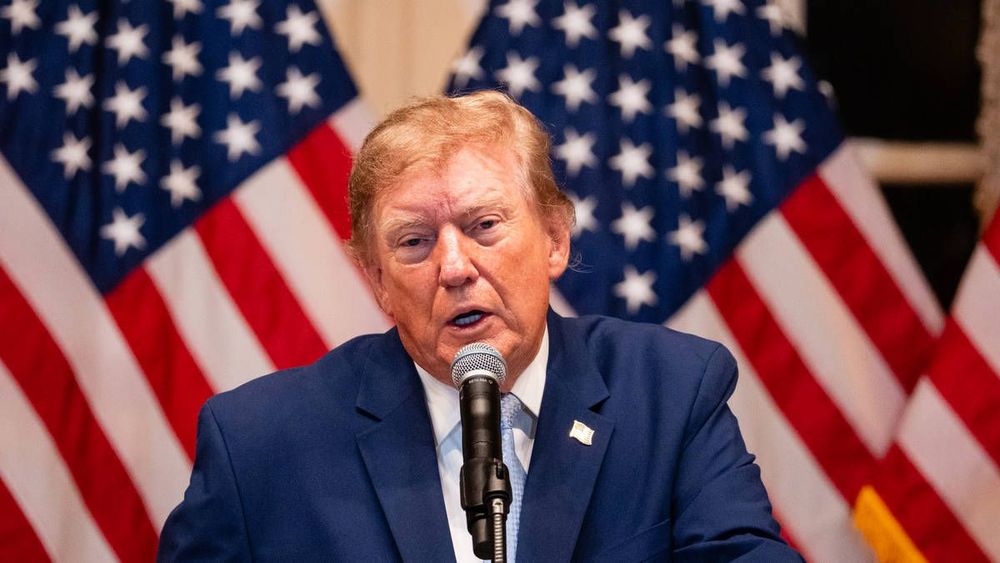
President Donald Trump has suspended a comprehensive sanctions package targeting Russia's economy, telling Congress on Friday the pause was in the national interest just one week after announcing a controversial diesel supply deal with Moscow.
The executive order waives key provisions of the Lindsey O. Graham Sanctioning Russia and Iran Act of 2026, legislation Trump himself signed into law on September 18. The Act had passed with overwhelming bipartisan support, clearing the Senate 86-11 on August 7 and the House 262-159 on September 16, with 58 Democrats joining Republicans in the lower chamber.
The now-suspended legislation authorized tariffs of up to 500% on Russian imports and up to 100% on goods from the five largest purchasers of Russian crude oil or natural gas, potentially including China and India. The measures were designed to restrict financial resources flowing to the Kremlin's war machine in Ukraine.
Political backlash intensifies
The decision has triggered sharp criticism from both sides of the aisle. Democratic Senator Elizabeth Warren called it an "abject and predictable failure in leadership," noting the "strong bipartisan support" for Ukraine. Senator Richard Blumenthal, who helped draft the bill, said the waivers "have nothing to do with our national security, and everything to do with sucking up to Vladimir Putin."
Representative Don Beyer of Virginia accused Trump of betraying Ukrainian partners and defying congressional intent. A dozen senators, including six Republicans, have called on the President to rescind the diesel agreement that preceded Friday's announcement.
The move comes at a politically sensitive moment, with midterm elections scheduled for November 3, 2026. All 435 House seats and 35 of the Senate's seats are being contested, and Republicans currently hold only narrow majorities in both chambers.
Fuel price pressures mount
The suspension follows Trump's announcement last week that the United States would purchase diesel from Russia in an effort to ease domestic energy costs. Diesel prices have surged to an average of $6.28 per gallon, up from $3.68 a year earlier—a roughly 70% increase. The national average reached a record high of $6.53 per gallon on September 22.
The price spike follows the US war with Iran, which began on February 28, 2026, when Trump ordered Operation Epic Fury. The conflict has contributed to rising global energy prices and remains deeply unpopular with American voters ahead of the midterms.
Energy analysts question whether the Russian diesel deal will significantly impact prices. The commitment of approximately 4.8 million tons, or about 36 million barrels, would cover less than nine days of US domestic demand, given that the country consumes roughly 4 million barrels of diesel per day.
Further complicating matters, Russian diesel production has fallen nearly 30% compared to 2025 levels, with gasoline output down 20%, according to the International Energy Agency. The decline stems from Ukrainian drone strikes on Russian refineries—more than 300 attacks since February 2022, with 305 cumulative strikes recorded by June 2026.
Ukraine tensions escalate
The White House has pressured Ukraine to halt strikes on Russian oil facilities in an effort to stabilize energy markets. While Ukrainian President Volodymyr Zelenskyy briefly complied, attacks have since resumed.
Meeting with European leaders in Brussels on Friday, Zelenskyy warned that the diesel deal would mean cash "will start flowing back into Russia." Trump blindsided the Ukrainian leader last weekend by announcing that Ukraine and Russia had agreed not to target each other's energy facilities.
The suspended legislation carries particular symbolic weight, having been named in honor of the late Senator Lindsey Graham, who championed sanctions against Russia before his death. Trump's reversal on an act bearing Graham's name has intensified criticism that the President is prioritizing political calculations over allied commitments.
The Treasury Department issued a general license on October 9 temporarily waiving sanctions on Russian diesel through April 2027, overturning a ban on Russian oil and gas imports imposed by the Biden administration in 2022 following Russia's invasion of Ukraine.