SoftBank in talks to buy US security group Allied Universal
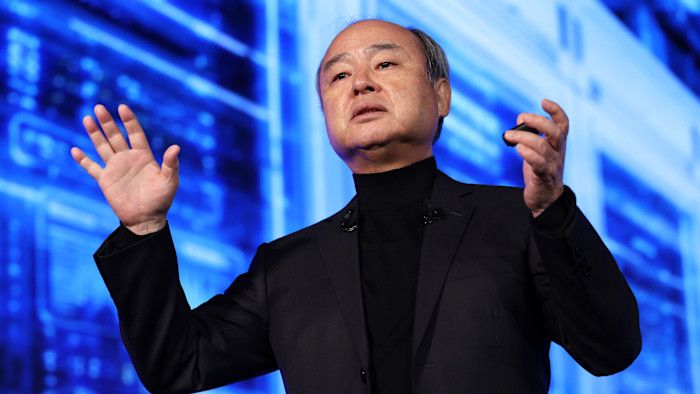
SoftBank is in advanced discussions to acquire Allied Universal, the world's largest private security firm and owner of UK-based G4S, as chief executive Masayoshi Son pursues an ambitious expansion into robotics and artificial intelligence applications.
The potential transaction could value Allied Universal at approximately $30 billion including debt, according to multiple sources familiar with the negotiations. However, discussions remain at an early stage and no agreement is guaranteed.
Strategic fit with robotics ambitions
The acquisition would significantly expand SoftBank's growing robotics portfolio, which includes the pending $5.4 billion purchase of ABB Robotics—a business with more than 7,000 employees that generated $2.3 billion in sales in 2024. The ABB deal is currently awaiting regulatory approval in China and other jurisdictions. SoftBank also plans to list Roze, its physical AI company, in the United States.
Son has increasingly focused on humanoid robots as a core element of his artificial intelligence vision. He has discussed with advisers the potential for autonomous robots to deliver security services, making Allied Universal a natural strategic target. The security company has been exploring its own autonomous robot initiatives, including developing a five-foot-tall, 300-pound autonomous machine designed for security patrols and monitoring. Allied also provides security services for data centres, another expanding area of SoftBank's operations.
Allied Universal's scale and ownership
Allied Universal was formed in 2016 through the merger of AlliedBarton Security Services and Universal Services of America, with private equity firm Warburg Pincus and investment group Wendel initially holding equal 33% ownership stakes. The company's ownership structure shifted significantly in 2019 when Canadian pension fund Caisse de dépôt et placement du Québec (CDPQ) acquired approximately 40% of the business at an enterprise valuation exceeding $7 billion, becoming its largest shareholder.
Today, Warburg Pincus and CDPQ collectively own more than two-thirds of Allied Universal. The company employs between 770,000 and 800,000 people globally and generates annual revenues of approximately $21 billion to $23 billion. It operates in more than 100 countries and serves as a trusted partner to over 400 Fortune 500 companies, while holding security contracts worth billions of dollars with the U.S. Department of Homeland Security.
The security giant significantly expanded its reach in April 2021 by acquiring G4S, previously the world's largest security company by revenue with over 533,000 employees, for £3.8 billion ($5.3 billion). The combination created a company with more than 800,000 employees and revenues exceeding $18 billion, making Allied Universal the third-largest employer in North America and seventh-largest globally.
Chief executive Steve Jones has publicly discussed the possibility of an initial public offering for Allied Universal, which the company has been considering for several years.
Financing SoftBank's AI vision
The potential Allied Universal acquisition comes as SoftBank aggressively finances Son's artificial intelligence ambitions. The company invested approximately $65 billion in OpenAI, securing a roughly 13% ownership stake through multiple tranches including a $30 billion follow-on investment. To fund that commitment, SoftBank completed a record-breaking junk bond offering in September, raising $11.1 billion at yields as high as 9.75 percent—the largest high-yield corporate bond sale globally.
Son is also seeking to raise up to $100 billion from Gulf investors to create a fund for acquiring entire companies that can be transformed using artificial intelligence. According to sources familiar with the matter, such a fund could view Allied Universal as a potential target.
SoftBank's recent investment spree has come at a significant cost. The company's financing expenses are rising, and its share price has declined approximately 40 percent from its June peak, though it remains up 7 percent for the year. By comparison, Japan's benchmark Nikkei 225 index has gained 26 percent over the same period.
Uncertainty around OpenAI timeline
The potential Allied Universal deal unfolds as SoftBank faces fresh uncertainty regarding OpenAI's plans. The ChatGPT developer has delayed its planned stock market listing amid concerns about the risks and costs of developing increasingly powerful AI systems. That delay could complicate SoftBank's broader AI investment strategy, with some investors questioning the rationale for additional large-scale acquisitions.
Senior SoftBank executives have pointed to the company's strong balance sheet as evidence it can finance Son's expansion plans through new acquisitions and investments. The company's ownership of UK chip designer Arm and its substantial OpenAI stake form the foundation of Son's AI strategy.
Major private equity exit
For Warburg Pincus, a sale of Allied Universal would represent a substantial private equity exit at a time when many financial sponsors struggle to divest long-held portfolio companies. Warburg has recently completed some of its largest exits, including selling turbine parts manufacturer Consolidated Precision Products to GE Aerospace for $11.75 billion and a majority stake in Ensemble Health Partners, valuing the healthcare technology group at $12 billion.
Warburg Pincus, CDPQ and SoftBank all declined to comment. Allied Universal did not respond to requests for comment.