
Federal Reserve's Warsh Expects AI to Support Growth but Flags Economic Transition Risks
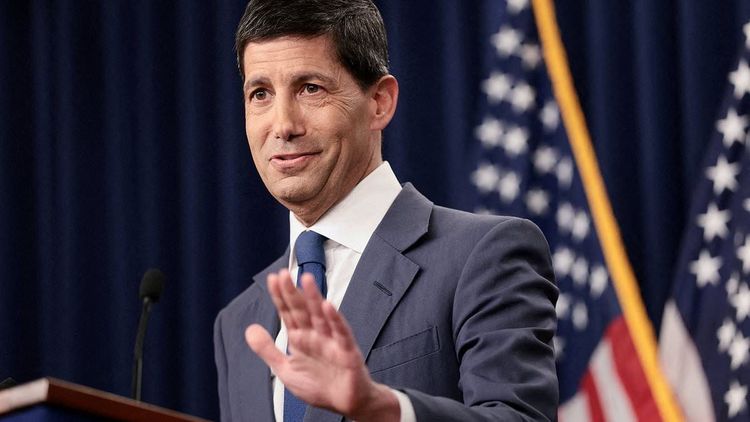
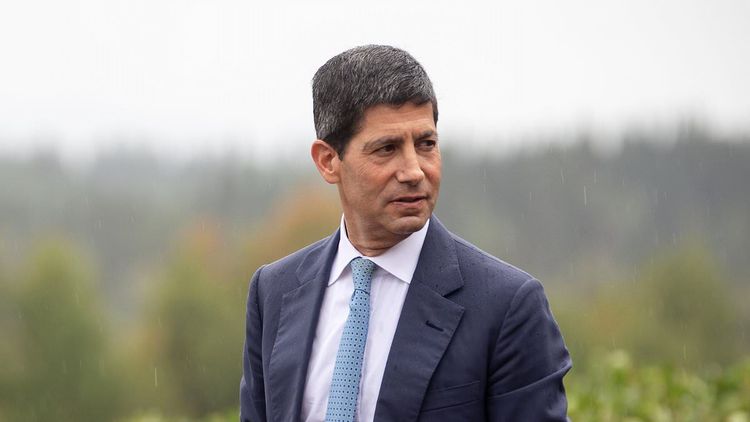
Federal Reserve Chair Kevin Warsh said artificial intelligence is positioned to enhance economic productivity in the coming years, though he warned that the transition period could create complications for businesses, workers and monetary policy officials.
Warsh, who was nominated by President Donald Trump and confirmed by the Senate earlier this year to replace Jerome Powell as Fed Chair when Powell's term ended in May 2025, delivered his assessment on Friday at an International Monetary Fund forum in Bangkok. His remarks addressed both the promise of AI-driven growth and the policy challenges that may accompany the technology's expansion across the economy.
The Fed Chair brings prior experience with economic disruptions, having served on the Federal Reserve Board of Governors from 2006 to 2011 during the financial crisis. He was also considered for the Fed Chair position in 2013 before Janet Yellen was selected.
Near-Term Investment Fuels Demand
Warsh described the economic effects of artificial intelligence as likely to unfold in distinct phases. In the immediate term, corporate investment in AI is adding to demand as companies increase spending on technology infrastructure and related systems.
Major tech companies including Microsoft, Google, Amazon and Meta have collectively announced over $400 billion in AI infrastructure investments for 2025-2027, representing the largest coordinated technology spending surge in decades. This capital deployment illustrates the scale of investment Warsh referenced in his remarks.
Over the medium term, he expects the technology to expand the economy's productive capacity, potentially enabling businesses to generate greater output. Warsh characterised AI as among the most significant technological developments affecting the US and global economies during his lifetime.
The International Monetary Fund, which hosted the Bangkok forum, released its October 2026 World Economic Outlook projecting global GDP growth of 3.2% for 2026, citing AI adoption as a key medium-term growth driver.
Productivity Gains Show Early Signs
Recent economic data suggests productivity improvements may already be emerging. US labor productivity growth accelerated to 2.7% annually in the second quarter of 2026, the highest sustained rate since 2010. Some economists attribute this gain partially to early AI adoption in service industries.
However, Warsh cautioned that the transition would not necessarily proceed smoothly. The timing of productivity improvements, the implications for employment and which companies ultimately benefit all remain uncertain. Historical analysis of major technological transitions shows that steam power, electricity and computer adoption each took 20-40 years to significantly boost measured productivity, suggesting AI's full economic effects may take decades to materialize.
Policy Challenges Under Review
Warsh identified several areas requiring continued assessment as AI adoption expands, including changes in employment patterns, the competitive structure of industries and possible implications for financial stability. The Federal Reserve is also examining whether productivity improvements could affect inflation dynamics over time.
To support this work, the central bank is using external task forces to study the economic consequences of artificial intelligence. One group focused on productivity and jobs is scheduled to conduct its first field hearing in the San Francisco Bay Area on November 16. The location is home to major AI development centers including OpenAI, Anthropic and significant operations of Google, Meta and Apple.
Rate Path Remains Data-Dependent
On monetary policy, Warsh reaffirmed the Federal Reserve's commitment to restoring price stability. The central bank has cut interest rates by 50 basis points at its September 2024 meeting, the first reduction since 2020, and has since implemented additional cuts totaling 125 basis points through September 2026, bringing the federal funds rate to a range of 4.00-4.25%.
Core PCE inflation, the Federal Reserve's preferred measure, stood at 2.6% year-over-year as of September 2026, still above the Fed's 2% target. This persistent inflation above target contributes to the Fed's cautious stance on further rate reductions.
Warsh did not indicate whether additional adjustments would follow at the Federal Reserve's two remaining scheduled policy meetings in 2026 on November 6-7 and December 17-18. Instead, he said decisions would depend on developments in economic activity, employment and inflation data.
Broader Investment Trends Support Growth
Warsh noted that the US economy is benefiting from an increase in investment extending beyond artificial intelligence. He identified this broader capital spending trend as a factor supporting economic growth.
The Federal Reserve chair also said global economic performance had been more resilient than he expected several months earlier. His assessment reflected economic conditions despite ongoing geopolitical tensions and conflicts.
Warsh emphasised that technological developments and structural economic changes require monetary policymakers to review established assumptions. He said the central bank needs to consider new evidence when assessing how AI could affect productivity, employment, inflation and financial stability.
The Federal Reserve's research initiatives are intended to contribute to that assessment as the technology develops. Warsh's comments indicate he expects AI to provide longer-term economic benefits while recognising uncertainty about the transition and its implications for monetary policy. The central bank's immediate policy focus remains on incoming economic data and its objective of restoring price stability.