Funding uncertainty emerges
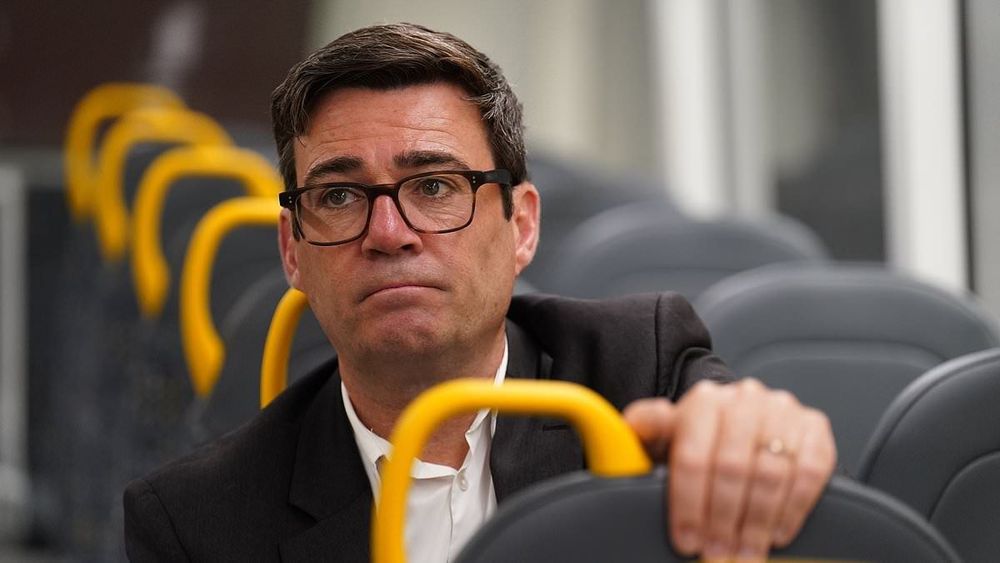
As Andy Burnham announced his government's £2 bus fare cap standing before a double-decker emblazoned with 'Funded by UK Government', the image captured a fundamental truth about how socialist administrations operate: all public money is treated as theirs to spend as they please. Yet the reality behind the attention-grabbing promise proved less straightforward than the slogan suggested.
Transport Secretary Heidi Alexander acknowledged that the 'detail' of where the £454 million funding will come from 'hasn't been worked through' yet. The admission comes just three days into Burnham's tenure as the UK's 59th Prime Minister, raising early concerns about financial governance under the new administration.
The bus fare announcement follows a pattern established the previous day, when promised energy bill reductions were swiftly followed by the £850 million funding appearing to unravel. Sources indicate the £454 million for bus fares will be diverted from the energy department, with part of the money coming from switching international climate finance from grants to loans, alongside existing transport department allocations.
The £2 fare cap, set to begin on January 1, 2027, and run for 12 months across England outside London, represents a revival of a Conservative policy first introduced in January 2023. Labour under Keir Starmer had raised the cap to £3 in January 2025, deeming the national £2 cap unaffordable. The current £3 cap will remain in place until the end of 2026.
Rapid rise to power
Burnham officially became Prime Minister on July 20, 2026, following Starmer's resignation in June after approximately two years in office. Starmer's premiership unraveled amid policy U-turns, painful local election defeats in May 2026, and controversy over appointing Peter Mandelson as UK ambassador to Washington. Upon announcing his resignation, Starmer said Labour MPs had made clear their view on whether he was best placed to lead the party into the next general election.
The path to Downing Street required Burnham to first return to Parliament. Sitting Labour MP Josh Simons resigned the Makerfield seat on May 14, 2026, creating an opening for Burnham to contest the by-election under party rules requiring leaders to be MPs. Burnham won the June 18 by-election with 54.8% of the vote and a Labour majority of 9,241, returning to Westminster after serving as Mayor of Greater Manchester since 2017.
Pattern of vague commitments
Beyond the bus fares and energy bills, the source of hundreds of billions of pounds required for other ambitious plans on the Prime Minister's agenda remains unclear. There is an increasingly hollow ring to Burnham's directive that Cabinet ministers must demonstrate how projects are being financed. Everything announced so far appears to lack the detailed financial planning necessary for credible governance.
Channel crossings silence continues
Burnham has maintained complete silence on the Channel migrants crisis since becoming Prime Minister. With more than 200,000 illegal arrivals since the crisis began in 2018 and crossings from France resuming following a brief respite, the issue represents arguably the biggest challenge facing the government and a priority concern for millions of voters.
Starmer's decision to cancel the Conservatives' Rwanda scheme before launch has been widely criticized as an error of judgment. Significant payments to France to address the problem have produced limited results. Before the Makerfield by-election, Burnham praised Shabana Mahmood's record on reducing boat crossings but insisted there was 'more to be done'. He has yet to elaborate on his specific plans.
Early release programme controversy deepens
The criminal justice system faces mounting criticism as dangerous offenders prepare for early release after serving only fractions of their sentences. Senior Cabinet figures including Mahmood and Wes Streeting have drawn fire for joking about the early-release programme.
The case of PC Andrew Harper's killers has become a focal point for criticism. The 28-year-old Thames Valley Police officer was killed in August 2019 while responding to a quad bike theft in Berkshire when he became caught in a strap trailing behind a fleeing vehicle and was dragged along the road. Three teenagers were convicted of manslaughter in 2020, with Henry Long receiving 16 years and Jessie Cole and Albert Bowers each receiving 13 years.
Under a new early release scheme set to come into force in September 2026, Cole and Bowers may be eligible for release halfway through their sentences. The programme is expected to affect some 6,000 prisoners. Harper's widow has condemned the policy, stating that 'politicians are making decisions from behind a desk that will have real and lasting consequences for victims' families like mine'.
Chancellor John Healey, appointed by Burnham on July 20 in a surprise move, faces the task of bringing clarity to the government's fiscal position. The 66-year-old previously served as Defence Secretary under Starmer and held junior Treasury positions between 2002 and 2007. Whether his experience will translate into the transparent financial planning demanded by the scale of the government's ambitions remains to be seen.