Ian Murray: Tory economic policy – tax cuts for the rich
The Conservative Party conference in Birmingham last week delivered a clear message: the party has learned nothing from its electoral defeat two years ago. Despite leaving office with a struggling economy and deteriorating public services, senior Conservatives signalled they would pursue the same policies if returned to power.
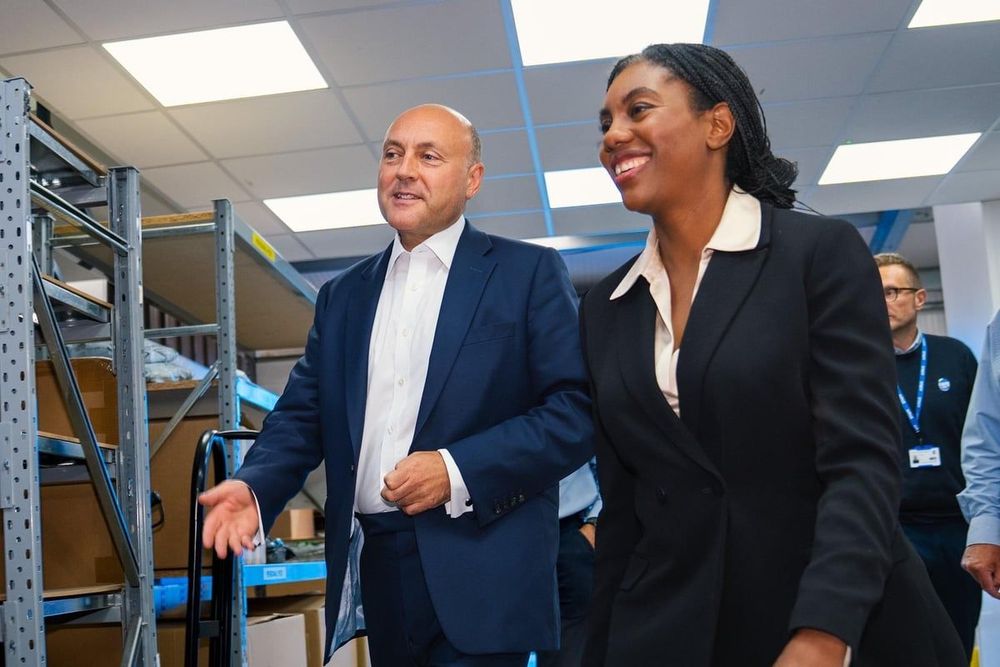
Shadow Chancellor Andrew Griffith MP used the conference platform to promise tax cuts for the highest earners, while being recorded pledging tens of billions in public service reductions to party members. Griffith, who replaced Mel Stride in the role on 31 August this year, has rapidly positioned himself as the architect of a return to the economic approach that contributed to the party's downfall.
Griffith's controversial history
The choice of Griffith for this crucial economic role is particularly striking given his history. He served as Financial Secretary to the Treasury from September to October 2022 under Liz Truss, making him one of the key figures behind the mini-budget that triggered economic chaos. That September 2022 fiscal event proposed £45 billion in unfunded tax cuts, causing the pound to plummet to $1.035 against the dollar—its lowest level since 1985.
The mini-budget's impact on ordinary households was severe and lasting. Average two-year fixed mortgage rates, which stood at 4.24% at the start of September 2022, soared to a peak of 6.86% by July 2023. The crisis was so severe that Truss resigned after just 49 days in office, making her the shortest-serving Prime Minister in British history.
At the time, Griffith defended the policies on television even as financial markets were in freefall and confidence in the British economy collapsed. Most politicians involved in such a calamitous episode might have retreated from frontline politics. Instead, Conservative leader Kemi Badenoch, elected in November 2024 following the party's general election defeat, appointed him to lead the party's economic policy.
Labour's approach to living costs
Meanwhile, the current Labour government is addressing the cost-of-living challenges facing households. From 1 October, the government removed the 5% VAT charge from household electricity bills, a six-month measure that will save households an average of £45 per year based on the Ofgem price cap. The policy, funded by cancelling the £1.8 billion Digital ID programme, provides relief as concerns grow about the impact of the Iran war on energy costs and food prices. While the measure applies only to electricity and not gas bills, it offers immediate support during the winter months through to 31 March 2027.
The government's approach is showing results. Economic growth forecasts were revised upwards this week, and the International Monetary Fund noted that the UK stands out among major economies for having a credible plan to reduce borrowing. These assessments validate the decision to maintain fiscal discipline and stabilise public finances.
Progress on migration and defence
Progress is also evident on migration. Net migration has fallen to 171,000 for the year ending December 2025, representing an 82% decrease from the peak of 944,000 recorded in the year to March 2023 under the previous Conservative government. Channel crossings have declined by 40% this year alone.
At the Birmingham conference, the Conservatives unveiled proposals such as the 'Britannia Shield' defence initiative. However, military experts estimate the actual cost could be up to eight times higher than Conservative projections. Such miscalculations are particularly troubling given that the party left office with the Armed Forces at their smallest size since the Napoleonic era. In contrast, the Labour government has increased defence spending to its highest level since the Cold War, recognising the security challenges of the current international environment.
A stark contrast
The contrast between the two parties is stark. While the Conservatives promise giveaways for the wealthiest and propose unfunded spending commitments, Labour is delivering practical measures on living costs, economic stability, and national security. And while Reform UK's Nigel Farage now criticises Conservative economic policy—despite having called the 2022 mini-budget 'the best Conservative budget since 1986'—and the SNP continues to struggle in Scotland, the Labour government is making tangible progress on the issues that matter most to working people.