Housing funding and delivery
The housing allocation will supplement the £39 billion Social and Affordable Homes Programme, which runs from 2026 to 2036. In an exclusive published on October 24, the Daily Mirror reported that the additional money could support construction of up to 10,000 homes.
UK Fact Check's account of the Mirror report noted that the increase represents less than 3% of the program's existing budget. The newspaper's figures imply roughly £100,000 in grants per home. The Treasury did not confirm either the £1 billion figure or the estimate of 10,000 homes.
Funding from the program is already being allocated. On August 25, 2026, nearly £10 billion went to 33 councils, housing associations and other providers designated as Strategic Partners. A separate £46 million "Capacity to Build" package announced alongside it was intended to strengthen local authorities' skills and capacity.
The Mirror also highlighted the government's confirmed commitment to keep newly completed social homes exempt from Right to Buy for 35 years. The policy was first proposed in mid-2025 under the previous Starmer government.
Local investment powers and borrowing
The Budget is expected to give English mayors and regional leaders greater control over investment, while offering councils preferential interest rates on government loans for housebuilding. The aim is to give local leaders more flexibility and authority to decide where money goes.
Next year, the government will provide £285 million in transitional seed funding. Reuters reported that this money will form part of a new "Good Growth" scheme, which the Treasury says will allow local leaders to fund their growth priorities without first seeking central government permission. The Treasury also wants to reduce their dependence on what it calls "fragmented bidding pots" in Whitehall.
Places that do not yet have strategic authority status will be eligible for a share of the £285 million to help advance projects contributing to local growth. Strategic authorities will receive an additional £150 million next year to develop the staffing and expertise needed to manage larger budgets.
Ministers will also confirm plans to work with mayors on a £1.5 billion borrowing facility, worth about $2 billion, from 2028. According to the Treasury, the capital could support housing, town-center revitalization or transport improvements.
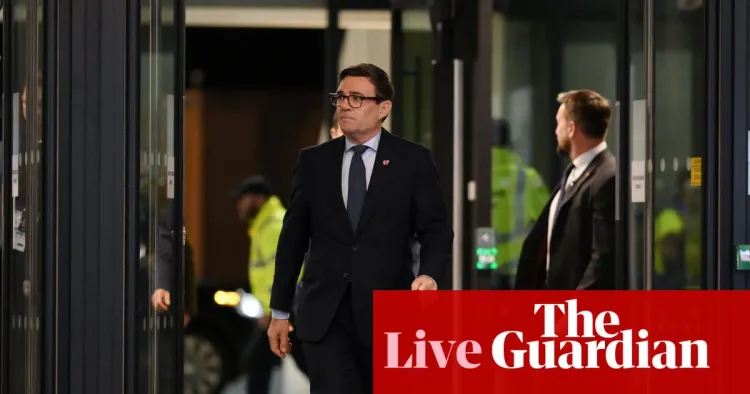
Healey said cities and regions should have the "right to decide their own future". Prime Minister Andy Burnham described the changes as a transfer of power to people "who know their communities best", saying: "I'm calling time on local leaders going cap in hand to Westminster. That is no way to run a country."
Claire Ward, Labour's East Midlands mayor and chairwoman of the UK Mayors Network, said greater devolution, backed by appropriate powers and resources, would help local leaders carry out their plans and deliver lasting change.
London Mayor Lord Sadiq Khan pointed to several projects that greater investment powers could help advance: the West London Orbital route, extensions of the Bakerloo Underground line and Docklands Light Railway, and development at Stratford International station.
Pressure over the defense timetable
The Sunday Times reported that Healey is expected to announce billions of pounds in new defense funding, with the details to follow at next year's spending review. Shadow Chancellor Andrew Griffith has demanded his resignation if he does not explain how the UK will reach defense spending of 3% of GDP by 2030.
Healey had advocated that threshold himself before becoming chancellor, as a step toward NATO's target of 3.5% in 2035. In June, he resigned as defense secretary in the previous government, saying its defense investment plan fell "well short" of the armed forces' needs.
According to The Telegraph, Healey was not expected to use the Budget to lay out a route to either target. The newspaper reported that he needed to find £4.7 billion to cover a gap in the Defence Investment Plan, which former Chancellor Rachel Reeves had left only partly funded. The Treasury says plans for reaching both 3% and 3.5% will be presented at next year's spending review.
Defence Secretary Wes Streeting outlined that sequence in September 2026: funding for the Defence Investment Plan would come in the Budget, followed by a timetable for the two GDP targets at the spending review.
Office for Budget Responsibility calculations cited by BBC News put the additional annual funding needed to reach 3% at £17.3 billion by 2029-30. They indicate that the total defense budget would need to grow from more than £63 billion a year to nearly £90 billion by 2030.
Gen. Lord Sanders, who led the British Army until June 2024, also criticized the expected delay. He told The Telegraph it was "incredible" that Healey would not use his first Budget to explain how spending would reach 3% of GDP by 2030.
Griffith argued that a strong economy required strong defense and accused Healey of delaying the funding decision despite extraordinary threats. In response, Streeting blamed the Conservatives for failing to invest adequately in the military during their time in office. He said the prime minister had made clear that the government was "determined to give our armed forces the investment needed to keep us safe".
Brewery support and an adviser's departure
Healey will also announce additional support for small breweries. The Treasury said he wants "to turn the tide for our pint producers".
Meanwhile, Treasury entrepreneurship adviser Alex Depledge has announced her resignation and will leave on Thursday, the day after the Budget.
Depledge told the Sunday Times that start-ups were being treated as a "sideshow" and should not be relegated to the "margins of economic policy". She said: "Keeping scale-ups on the fringes underestimates the contribution of our greatest companies, and we need to support and develop them on British shores at all costs."