Shell sells European renewables portfolio to TotalEnergies in strategic retreat from green energy
Shell has sold its European wind and solar energy business to French rival TotalEnergies, continuing the oil giant's strategic retreat from renewable investments under chief executive Wael Sawan.
The transaction includes renewable energy assets across the UK, Italy, the Netherlands and Spain, which together accounted for around 0.5 gigawatts of capacity, as well as a pipeline of future projects. The financial terms were not disclosed.
The sale represents another pivot away from green energy as Shell proceeds with plans to expand oil and gas production. Under Sawan, who became CEO in January 2023, the company has deprioritised low-carbon investments in favour of its more profitable fossil fuels business, arguing that cutting production would be 'dangerous and irresponsible.'
Pattern of renewable divestments
The European sale follows Shell's disposal of Sprng Energy, its India-based renewable unit, in July 2026 for $1.8 billion to Aditya Birla Renewables. Shell had acquired Sprng Energy just four years earlier for $1.6 billion. The Indian portfolio consisted of 5.0 gigawatts-peak of renewable capacity, including 3.3 GWp of operating assets and 1.7 GWp under contract or development.
Shell's Renewables and Energy Solutions segment reported a loss of $497 million in adjusted earnings for 2024, with renewable power generation, hydrogen, carbon capture and storage, and ventures accounting for 146% of the negative earnings. These financial losses have driven the company's strategic shift towards higher-return assets.
At its 2025 Capital Markets Day, Shell announced a target of 10% return on average capital employed by 2030 for its power business, as part of its strategy to high-grade the portfolio. The company aims to sustain liquids production at 1.4 million barrels per day while growing total production by 1% through to 2030, and to grow LNG sales by 4-5% per year through the same period.
Diverging strategies
TotalEnergies, by contrast, is expanding its renewable energy portfolio. The French energy company held more than 37 GW of gross renewable power generation capacity by the end of June 2026 and aims to achieve over 100 TWh of net electricity production by 2030.
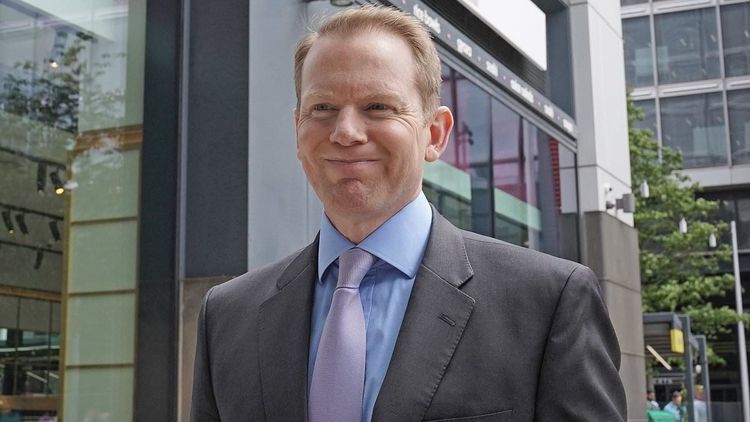
Machteld de Haan, Shell's president of downstream, renewables and energy solutions, said:
We are recycling capital and prioritising areas where we have differentiated capabilities and can create the most value over time, including through asset-backed power trading and customer-focused energy solutions.
Shell shares rose 0.7 per cent, or 22p, to 3405.5p following the news.
Last week, Shell reported it had more than doubled its earnings in the second quarter of the year, as it cashed in on 'severe disruption' in energy markets after the Iran war pushed up oil and gas prices. The company has also abandoned plans to develop offshore wind farms in Scotland.
Industry-wide shift
Shell's main British rival BP is also focusing on fossil fuel production and slimming operations down under new boss Meg O'Neill. BP is targeting $20 billion in asset disposals by 2027 to reduce debt, lower costs and streamline its portfolio. On July 31, 2026, O'Neill launched a formal sale process for BP's North Sea business, saying it would be
better positioned as part of another company.
The UK's windfall tax on North Sea oil and gas operations stands at 38% and is expected to remain at that level until March 31, 2030, contributing to total taxation reaching up to 78% in some cases, adding regulatory pressure to operators in the region.