Six countries at the center of discussions
The British Council is organizing the conference with Türkiye's Council of Higher Education. Its regional focus spans Armenia, Azerbaijan, Georgia, Kazakhstan, Türkiye and Uzbekistan, whose tertiary education sectors together comprise more than 900 institutions and nearly 12 million students.
Vocational education is also a substantial part of the regional picture. The British Council puts technical and vocational education and training (TVET) enrollment across the six countries at about 3.5 million, including around 2.8 million learners in Türkiye's short-cycle tertiary vocational programs.
As these systems grow rapidly, delegates will consider the pressures of geopolitical uncertainty, economic competition and technological change. Six guiding questions set out by the British Council cover teaching quality and institutional capacity; research quality through international cooperation; digital delivery and EdTech; resilience and labor-market relevance in tertiary education and TVET; equity and inclusion as systems expand; and partnerships that strengthen capacity, quality assurance and innovation.
Partnerships during crisis
The ongoing war in Ukraine and its effects on education will be among the subjects discussed. A spotlight session titled "International collaboration in times of crisis" will examine Ukraine's experience, including how institutions adapt to demographic decline, institutional consolidation, damaged or destroyed infrastructure, and the displacement of students and faculty, according to the British Council.
The wider discussion will address education's contribution to recovery, resilience and long-term transformation in places affected by crisis. Delegates will also consider how partnerships formed in solidarity can develop into lasting, strategic relationships that benefit both sides.
Catriona McCarthy, interim director of education at the British Council, said the conference would build on the UK's commitment to being an international education partner for Central Asia, Türkiye and the South Caucasus. She described it as a "strategic forum for leaders in international education to connect, share knowledge and build a global network of senior leaders and policy influencers to shape the future of further and higher education".
"The event will focus on how international collaboration between the six focus countries and more widely with the UK, EU, Middle East and North Africa, and Sub-Saharan Africa – supports the development of innovation leading to positive change," she said. "Ultimately, Going Global will provide an opportunity to share best practice and forge new collaborations."
Expected attendance and venue
The British Council's sponsorship document forecasts approximately 350-450 senior leaders at the Istanbul gathering, including ministers, university rectors and vice-chancellors, funders and heads of quality-assurance bodies. Expected representation extends beyond the six focus countries to the Middle East and North Africa and the EU, alongside numerous UK education institutions and sector organizations.
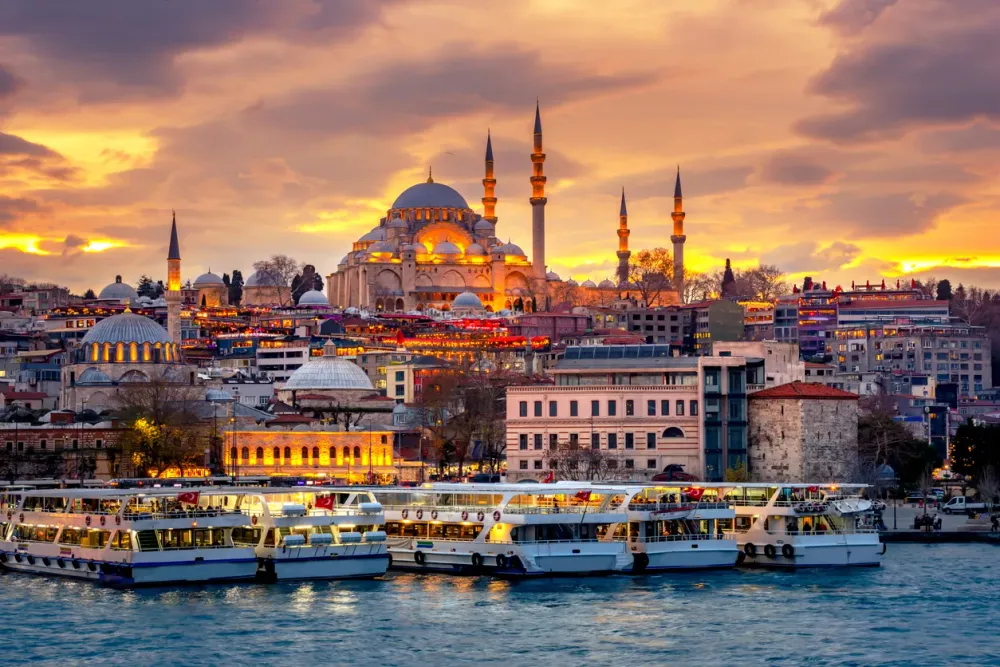
The November 3, 2026, draft program lists the Hilton Istanbul Bomonti Hotel & Conference Center, in the city's Bomonti-Sisli district, as the scheduled venue. The PIE News plans to report from the conference.
A conference series dating to 2004
Going Global began in 2004, according to the British Council. Recent hosts have alternated between UK and international locations: Singapore in 2022, Edinburgh in 2023, Nigeria in 2024 and London in 2025.
Partnerships were the focus in Edinburgh, under the theme "Towards Sustainable, Scalable and Equitable Partnerships in Tertiary Education". The following year's Nigeria conference addressed "Building Sustainable and Relevant Tertiary Education Institutions and Systems in Africa".
London's 2025 edition used the theme "Resilience, Values, Innovation: Surviving and Thriving in a Volatile World". Held at the QEII Conference Centre, it attracted participants from more than 50 countries and more than 450 senior leaders, according to the British Council's 2026 sponsorship document.