Pact leaves key questions open
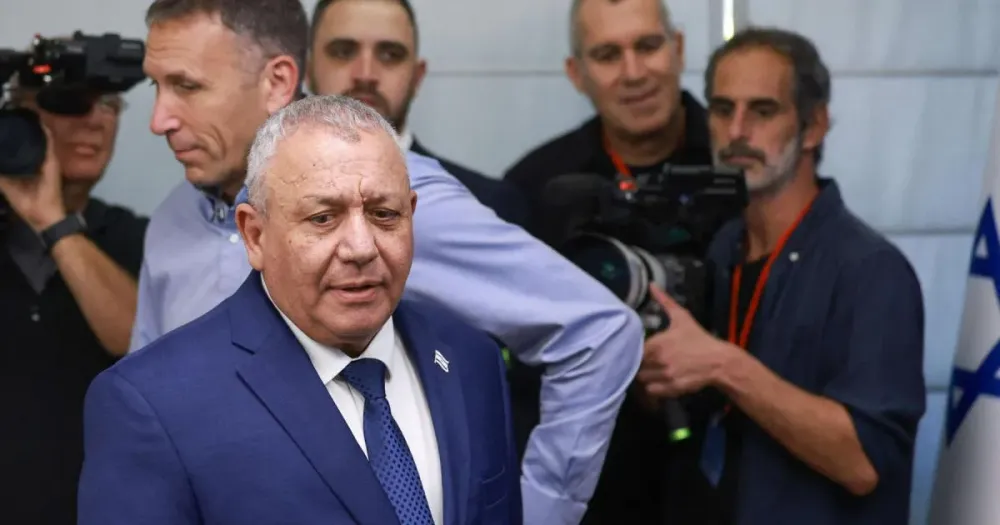
Yashar announced the agreement after Eisenkot, a former military chief, met with Lieberman earlier Tuesday. Their parties won 21 and seven seats, respectively, but neither disclosed the pact's provisions or any allocation of ministerial posts.
Channel 12 commentator Amit Segal questioned how much the two sides had settled. According to Matzav.com, he estimated that they had resolved roughly two of 50 outstanding issues and speculated that the understandings mainly involved the Defense Ministry and the Aliyah and Integration Ministry. Neither party confirmed his assessment.
Lieberman's participation comes despite his opposition to two possible routes to a government: relying on Arab parties or joining Netanyahu in a unity coalition. Although he has described removing Netanyahu as his main goal, he had explicitly said before the pact that he would vote against an Arab-backed minority government.
His preferred alternative was a coalition including the two Haredi parties, United Torah Judaism and Shas, The Times of Israel reported. Their combined 13 seats would bring Eisenkot's bloc to a 61-seat majority.
No majority after the election
The October vote ended the majority held by Netanyahu's alliance without giving his opponents a clear route to office. Likud and its far-right and ultra-Orthodox allies did better than expected but secured only 53 of the Knesset's 120 seats. Parliament took office on November 10 with no new government in place, and Netanyahu remains caretaker prime minister.
Eisenkot's center-right Yashar and its prospective coalition partners, including Lieberman, together hold 48 seats. Parties representing Israel's Arab minority control another 19 and share his strong opposition to Netanyahu, making them potential sources of support.
President Isaac Herzog gave Eisenkot the mandate to form Israel's 38th government on November 8, 2026. According to JFeed and Matzav.com, 67 lawmakers recommended him, compared with 46 who backed Netanyahu; United Torah Judaism's seven lawmakers recommended neither.
A coalition with the Haredi parties remains a theoretical option, not an agreed arrangement. Matzav.com reported that reaching 61 seats this way would require all four parties in Eisenkot's original bloc, plus United Torah Judaism's seven lawmakers and Shas' six. Shas has stayed aligned with Netanyahu, while United Torah Judaism's Yaakov Asher disputed reports of an imminent deal.
Competing paths divide the negotiations
A minority government was among the options Eisenkot was reportedly considering before Tuesday's pact. The Times of Israel reported on November 20 that he planned to seek a Knesset vote as much as a week before his December 6 deadline, even without a majority coalition. He reportedly expected support from the Democrats and Ra'am, which hold eight seats each, and abstention by the 11-seat Joint List.
At the same time, Eisenkot and some of his "change bloc" partners have been negotiating with Likud about a unity government. A fourth round of Yashar-Likud talks was scheduled for Wednesday, November 25, according to Matzav.com. Disputes include whether and how to rotate the premiership, which parties would join, and whether to establish a state commission of inquiry into the October 7 failures. Netanyahu reportedly insists on retaining the premiership under any unity arrangement.
The eight-seat Democrats party, led by Yair Golan, has suspended its coalition talks with Eisenkot. It cited progress in his negotiations with Likud alongside the lack of progress toward a government without Netanyahu. Matzav.com reported that the party also objected to reported Yashar-Likud understandings about creating a committee to seek consensus on judicial reform.
Golan has said his preference is a government that excludes Netanyahu and includes Arab parties.
Deadlines for forming a government
Eisenkot's 28-day mandate runs through December 6, though he can request another 14 days. If he fails, Netanyahu would have a chance to form a government; if all attempts fail, Israel would hold another election next year.
JFeed outlined the formal process under Basic Law: The Government. The mandate would first return to Herzog, who could assign it to another lawmaker after three days of consultations, with December 23, 2026, as the final date. The second candidate would receive 28 days without an extension, reaching a January 20, 2027, deadline.
After that, 61 lawmakers could request that a third candidate receive the mandate. If none of these attempts produces a government, JFeed estimated that a new election would take place by May 27, 2027.