Attacks and regional diplomacy
Harrasy frames Oman's pursuit of strategic autonomy around broader international ties, greater economic independence and a regional security system shaped by Gulf countries. The ongoing war has put its longstanding approach of constructive neutrality under pressure.
The conflict began on February 28, 2026, when the United States and Israel struck Iran. Iran subsequently retaliated against Oman. In its November 4 report, the Congressional Research Service (CRS) estimated that Iran carried out 66 strikes against Oman from February through October, causing more than two dozen casualties, including 14 deaths. Several Omani ports and coastal facilities were hit during the conflict's early months.
The Polish Institute of International Affairs (PISM) described the attacks on Oman as less intense and less severe than those against other Gulf Cooperation Council (GCC) states.
In October, Omani Foreign Minister Badr Albusaidi publicly urged GCC members to negotiate a nonaggression pact with Iran, according to CRS. He said the bloc can "no longer rely upon the co-operation of external partners."
Oman also has a specified role in talks over the Strait of Hormuz. According to PISM's June 29 bulletin, an agreement reached by Iran and the United States on June 17 requires Iran and Oman to develop a management model for the strait through direct dialogue, with other Gulf states actively participating.
Ports support growth during the war
PISM attributes much of Oman's economic resilience to the position of most of its major ports outside the Strait of Hormuz. That location protected them from the shipping shock, while cargo diverted from Dubai's Jebel Ali and Dammam's King Abdulaziz Port turned them into logistics hubs.
The institute's June bulletin reported that Oman, traditionally among the GCC's slowest-growing economies, had risen to a tie for second place in 2026 growth forecasts. It cited World Bank projections of 3.1% growth for Saudi Arabia and 2.4% for both Oman and the United Arab Emirates.
A separate International Monetary Fund forecast cited in CRS's November 4 report put Oman's 2026 GDP growth above 4% and projected that it would be the only Gulf state to record positive growth.
Financial reforms and lower debt
Oman created the International Financial Centre of Oman under Royal Decree No. 8/2026 to attract banking, investment and insurance institutions from the region and beyond, including Islamic finance providers, the Oman Observer reported on November 18. Its board was appointed in June, with Crown Prince Theyazin bin Haitham al Said, the deputy prime minister for economic affairs, as chairman.
The Oman Observer also cited the first-quarter Oman Vision 2040 report on improvements in public finances. Public debt declined from 65.9% of GDP to 34.6% between 2020 and 2025, and Oman regained investment-grade credit status. In September 2026, Standard & Poor's affirmed the country's BBB- investment-grade rating with a stable outlook.
Agreements with China
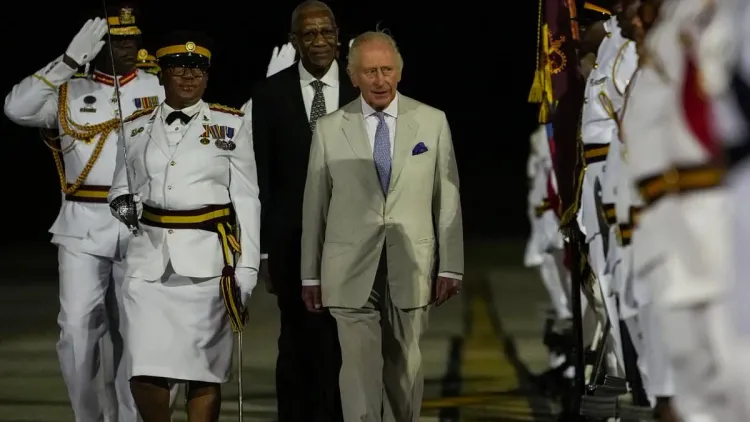
According to CRS, Sultan Haitham traveled to China for a two-day state visit in November 2026, the first such visit by an Omani sultan since the countries established diplomatic relations in 1978.
The visit produced a five-year bilateral currency swap agreement valued at $4.50 billion. The two countries also signed nearly two dozen investment partnership agreements.