Investment pledges meet the delivery challenge
COP31 has brought financial commitments as well as debate about how to deliver them. According to the COP31 Presidency's first-week summary, Türkiye signed green-investment partnerships worth more than $26 billion. They include a $15 billion renewable energy agreement with China, planned investment of $6 billion over five years by the European Bank for Reconstruction and Development, and $5.1 billion in agreements with development banks.
The Presidency also reported that Norway, Canada and the United Kingdom committed to mobilizing $10 billion in climate finance by 2030.
The 31st Conference of the Parties to the UN Framework Convention on Climate Change runs November 9-20, 2026, in Antalya, Türkiye. Türkiye and Australia are co-hosting, with Australia leading negotiations under COP31 President of Negotiations Chris Bowen.
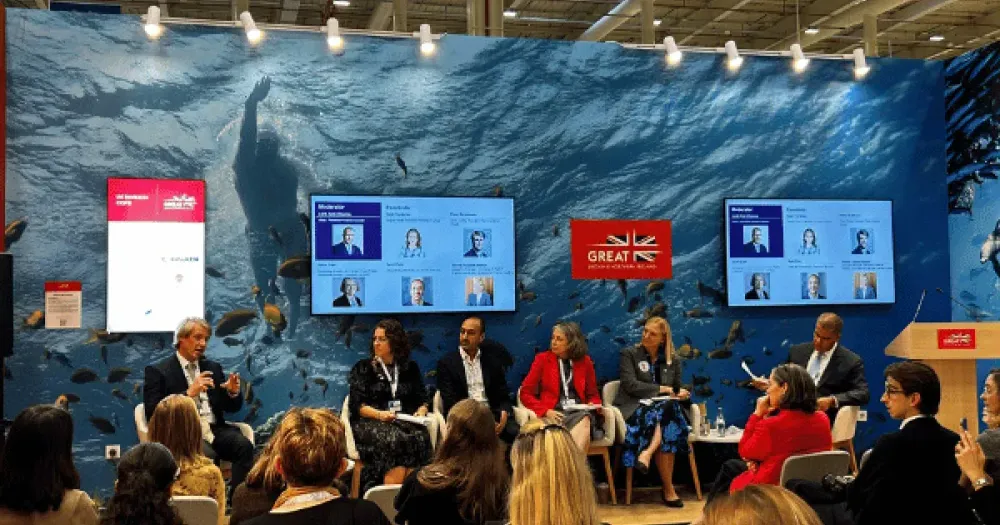
In a November 19 Howden commentary, Rooke, the company's co-lead of climate risk and resilience, describes the sessions he attended as evidence of a shift toward implementation. His focus is on what makes commitments commercially viable: confidence that projects can deliver, financial cases that capture their benefits, and explanations that make sense to businesses outside the climate-finance community.
He argues that insurance belongs in the financing structure before project design is complete. "Insurance does not replace the need for a strong investment case," he writes. "It helps make that case possible."
Electrification draws government and business backing
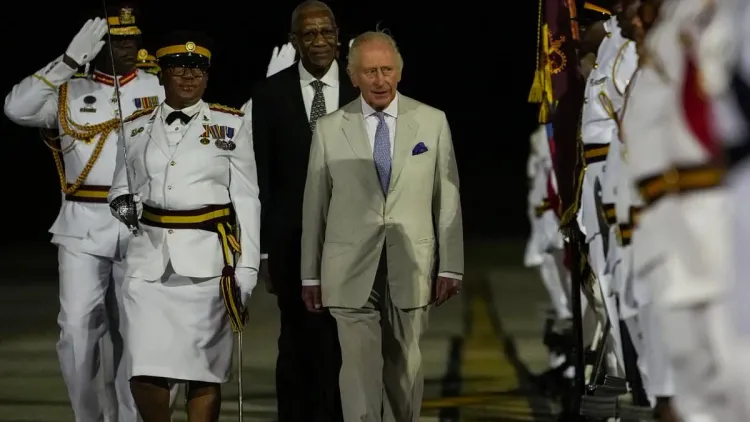
One prominent initiative is Türkiye's "35 by 35" pledge, which seeks to increase electricity's share of global energy use from about 21% to 35% by 2035. The UK backed it on November 12, with Prime Minister Andy Burnham attending alongside approximately 100 national leaders.
The UK also released a clean electrification roadmap that day. Its government said more than £110 billion in clean-energy investment had been announced since July 2024 and that it had secured enough domestically generated clean electricity to power 23 million homes.
The global pledge does not impose national targets, compulsory financial contributions or extra reporting requirements. The COP31 Presidency describes it as voluntary and non-binding; governments and non-state participants can join by emailing an official expression of support.
The Presidency's first-week account lists backing from 180 companies whose combined annual revenue totals $1.69 trillion, as well as the International Chamber of Commerce, representing 45 million companies. A utilities alliance increased its collective investment plans to at least $156 billion annually, with members set to mobilize more than $1 trillion for the energy transition by 2030.
For Rooke, electrification also illustrates the practical risks investors must assess. Data centers face challenges to their license to operate in the UK, Europe and the US because of concerns about electricity demand, water use, environmental effects and costs. He argues that they can instead contribute to energy systems as flexible grid assets while providing benefits locally. In Finland, Microsoft and Fortum are working to supply district heating to approximately 100,000 homes using data-center waste heat.
Making delivery risks visible
Rooke attributes part of the changing investment outlook to geopolitics. In his account, International Energy Agency Executive Director Dr. Fatih Birol emphasized that cost and efficiency no longer determine decisions on their own: security, reliability and confidence in delivery now carry comparable weight.
The UK's Net Zero Council is developing transition pathways for 17 industries over the next three years, with financial plans attached to each. Rooke sees them as a basis for investors to assess policy, technology and market risks before committing funds.
Ukraine's reconstruction presents a more acute test. Howden recently led what Rooke describes as the largest non-defense industrial delegation to Ukraine, seeking to attract investment through insurance. Discussions covered first-loss protection and war-risk insurance, with premiums for energy assets reaching 25%.
Accountability for climate promises creates another exposure. Rooke expects directors and officers insurance to increasingly reflect the legal risks directors face over whether their organizations fulfill those commitments.
Resilience projects need a financial case
Adaptation finance is also on the negotiating agenda. On November 16, Australia circulated an 18-page draft political deal containing 144 items. The proposal called for an "immediate transition away from fossil fuels" and a tripling of adaptation finance for developing countries to at least $120 billion (€109 billion). It also included Türkiye's goal of 35% electrification by 2035.
Rooke's argument at the project level is that identifying a need for protection is not enough to secure investment. Adaptation and resilience projects must show financial returns alongside wider economic benefits, explain how those benefits overlap, and demonstrate how risks will be managed.
He says discussions with investors, governments, commercial banks and multilateral development banks highlighted how insurance and risk transfer can support that case. The Standard Chartered-KPMG "Guide for Adaptation and Resilience Finance," launched at COP, similarly emphasizes structuring investments to meet capital providers' needs.
For nature, carbon and blue finance projects, Rooke identifies uncertainty over delivery, performance and offtake as areas where insurance can strengthen confidence in commercial arrangements.
Howden's four-year Global Risk & Resilience Fellowship offers an example of that approach in urban planning. Working with the Resilient Cities Network across 13 cities, the program brings insurance and risk-management expertise into resilience planning to help cities identify multiple benefits and present stronger investment cases.
Food security brings together several of the same concerns. Rooke notes that heightened El Niño-related risks affect agricultural output, food availability and prices, with consequences for corporate supply chains and vulnerable communities. He points to Humanity Insured's work with the most vulnerable communities as an example of an insurance-backed response. Separately, Howden's UK charity partnership with Felix involves staff volunteers helping distribute 5 million additional meals.
Explaining returns without climate jargon
Rooke's communication argument follows from the financing challenge: terminology familiar to climate specialists can make an opportunity harder for other investors to understand. Labels such as "blue finance," "carbon finance" and "climate finance" may be useful within the sector, he says, but can obscure the commercial proposition for a broader audience. He expects much of this activity to become ordinary business as markets mature.
He points to TheCityUK's UK playbook work as support for presenting sustainable-finance opportunities in accessible, commercially relevant terms. Highlands Rewilding, in his view, illustrates how a project can explain several benefits by describing the value it creates, the risks it addresses and the results it delivers, rather than relying on specialist labels.
An investor's response during a coastal-resilience discussion captured the distinction for him: a sea wall may address storm surges and future sea-level rise, but the investor still wants a business plan showing adequate returns.